






























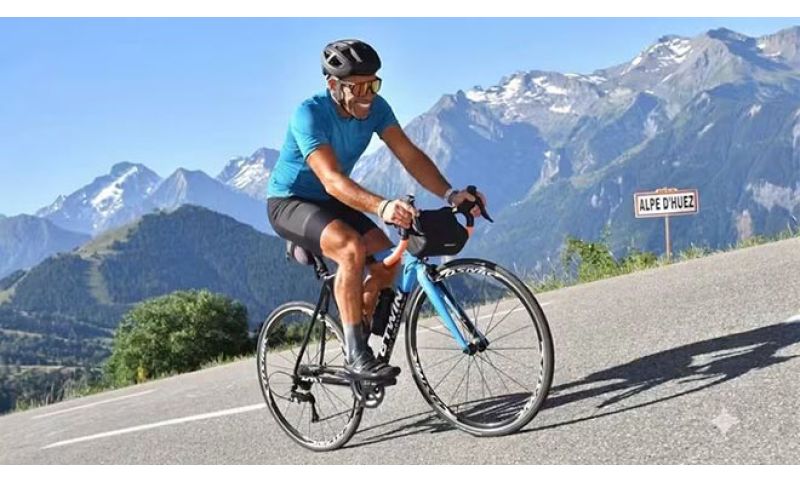
Clamor, too much clamor at Alpe d'Huez? Setting aside an admittedly hagiographic approach to the Tour de France, we truly appreciate the quiet and scenic genuineness offered by Col de la Sarenne, making its debut as a climb in the Grand Boucle. Don't expect, in other words, massive urbanization along the asphalt ribbon leading to the last major alpine prize before Paris—1,999 meters, and don't round it up, it's actually two thousand.
With views of inestimable beauty over those glaciers in ever-greater retreat, just to make sure we don't miss a bit of healthy melancholy, watching races while climate change alarms us.
The challenge of deseasoning tourism accelerates, one might add, but let's stay with Sarenne, stepping outside the altitude profile. The folks at Dauphiné Libéré help us, introducing us to the treasure chest of calm and discreet alpine identity capable of leaping to planetary notoriety without an unconditional influx of public, indeed, there's plenty—there's TV, especially in a natural context to be preserved. Those among the 16,000 of the Etape du Tour who know what we're talking about, about the splendid and small village called Mizoen, about pastures, about the welcoming last outpost of hospitality, the Auberge du Savel in Clavans le Bas: "there were only 55 inhabitants in winter, everything was based on self-sufficiency, everyone knew each other"—recalls an old resident of the petit village, in front of Clementine and Leroy (Dutch) who took over the hotel in 2025.
And not for marketing purposes, with heart and convinced adherence to the specificity of Sarenne, the stage of the Tour that was tackled downhill in 2013, when Riblon won. There was still the matter of 16,000 signatures to add to the petition supported by environmentalists. But we've fallen back into it, because we had promised ourselves not to talk about competitive cycling.



 3
3
 3
8
8
10
10
6
6
1
1
3
8
8
10
10
6
6
1
1


 Ritratti
 Oscar
Oscar Albi d'Oro


Se sei giá nostro utente esegui il login altrimenti registrati.