














"Uccellini was a great rascal", says Livio Trapè. "The Heron of Montefiascone", gold (in the hundred-kilometer quartet) and silver (in the individual time trial) at the 1960 Rome Olympics, had turned professional with great expectations, both his own and those of the cycling world. As an amateur, he had dueled and competed directly with Meo Venturelli, sharing first and second places, fame and glory, titles and summaries, finishing orders and general classifications. Together they had won a Trofeo Baracchi. Friends and enemies, or rather, never enemies, but adversaries, companions and rivals, and perhaps Livio cared for Meo more than Meo reciprocated, who knows.
"Uccellini was a great rascal - Trapè explains to me, 88 years old - because it's true that Solo-Superia secured Van Looy's first place, but we managed to do it for Meo's second place. We weren't a team, but we behaved like a real team. From the very first stage. Vendemiati's attack, then my work behind to break up the pace, to tire and trap the other favorites. That day I finished fourteenth, just ahead of Adorni. Uccellini had promised us money and contracts, I don't know about Meo but I never saw anything, not even a lira, and as for a team, Meo was hired by Bianchi, I should have gone to Bianchi too but instead Nencioli ended up there, and Vendemiati went to Salvarani. Maybe Uccellini was passionate and knowledgeable, but he didn't honor his agreements with me".
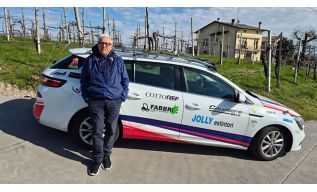
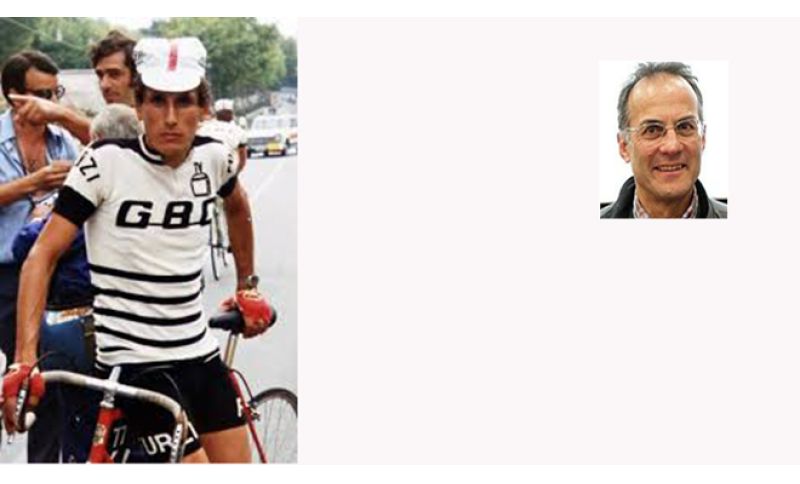
Carlo Brunetti doesn't see it that way. Also a Roman (Brunetti - in the photo - from Garbatella, Uccellini from via Gregorio VII toward Monteverde), he was one of the commendatore's protégés. "Without him I probably would never have reached the blue jersey – Brunetti tells me, 82 years old -. Tour de l'Avenir 1966. It was raced as national teams, Italy was coming off Gimondi's victory in 1964, the Avenir was the most important and toughest race among amateurs, that year the same stages were raced on the same days as the professionals, though with a shorter distance. Elio Rimedio, the national coach, called me up to help Mino Denti with Albonetti, Benfatto, Dalla Bona, Favaro, Guerra and Panizza. It was a triumph. Three stage wins plus the opening team time trial, Denti first overall, Favaro fifth, me seventeenth. And first in the team classification". Brunetti was then a professional from 1967 to 1975. "Turning professional wasn't easy – Bocci confirms to me, 83 years old -. If it hadn't been for Uccellini, I never would have made it. Professional from 1967 to 1970, the first three years in Vito Taccone's Germanvox with Ole Ritter, the last in the Ferretti of the four Pettersson brothers and sports director Alfredo Martini, but first as a winning amateur and also Italian at the Grand Prix of Europe in Germany. That second place at Milano-Vignola 1968 in a sprint behind Marino Basso. That sixth place at the Giro dell'Appennino 1969, even though, unfortunately, believing it was possible to catch the top three, I pushed too hard pulling the group of chasers. That tenth place in the fifth stage of the 1970 Tour de France. Also those two first places, an elimination race during the circuit of aces in Terni in 1968 and a speed trial at the Olympic Velodrome in Rome".
Enrico Uccellini would have continued, as an advertising professional by trade, as a sports director by passion and as a commendatore by reputation, to be involved in cycling. The chronicles identify him as sports director of the Chiorda of the knight (and this title was authentic) Angelo Trapletti and general manager Franco Mealli. Among Uccellini's protégés, after Bocci and Brunetti, was another Roman, from the Trionfale district, Tullio Rossi, nicknamed "er Drago". Together, Uccellini in his car with his insights, Rossi on his bike with his legs, they collected victories often in sprints. Not only that. Together they invented the first cranks that, by pushing on the pedals, would automatically extend from 170 to 175 millimeters; together they thought of the first mobile phones to use during races; together they designed the first quick-release pedals.
It was precisely "er Drago", who died at 77 last September 16th, who revealed to me the story of those special pedals: "The spark flew because, when it rained, the shoes would splash and move in the cages. I designed a special tongue that helped release them from the pedals. I showed it to Luciano Pezzi, my sports director at Dreher. Pezzi observed them, admired them, then declared: 'Beautiful, but something's missing'. He wasn't wrong, those pedals could still be improved. So much so that the system was later perfected by Look, patented and imposed on the market. And to think that if I had made that improvement myself, it could have changed my life". Life did change for him, in glory, with a stage victory at the Giro d'Italia, but it didn't change his existence: until his last day, first alone, then with his son, Tullio Rossi would manage a bicycle shop on via Trionfale, number 11892. And here, still hanging on a wall, as a trophy of prestige and proof of truth, shoe and almost quick-release pedal.
(end of the fourth and final installment)



 4
4
 4
2
2
4
2
2

 Ritratti
 Oscar
Oscar Albi d'Oro


Se sei giá nostro utente esegui il login altrimenti registrati.