
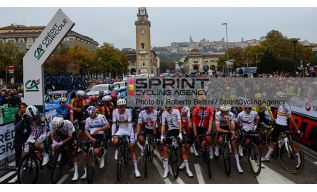
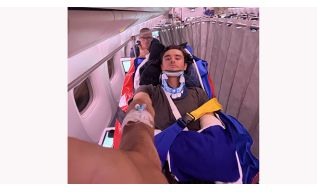
















A beautiful stage, the most beautiful of the Giro without Vingegaard, with the general classification contenders finally in the spotlight seeking improvements in podium positions, even if someone is collecting setbacks instead (case in point: Arensman). Such a magnificent stage, so fiercely contested, that in fact on TV they're talking about the women's Giro (no offense intended, the ladies have nothing to do with this).
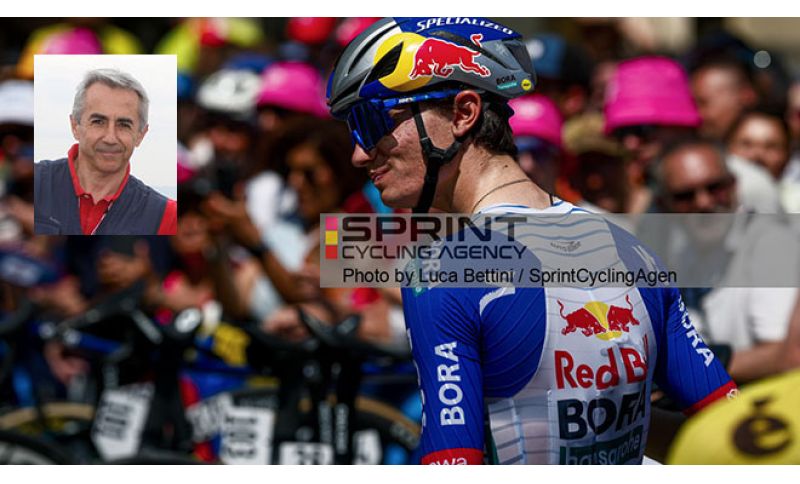
Given how things stand, since the men's Giro no longer interests anyone, least of all state television and the organizers in their dismantling phase, I too take a detour and dedicate my (useless) pink jersey to someone. It's personalized, it's for Giulio Pellizzari. The motivation, however, isn't linked to his fine day of partial redemption, breaking away first, then giving it everything on the final climb to support captain Hindley toward the podium, but for much higher and more important merits: he's still here. He's here and continues to lose with complete dignity.
By coincidence, these days, half the world is emphasizing in bold letters, with misty eyes, the great nobility of Jannik Sinner, who in the throes of physical and existential crisis, slowly roasted in the furnace of Paris, proud and indomitable offered his chest to Argentine Cerundolo, accepting defeat all the way through, honoring his opponent and the public, when others would certainly have seized the opportunity to withdraw, fully understood and justified.
Nothing. After having amply demonstrated his ability to win, in a thousand ways, Sinner showed on his darkest day how to lose, in the only possible way, without running away, without hiding, without self-pity. All correct and all truly very beautiful. But finding myself here at the Giro, I immediately found myself thinking of our Pellizzari, whom we've been following for days in his long ordeal. Honestly, I find no differences. If Sinner deserves a monument, little Giulio deserves two. Finishing a tennis match is a matter of an hour (two sets of 1-6 and the ordeal is over), finishing a Giro that's already compromised in the first week is far more painful. It's like drinking the same poison every day, for an interminable time. And yet.
And yet Pellizzari didn't back down. Like Sinner, he didn't run away, clinging to very real motivations, malice-proof ones, that is serious ailments and deep crises. No withdrawal, no comfortable shortcut home, to spare himself the jeers, or even the most edifying compassion, of the world out there. Head held high, Pellizzari like Sinner has respected his opponents, the public, the race.
It must be crystal clear: if Sinner had remained in the dressing room after his collapse and if Pellizzari had withdrawn after the torments of certain hard stages, no one would have found anything to criticize. In any case the world would have understood, given the real and respectable reasons. But the mere fact of having resisted the legitimate temptation, the mere fact of having chosen outright defeat in the middle of the global square, adds to their career and their story a particular ingredient that smells of greatness. Perhaps the career loses something at the level of numerical and quantitative curriculum, but it certainly gains much at the qualitative level.
The two lines are decidedly parallel, but they are somewhat too distant in terms of general recognition. Everyone remarked on Sinner's nobility, almost no one on Pellizzari's. As far as I'm concerned, I want to restore equity. If Sinner is great because he doesn't hide from the ruthless divinity of humiliation, Pellizzari is equally great for doing the same, every day, without sparing himself anything. I owed him that much: it counts for nothing, it's just moral compensation. But to pass it over in silence would be a real injustice. Rhetoric is elevating Sinner to the most sublime heights. What is Pellizzari, nobody's son?

 12
12


 12
12


 2
2
1
1
2
2
2
2
1
1
2
2

 Ritratti
 Oscar
Oscar Albi d'Oro

