
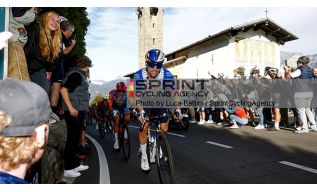
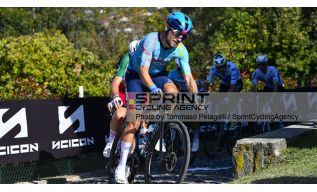

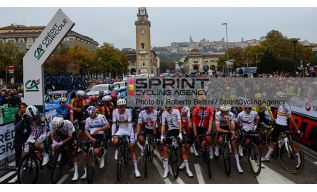

















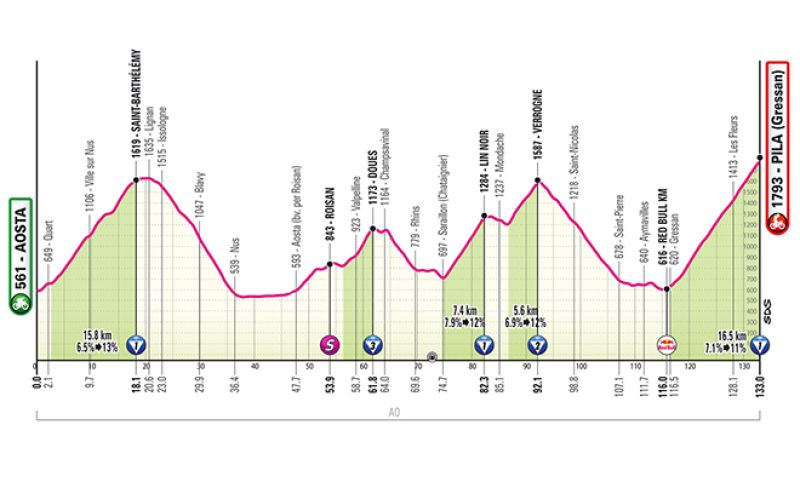
And here we are at the first high mountain stage of this edition of the Giro d'Italia: from Aosta to Pila only 133 km are covered with a concentration of 5 climbs and 4,350 meters of elevation gain.
to follow the live coverage of the entire stage starting at 12:50 CLICK HERE
Right from the start, the long climb of Saint-Barthélemy (1st category) is tackled, followed by a wide and fast descent of almost 20 km. Brief approach section to Aosta and immediately the climb of Valpelline which culminates with Doues (3rd category), the least demanding climb of the day. Once descended near Aosta, Lin Noir (1st category) and Verrogne (2nd category) are climbed, separated by a very short descent and then, after descending to the valley, the climb of Pila (Gressan side) with the first category climb that reaches an elevation of 1,793 meters: final kilometers all uphill around 9% with peaks of about 11% at 3 km from the finish.
THE ROADS OF THE GIRO. The Aosta Valley, setting for the entire fourteenth stage of the Giro, evokes the image of great mountains. And, naturally, it will be a day rich in climbs for both spectators and riders. The route design, however, allows for seeing and discovering much more.
Starting with Aosta, the ancient Augusta Praetoria, which for its magnificence and strategic importance was defined as the "Rome of the Alps". It is truly worth discovering that ancient world, still clearly evident and moving.
The Roman era is told by the Arch of Augustus, the Porta Praetoria, the imposing Roman Theatre, the evocative Cryptoporticus of the Forum and the Bridge over the Buthier. But one can venture much further back in time by visiting the megalithic area of Saint-Martin-de-Corleans with artifacts from 3000 to 1100 B.C. More recent are instead the Complex of Sant'Orso with the Collegiate Church and Romanesque cloister and the cathedral dedicated to Santa Maria Assunta and San Giovanni Battista. Then one relaxes in Piazza Chanoux, the monumental living room of the city, and departs.
The climb towards Saint Barthélemy allows you to observe up close the vineyards clinging to the mountainside that have made the small region a small paradise for lovers of quality wines. Rows and terraces carved out with effort and their management is equally demanding to the point that it is no coincidence that one speaks of heroic viticulture. After a stop at the Astronomical Observatory of Lignan, one descends, still among the vineyards to Nus where the remains of the Castle of Pilate stand out, which according to legend hosted Pilate on his journey towards exile in Gaul after the condemnation of Jesus.
The long climb in Valpelline and the subsequent climb towards Verrogne allow you to discover silent and beautiful villages, but also to observe from privileged observation points the Grivola, Monte Emilius and the Gran Paradiso Group. At the end of the subsequent descent, it is instead the castles that capture attention. These are those of Sarre, Sarriod de La Tour, Saint Pierre (home to a notable Museum of Natural Sciences) and, finally, Aymavilles, an unmistakable Renaissance manor with cylindrical towers recently restored and open to the public.
Pila is well known to cycling enthusiasts attracted by the great Pila Bike Park, a structure recognized internationally, with trails that develop between forests and open slopes to which are added areas dedicated to e-bikes, cross country and technical learning. Also pleasant is the short walk to Lake Chamolé surrounded by high altitude pastures and near which is the Christ of Chamolé, a panoramic point and spiritual symbol. Do not underestimate the possibility of reaching Pila by cable car departing from Aosta, thus avoiding traffic and parking problems at altitude.

 4
4


 4
4


 2
2
1
1
2
2
2
2
1
1
2
2

 Ritratti
 Oscar
Oscar Albi d'Oro

