
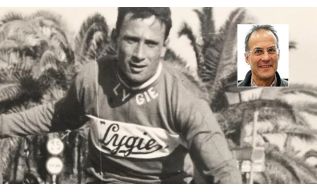














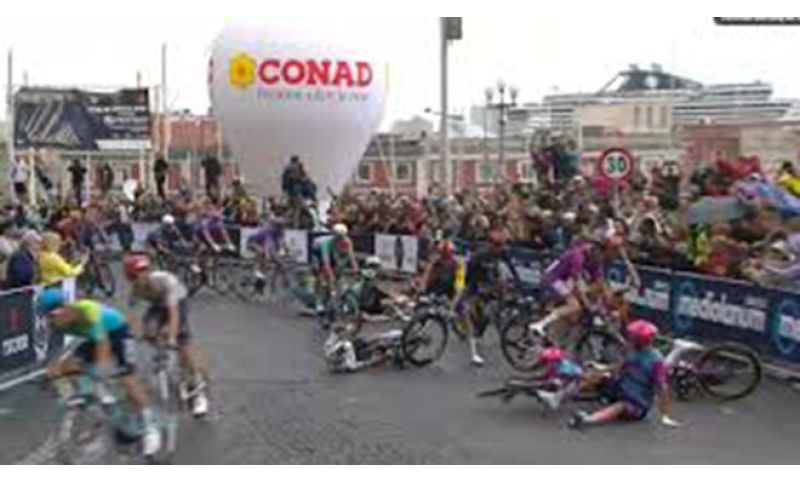
Patrick Lefevere demolishes the Giro, defining the safety of the race as an outright farce. Lefevere, a historic figure in world cycling and still today, despite no longer being CEO, a central figure at Soudal Quick-Step, pulls no punches in his usual "Column" rubric, launching a scathing attack against the Giro d'Italia, accusing the pink race of being left behind in time and no longer being on par with the other Grand Tours.
Lefevere, whose career as a manager began in 1979 as a sporting director at teams such as Marc Zeepcentrale, Lotto, GB-MG and Mapei, before becoming manager and CEO of Quick-Step from 2003 until his operational retirement at the beginning of 2025, has not hidden his deep concerns about what he witnessed in the opening stages of the Giro.
«As a former CEO of a cycling team, I haven't missed much of the Giro so far, and what a week it's been! I've seen riders wearing the pink jersey that I'd never heard of before: Guillermo Thomas Silva from Uruguay and Afonso Eulalio from Portugal. If I saw them tomorrow without the pink jersey, I wouldn't recognize them. But of course, in cycling we root for the 'emerging countries'».
Pointed words, but the main target of his analysis remains above all the safety of the race. According to Lefevere, we are witnessing a memorable race for all the wrong reasons and this edition of the Giro seems to be making its mark almost exclusively for accidents and dangerous situations.
«Unfortunately, it's a Giro memorable above all for the wrong reasons. I've seen two idiots on the roadside trying to push the riders. I can only suspect that in their heads it was a stunt for TikTok. One pushing and the other filming. Too absurd to be true».
The former Belgian manager then points the finger at the organization of the stages and a series of errors that, in his view, continue to repeat themselves year after year.
«There was the fifth stage in Potenza, where Igor Arrieta first crashed, then took a wrong turn and ultimately won anyway. Unfortunately, crashes are the common thread of this Giro. In front of the TV, I've already shouted several times: 'Okay, you never learn'. Barriers with little feet in Bulgaria, a so-called final straightaway that suddenly transforms into a U-turn. Not to mention the potholes in the asphalt in Naples. You know in advance that they'll crash, and of course it happens. If it rains, that's bad luck; nothing else is».
In his outburst, Lefevere also recalls episodes from the past, arguing that the safety problem at the Giro is now chronic.
«Italian negligence is timeless. I remember a Giro stage where the first twenty or thirty riders slipped at the finish line. If my memory serves me right, Paolo Bettini was one of them. They all slipped away on the paint with which sponsor names had been painted on the asphalt».
For the Belgian manager, it is always and only the riders who pay the price. «As always, it's the riders who pay the price. How many cyclists remained in the race against all good sense after that terrible crash against the guardrail in the second stage? Only to then withdraw one, two or three days later».
Lefevere also harshly criticizes the UCI, accusing it of not enforcing the standards introduced in recent years. «Watching the Giro means realizing that the race is not making progress in terms of safety. The UCI has imposed standard rules for barriers, bans turns in the last two hundred meters of a final sprint and requires a safety officer for every race. In practice, all of this proves to be nothing but empty words. An outright farce».
The former Quick-Step chief then recalled the Safer project, the initiative launched together with Richard Plugge to improve safety in professional cycling, but which ultimately failed to carry forward the projects it had set out to achieve.
«I can say that, in my time, I at least tried to change something, but Safer, the initiative that Richard Plugge and I launched, unfortunately got bogged down in politics. The UCI had, and still has, a fear of relinquishing control of the regulations. Our starting point has always been to entrust safety to experts who would make decisions autonomously. Today, it turns out that exactly the opposite happened. Safer operates with a consensus-based model, where all stakeholders have a say. And so, in fact, nothing happens. We see the results every day at the Giro».

 11
11


 11
11


 1
1
2
2
1
1
1
1
1
1
2
2
1
1
1
1

 Ritratti
 Oscar
Oscar Albi d'Oro

