

















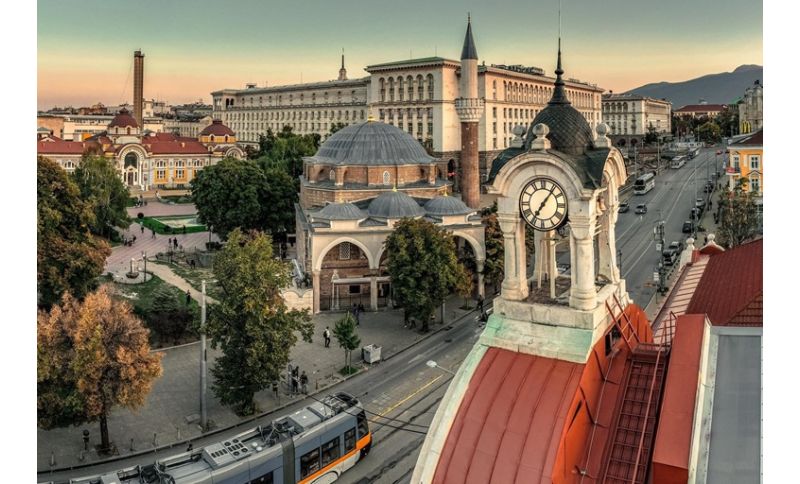
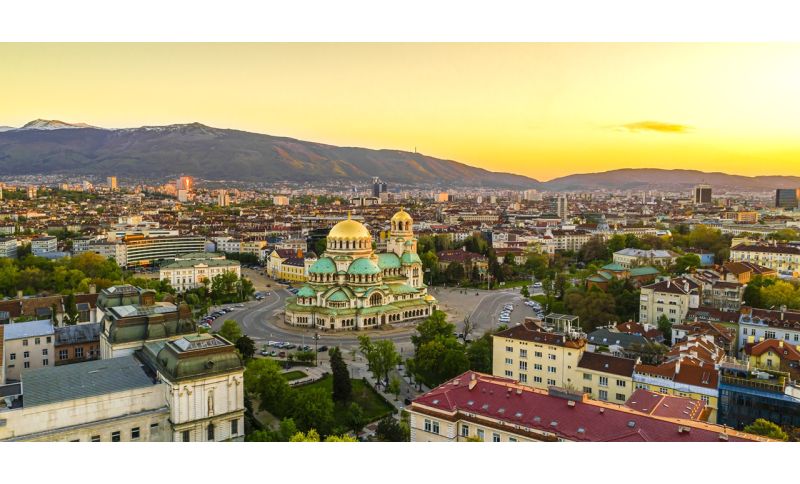
The three-day Bulgarian leg of the Giro d'Italia 2026 Grand Departure, if all goes as planned, should attract approximately 100,000 foreign fans overall. The showcase will be closed by Bulgaria's two most populous cities: Plovdiv, where the stage starts, and Sofia, the capital, where it finishes.
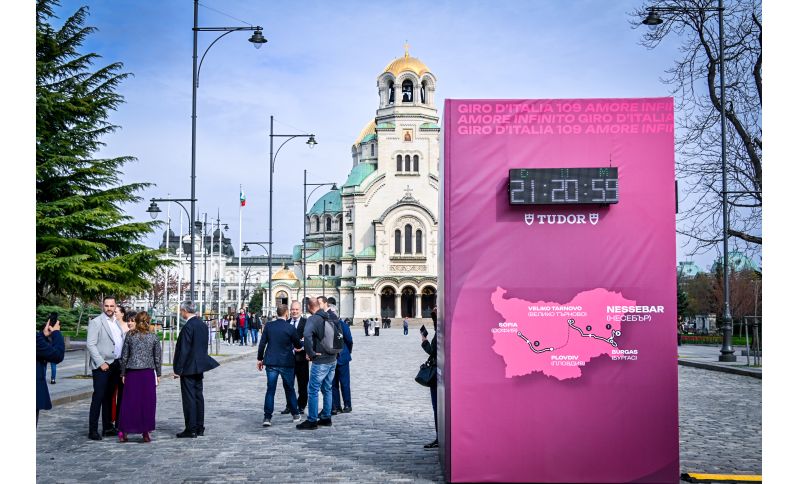
In Sofia, at Alexander Nevsky Square, a countdown totem has been installed ahead of the Grand Departure. "Why the Giro and not the Tour or Vuelta? The bond between Bulgaria and Italy is very important," explained Dimitar Iliev, Bulgaria's Minister of Sport. "Every year 200,000 Italians visit our country, Italy is one of our best markets. And for me personally, Italy represents an important chapter of my life. I lived there for two years when I raced in rallies, it's a beautiful country, from north to south." Iliev, who will soon no longer be Minister (he was serving in an interim capacity) following elections ten days ago, was a Bulgarian national champion and spent several years based in Italy.
When it comes to racing, Bulgaria is keen to emphasize that the country has organized the Tour of Bulgaria since 1924, one of Europe's oldest races, though it has always remained at semi-professional level (currently 2.2 category).
STAGE 3: PLOVDIV - SOFIA (175 km)
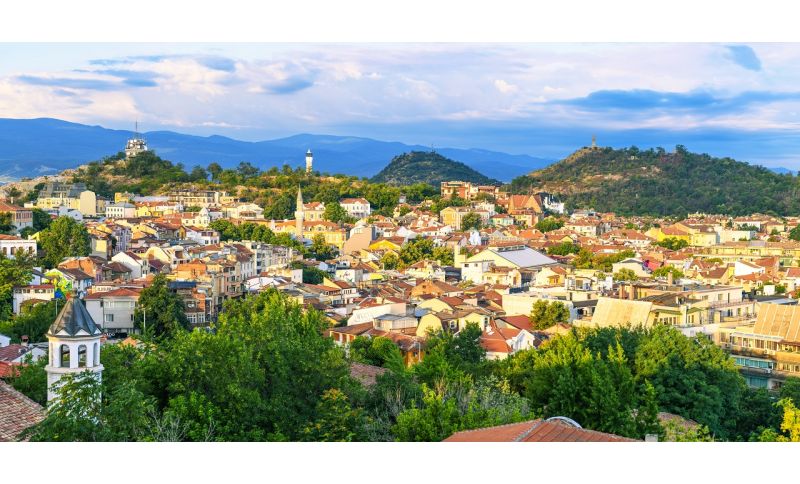
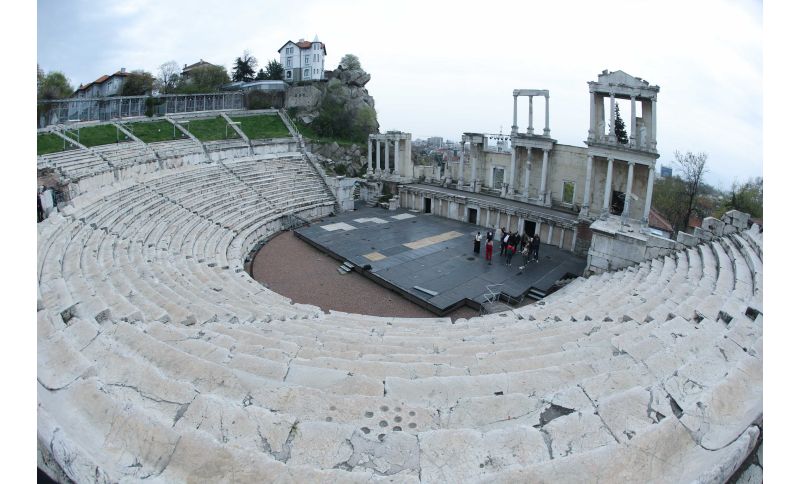
Plovdiv is one of Europe's oldest continuously inhabited cities and represents a crossroads of cultures that have shaped its identity and urban landscape over the centuries. Thrace, Greece, Rome, and the Ottoman Empire have left evident traces, today visible among the Roman theater, historic quarters, and varied architecture. This layering earned it the title of European Capital of Culture 2019, a recognition that boosted its international profile. Dynamic and livable, it is often considered among Bulgaria's most bike-friendly cities, thanks to growing attention to sustainable mobility, and is also a candidate for European Capital of Sport for 2028.
"With the Giro we aim to increase tourism by 20% compared to the same period in 2025," explained Plovdiv's Mayor, Kostadin Dimitrov. "We're expecting 30-35,000 tourists. We've also organized a bike ride around the city, immediately after the stage start, which will gather around two thousand people. We'll provide free bicycles for those who don't have one, and there will be concerts and various events. We're ready, it will be a great celebration."
Sofia is the capital and the country's main political, economic, and cultural center, situated in a wide basin at approximately 550 meters altitude. The city displays strong historical layering, with evidence ranging from the Roman era—such as Serdica—to Ottoman buildings and modern architecture. What particularly characterizes it is also the natural context: behind it rises the Vitosha mountain massif, easily accessible and frequented for hiking and winter sports, while all around alternate parks, green areas, and thermal springs that contribute to defining a direct relationship between city and landscape.
The stage proceeds always on flat terrain but will be abruptly broken by the Borovets Pass (2nd category, 9.2 km at 5.4%), whose area has hosted several Alpine Skiing World Cup races, especially between the 1970s and 1980s (with some appearances afterward), which will nonetheless be crossed 72 km from the finish and shouldn't cause too many headaches for the sprinters.
Previous installment: Bulgaria at the Giro (1): The First Pink Jersey Passes the Black Sea
Previous installment: Bulgaria at the Giro (2): History and Sparks in Veliko Tarnovo



 1
1
 1
4
4
2
2
1
4
4
2
2

 Ritratti
 Oscar
Oscar Albi d'Oro


Se sei giá nostro utente esegui il login altrimenti registrati.