
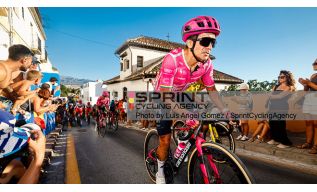
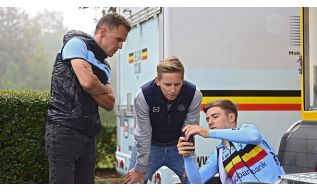
















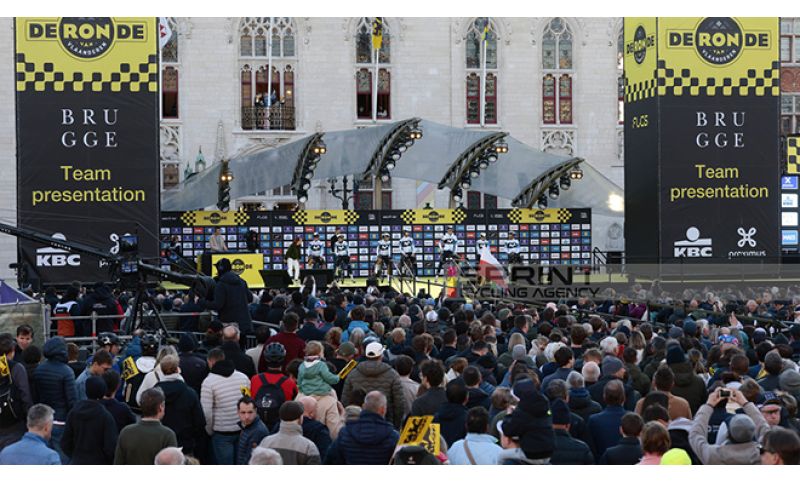
As we approach Sunday's Tour of Flanders, one of the most beloved races in the world, we thought it would be interesting to enter that world of Belgian cycling that you only see on television and look at it through the eyes of Flemish journalists, to have them tell us how cycling is lived in Belgium and what the Tour of Flanders represents for them.
Marc Ghyselinck, a prestigious byline from the Flemish daily newspaper Het Laatste Nieuws, has been following all the races for over 30 years and chasing riders after the finish: «Let's say that football is the number one sport in Belgium, cycling is number two, with the exception of the period from late February (Omloop Het Nieuwsblad) to late April (Liège-Bastogne-Liège), when it becomes the number one sport. The same goes for the Tour de France and then the World Championships. So, for four months a year cycling dominates the sports pages and television sports programs».
Let's start with television: «Sporza (Belgian public television) broadcasts everything related to two wheels. It holds the rights to the classics and offers endless hours of cycling on TV. The pinnacle is the Tour of Flanders, whose live broadcast begins before the race start (this year in Antwerp) and continues until the conclusion of the women's Ronde as well. Private broadcaster VTM tries to carve out its own space and holds the rights to Strade Bianche and Milan-San Remo. They also followed the Vuelta Valenciana (Evenepoel was there and won it: ed. note) and streamed the UAE Tour on HLN.be. As for newspapers, the main dailies, Het Laatste Nieuws and Het Nieuwsblad, dedicate six, seven, eight or even nine pages a day in the week preceding the Tour of Flanders. The biggest news was obviously Remco Evenepoel's participation, so much so that it was even removed from the sports pages and placed in the general news section, as a "matter of national interest"».
A completely different vision from what happens here, where various sports and therefore cycling in sports dailies are relegated to just a few pages, and even less when we're talking about national newspapers. It should also be said that the expansion of football in Belgium, as far as the media is concerned, has had the opposite effect and cycling has increased its visibility.
«Going back to our national television – journalist Ghyselinck continues -, a few years ago it lost the television rights to the Belgian football championship and so they concentrated even more on cycling, promoting all the races, and focused most of their efforts on the Tour of Flanders. So the Ronde benefits from this great television attention, making the race ever bigger. It has been won by great Belgians like Boonen and Gilbert, who in their time were stars, but they have been replaced by new stars like Van Aert and Van der Poel, who is Dutch but was born and raised in Belgium, so he's considered half Belgian. Van Aert is becoming an antihero, which has skyrocketed his popularity. Pogacar is loved in Belgium as he is elsewhere, and now there's Evenepoel, who races the Grand Tours. The way he and his team announced his participation in the Ronde, after denying it for months, was ridiculous, let's be honest. Lying about the whole thing wasn't the smartest thing to do. But the media and the public are very forgiving about it, so everyone thinks it's great news».
Our friend Marc doesn't like to make predictions, but he decided to make a small exception for us: «I can't predict the future. I'd say Van der Poel and Pogacar have the best chances of winning. Van Aert has shown he's not at their level, because he didn't win the Dwars door Vlaanderen the way Van der Poel won the E3 or Pogacar won Strade Bianche. Evenepoel is an outsider, he doesn't shine for his bike handling skills, which will serve him more than anything else on the narrow roads and pavé. He could win by attacking from far out, but Pogacar and Van der Poel have already done that».



 10
10
 10
5
5
10
5
5

 Ritratti
 Oscar
Oscar Albi d'Oro


Se sei giá nostro utente esegui il login altrimenti registrati.