


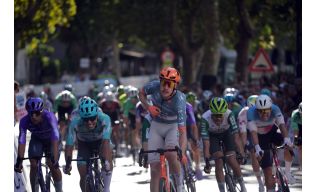
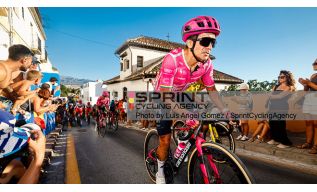
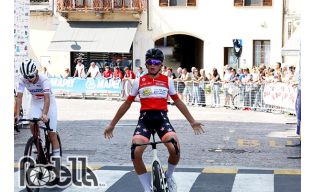













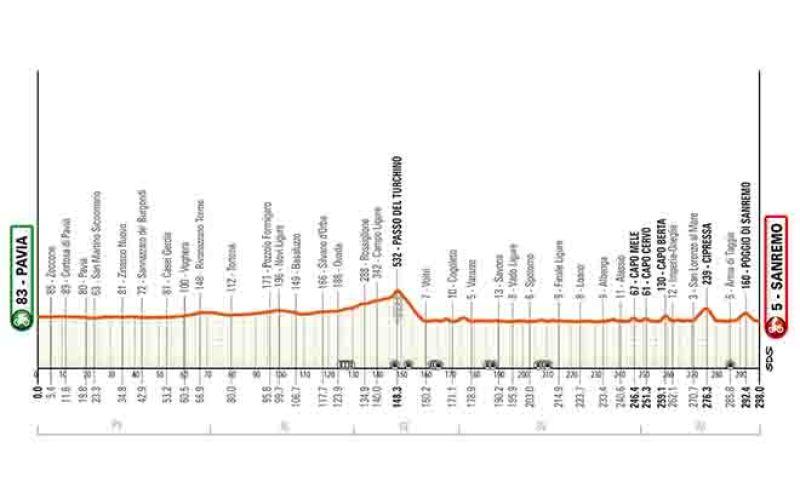
Today the 117th Milan-Sanremo is being raced, opening the season of the Monument classics. The start is from Pavia for the second consecutive year: the start at 10 AM from Piazza della Vittoria, finish on Via Roma in Sanremo after 298 kilometers around 4:30 PM. Total elevation gain 2,100 meters, of which 800 are in the final 50 km, the decisive stretch.
To follow the live coverage of the entire Classicissima starting at 10 AM CLICK HERE
Immediately after the start, the route heads north towards Milan to make a small circuit around Pavia. It passes in front of the Certosa, there is a second passage through the city and finally the classic route is resumed towards Voghera and Tortona. The difficulties are always the same: Passo del Turchino at 149 km from the finish (5.6 km at 2.9% average, peaks of 7%); Capo Mele (- 51 km from the line: 1.8 km at 3.6%); Capo Cervo (- 46 km: 2.1 km at 2.5%), Capo Berta (- 39 km: 2 km at 6.3%), Cipressa (- 21 km: 5.6 km at 4% with peaks of 9%) and finally the Poggio, the key point of the Classicissima. It is tackled when 9.3 km remain to the finish; it measures 3.7 km at 3.7% average with peaks of 8% after the Sanctuary of Madonna della Guardia about 700 meters from the summit, with an elevation gain of 136 meters, 30 curves and 4 hairpin turns. From the top 5.6 km remain to the finish: 3.3 km of extremely tricky descent and 2.3 km of flat road until the finish line on Via Roma. The final straight slightly climbs at 2%.
The Sanremo finish on Via Roma was inaugurated on Saturday, March 19, 1949 with Fausto Coppi's third triumph, the 40th edition of the race. The Campionissimo dropped everyone 27 km from Sanremo and arrived alone with 4'17" over Ortelli and Magni. It was the beginning of a memorable season, culminating with the Cuneo-Pinerolo at the Giro d'Italia and the first historic Giro-Tour double.
The breakaways – The craziest attack in Sanremo history remains that of French neo-professional Marc Gomez, who wins in 1982 with an action lasting 286 km: he goes solo on the Poggio descent and wins by 4". The longest solo breakaway is by Costante Girardengo, the first Champion in 1918 (the first of his six victories) attacks at Rivalta Scrivia and triumphs with 13' over Belloni. In more recent times, Michele Dancelli in 1970 breaks the spell of the longest period without Italian victories (13 years) with a solo action of 70 km started at Loano. The last longest winning breakaway of Sanremo is still by Gianni Bugno, 27 km in 1990: the rider from Monza drops Canzonieri on the Cipressa attack, flies over the Poggio and triumphs.
The roll of honor – In 116 editions, the multiple winner is Belgian Eddy Merckx with 7 triumphs: 1966, 1967, 1969, 1971, 1972, 1975 and 1976. He is followed by Costante Girardengo with 6: 1918, 1921, 1923, 1925, 1926 and 1928. With 4 victories are Gino Bartali (1939, 1940, 1947 and 1950) and German Erik Zabel (1997, 1998, 2000 and 2001). With three successes Fausto Coppi (1946, 1948 and 1949), Belgian Roger De Vlaeminck (1973, 1978 and 1979) and Spaniard Oscar Freire (2004, 2007 and 2010). A small group that could be joined by Dutchman Mathieu Van der Poel, the only one in the race to have won Sanremo twice, in 2023 and 2025. By nations, Italy leads with 51 victories, then 23 Belgium, 14 France, 7 Germany, 5 Spain and Netherlands, 2 Australia, Ireland, Great Britain and Switzerland, 1 Norway, Poland and Slovenia. The last Italian triumph is Vincenzo Nibali in 2018. The last to win in world champion's jersey is Beppe Saronni in 1983.
The history – The first Milan-Sanremo was raced on Sunday, April 14, 1907 over a distance of 288 km, in the rain. Victory for Frenchman Lucien Petit-Breton on a Bianchi bicycle, who took 11 hours 4 minutes 15 seconds at an average speed of 26.014 km/h. At 35" his compatriot Gustave Garrigou and third Giovanni Gerbi "the Red Devil", who had arrived second but was later demoted for irregularities. There were 62 registered, but at 5:17 from the Conca Fallata in Milan, Naviglio Pavese, 33 started and only 14 completed the route.


 5
5


 5
5


 5
5
1
1
3
3
5
5
1
1
3
3

 Ritratti
 Oscar
Oscar Albi d'Oro

