




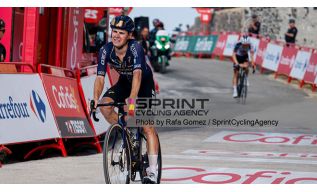


















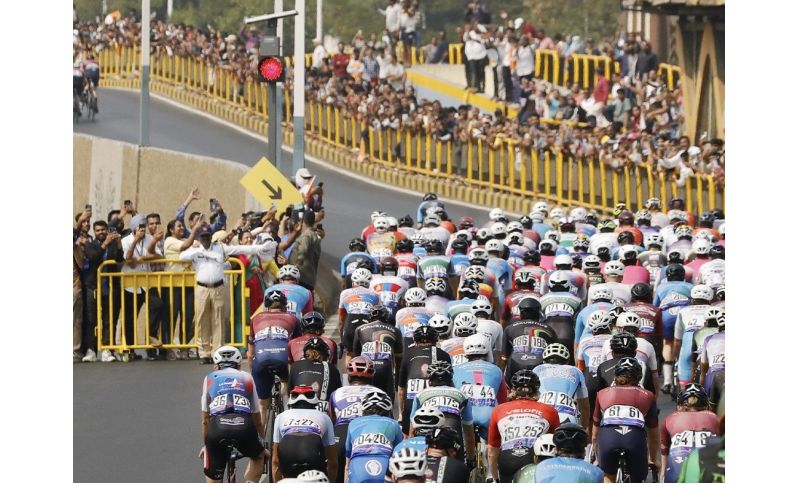
Riders, teams, organizers, and the international federation: the first historic edition of the Bajaj Pune Grand Tour, which took place between January 19 and 23, brought everyone into agreement. The short Asian stage race that marked the return of professional cycling to India after thirteen years was a resounding success, surprising both the protagonists who experienced it from the inside and those who, like us, followed it from home.
Any doubts about the organizational quality of the event were decisively swept away through a collective effort that did not go unnoticed: the enormous number of volunteers employed (over 3000), the many kilometers (500) of perfectly paved roads for the occasion, the carefully curated and timely social communication, the appreciated use of drones and helicopters to ensure television coverage of the race (which, we recall, was a .2 category event), and the successful involvement of the local community (the crowds and cheers in urban centers were impressive) all contributed to making the race enjoyable, competitive, and participatory, ultimately satisfying all parties involved.
Certainly, not everything was perfect (such as the often missing and not always updated graphics or the risks encountered in the final of the first stage with cars on the course and the finish line poorly attached to the asphalt), but the organizers showed, even during the event, that they could learn from their mistakes and adjust their approach to offer the best possible product, a process that will likely continue next year when, following the feedback from this first edition and based on UCI announcements, the race could already boast a different status.
"In 2026, we hope to promote the race to a higher level: this is our objective because, together with the district administrator and the national Indian federation, we want this race to become a reference point in Asia in the next five years," said the International Cycling Union Director General Amina Lanaya to some local media outlets (including TimesofIndia.com), who was present on site and explained why the Bajaj Pune Grand Tour had earned such an upgrade.
"First and foremost, there's the quality of the organization, and here, considering that the decision to create this race was made just six months ago and time was short, we can say we were truly impressed. We knew, however, that the country and the Pune district had the necessary capabilities and resources to guarantee a high-level event. The feedback from riders and teams has been very positive. Everyone told me "wow, so many people along the roads" but they were also struck by the many smiling faces. The Indians were very happy to welcome this event because it was a novelty," Lanaya stated, not holding back on why, in her opinion, the local people welcomed the race so warmly.
"If you want to watch a cycling race, you don't need to pay (sometimes very expensive) tickets like in other sports, but it's free," was the clarification from the Franco-Moroccan UCI executive, who appeared quite aware of the next step the organizers must take.
"We need the field to be even more international in the future, and we are sure that Pune will be able to attract riders from even more countries in the future because there is the will to do so. I am certain that the race will get better and better, year after year."
From these words, it is quite clear the desire, mixed with hope, that the Bajaj Pune Grand Tour (won this year by New Zealand's Li Ning Star Luke Mudgway) can continue to improve, a conditio sine qua non so that, together with the support given to Indian athletes through the World Cycling Centre in Aigle and its affiliated structures in the country, cycling can progressively take hold among the local population, firmly taking root in a territory (and market) with enormous potential.
The newborn Indian race, by developing in the near future, could concretely drive the development of the local movement, an objective consistent with the current UCI vision that has the globalization of two wheels as one of its mantras, to be pursued by also extending interest to other disciplines and preparing international events of even higher caliber.
In this perspective, thoughts immediately turn to the Road World Championships and an operation similar to the one recently done with Africa and Rwanda, areas relatively little touched by high-level cycling that, thanks to the recent world championship, revealed themselves to a wider audience and definitively put themselves on the map.
A similar dynamic could occur with India when, having consolidated certain organizational mechanisms and stabilized the Pune Grand Tour in the calendar, a potential World Championship could record unprecedented enthusiasm.
"In 2025, the World Championships in Kigali, Rwanda, were a huge success. Asia is capable and has shown it can do even more and even better, and therefore India could also have the opportunity to host the World Championships in the coming years, a milestone that should, however, be an integral part of the roadmap we must develop together with all parties involved," Lanaya said.
Time is certainly not lacking for India and its Federation, which in the coming years can work profitably on expanding cycling within its borders, adequately preparing the ground for what could be the first-ever road rainbow jersey edition on the Asian continent.



 4
4
 4
1
1
5
5
6
6
4
4
4
1
1
5
5
6
6
4
4

 Ritratti
 Oscar
Oscar Albi d'Oro


Se sei giá nostro utente esegui il login altrimenti registrati.