
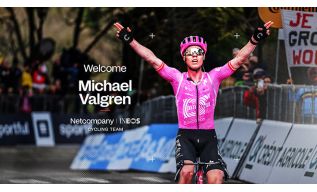
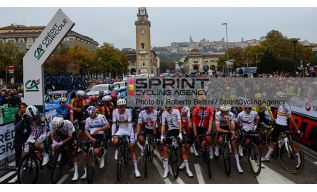
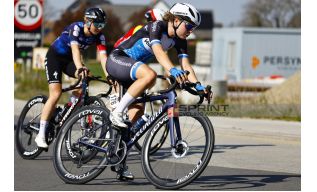















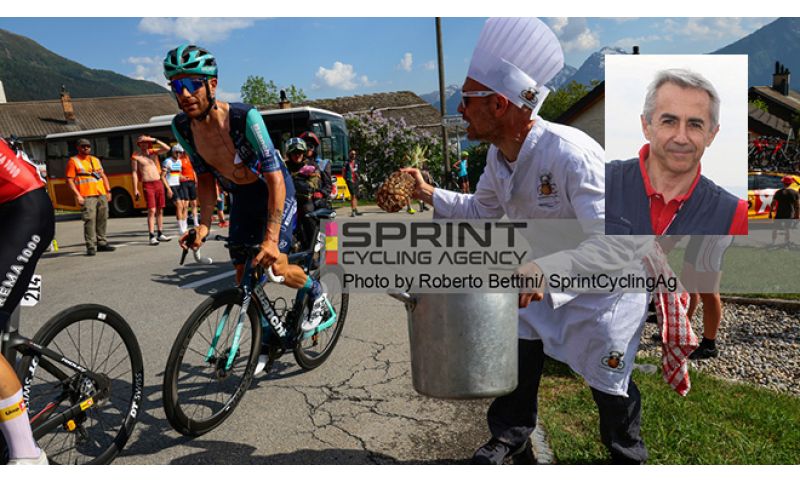
Like the news of a man biting a dog: a mountain stage arrives and Vingegaard doesn't win. What is this, does he take the day off like hairdressers? Nothing, no fuss: it's not a real mountain finish. He doesn't waste himself for so little. Andalo is a stage for breakaways and the lord of the race concedes something to his subjects. A fierce battle among the second-tier riders and in the end the last man standing wins, the valiant Valgren.
But this isn't the real news. Now, for us Italians, the big news is Caruso's third place. The invaluable Michele Merlino, a wizard of statistics and much more, informs me that at 38 years and 7 months he achieves a record: only Bartali, in '54, at the Saint Moritz stage, finishing second at 39 years and 10 months, stands ahead of him among the Methuselahs on the podium at the Giro. I don't know how proud Caruso should be of this feat, but this is what Italy must now settle for. It's no longer a time for flights of fancy. If this 2026 Giro has served any purpose, it has certainly served to administer last rites to our glorious movement.
Within living memory, at least of those still alive, nothing equally depressing comes to mind. In these final stages, we're clinging to the hope that a young domestique of Vingegaard (the last one on the climb, Piganzoli), can exploit his privileged position and secure a top-ten finish. At the opposite end of the age spectrum we have Caruso The Rock, always aiming for tenth. That's all. Ciccone continues to create ephemeral chaos, poor Pellizzari is in such a state he should be thrown out, failed his final exam.
If to this disastrous balance sheet we add the trump card of a truly modest Giro, because beyond the UFO Vinge we're at a quality level of cheap trinkets (it's certainly not the Galls, the Aresmans, the Gees who transform the ranking of those present into a Rotary), if that is to say we properly weigh the competition, our failure weighs even more. If we were a company, it would be time to take the books to court.
They tell us at the team bus paddock, in the morning chatter: you journalists are the catastrophists, Italian cycling isn't in such bad shape, we have the best sprinter (Milan, still with zero wins) and the best time trialist (Ganna, a true champion in his field, though as number one I'd put Evenepoel). Hurrah for optimism. Hurrah for the Pangloss of life (see Candide). Hurrah for the gang of the glass half full.
But with all this optimism we find ourselves in this vale of tears. We find ourselves clinging to Piganzoli and Caruso defending tooth and nail a place in the top ten of a meager Giro, anyway far from the podium. For those who find this analysis defeatist, I'll add a pure hypothesis: let's imagine in this Giro also Pogacar, Evenepoel, Seixas, Ayuso, Lipowitz, plus the Van Aerts and Van Der Poels, basically next year's Tour, and then let's see where the Italian army should be placed. I, since I want to sleep at night, prefer to avoid even the thought.
The truth? The sooner we look in the mirror, the sooner we come to terms with ourselves, the sooner we might manage to accept ourselves. We're in roughly the same shape as Japan and Eritrea. We're like nobles at the back of the Caritas line for a plate of beans. Sure, fat is what drips from the stages of Ballerini, Ganna and Bettiol. But that doesn't change destiny. Italy has gone from a superpower to a super-impotence in world cycling. Seen from here, Caruso's third place – among the old-timers second only to Bartali – becomes a national event. All we have left is the future, everything yet to be invented. But we need inventors. Unfortunately, around these parts you don't see many Leonardos in the Giro.

 24
24


 24
24


 2
2
1
1
2
2
2
2
1
1
2
2

 Ritratti
 Oscar
Oscar Albi d'Oro

