


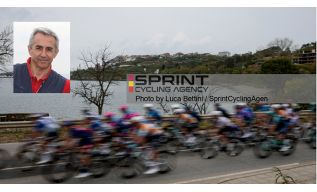























The Giro d'Italia 2026 kicks off with the Nessebar-Burgas stage, covering 147 km. A flat stage with very short climbs concentrated in the 22 km circuit that will be covered approximately twice at mid-stage.
To follow the live coverage of the entire stage starting from 12:50 CLICK HERE
The route follows the coast and passes near the finish line for the first time before heading towards Sozopol (intermediate sprint at km 90) where two laps will be completed on a fast circuit characterized by brief undulations of which Cape Agalina constitutes the categorized climb (two passages, respectively at km 84.3 and 106.8). Return to Burgas always along the coast on fast-flowing roads and arrival in the city center. Final kilometers on wide and predominantly straight roads. Last kilometer slightly uphill, final turn at 300 meters for a stage that will hardly escape the control of the sprinters' teams.
THE ROADS OF THE GIRO. The great crossing of Bulgaria begins from the shores of the Black Sea. Nessebar, today one of the best-equipped seaside resorts in the country with large hotels built right next to the beaches, boasts a very long history and a monumental heritage of great significance. Not surprisingly, the locality founded by the Thracians more than three thousand years ago, is part of the UNESCO World Heritage. Its historic center stands on an isthmus connected to the mainland by a short paved road: once you pass through the ancient city gates you enter a surprising world, characterized by typical wooden constructions dating back to the XVII and XVIII centuries and by a large number of medieval churches. Of the approximately 40 that once made the city the one with the highest number of churches per capita in the world, about ten can still be visited.
Among the most interesting are the Church of the Pantokrator built in the XIII-XIV century in Byzantine style, the Church of Saint John the Baptist dating back to the X-XI century, which features three naves and four rows of columns supporting the dome, and the more recent Church of the Redeemer-S. Spas (XVII century), whose interior consists of a single space with well-preserved frescoes on the walls illustrating episodes from the life of Jesus.
Having left behind the surprising artistic jewel of Nessebar, the race route leads to Pomorie, also of ancient origins but destroyed multiple times by wars and fires. Always capable of rising from its own ashes, Pomorie is today a modern seaside resort as well as a renowned health spa. Worth visiting here are the still-active salt pans and the adjacent Salt Museum where you can observe tools and reconstructions that tell centuries of history of the extractive activity that was the basis of the place's economic fortune.
The Black Sea welcomes the Giro also in Burgas where the first Pink Jersey of the Giro d'Italia 2026 will be awarded. Despite its strong industrial and port character, Bulgaria's fifth largest city by population knows how to welcome visitors in the best way. The beaches and three lakes located a short distance from the center guarantee relaxation, as does the Maritime Park with its numerous outdoor venues. A sightseeing tour can begin at Kiril i Metodii square where the homonymous Church of the XIX century stands with precious frescoes inside and a beautiful iconostasis. Not far away is the Ethnographic Museum where interesting collections of traditional costumes and embroidered fabrics are displayed. Also worth seeing is the Archaeological Museum with numerous objects used by populations that lived on the Black Sea coast in prehistoric times and in subsequent eras, including wonderful jewels found in a Thracian-era tomb.

 4
4


 4
4


 2
2
14
14
1
1
7
7
1
1
2
2
14
14
1
1
7
7
1
1

 Ritratti
 Oscar
Oscar Albi d'Oro

