
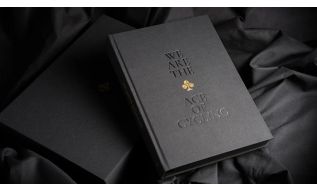



















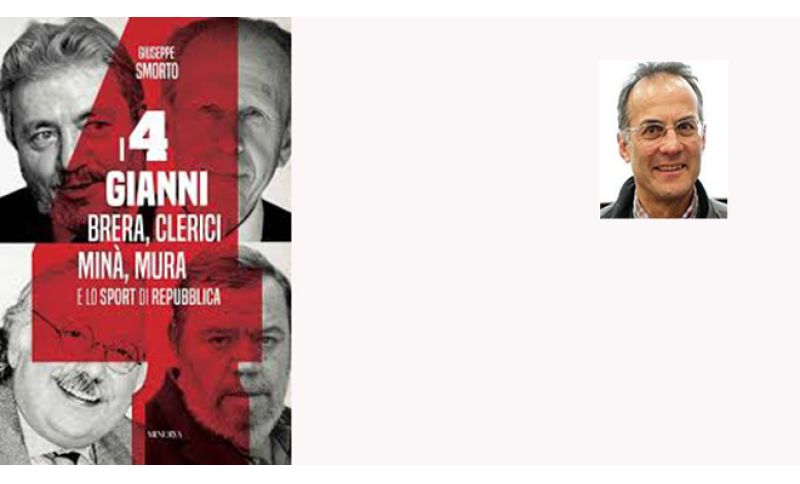
His thesis: "Take the side roads", with his own thoughts and convictions. His antithesis: "I never worked a single day in my life. I was allergic to the fine dust of the printing press". His synthesis: "They're stories, who knows why we call them articles". Gianni Clerici is the second of "The 4 Gianni" by Giuseppe Smorto (Minerva, 234 pages, 18 euros). Of the four, the least football-focused. "Inter-Liverpool at San Siro, when Suarez still had hair, and Peiró snatched an incredible ball from some clumsy English goalkeeper. I wrote, as always drawing inspiration from my masters of 'sense of humour', a specialty rarely practiced by us. The next day I received a phone call from some Inter fans, who threatened to burn down the forest – I live in a forest – and kill my dogs – I've always had dogs. I asked to cover less bloody sports, and my request was granted".
Tennis. He played it at a high level. He writes about it at the highest level, more couldn't be done, won't be done. In his own way: it's Clerici, he does it as Clerici, as a "scribe", or also as a "journattore" (journalist-writer). "One day the scribe meets Hemingway: 'He also taught me that journalism is not second-rate compared to literature'". Mario Soldati tells him: "Why don't you write directly in English? If I had your money, I would have gone to America". That time when Scalfari tells him "you could become the new Brera", and he replies (only to regret it later) "but Brera is alive and well". That time when "one day – Smorto explains – he has an appointment in Copenhagen with Karen Blixen, who apologizes for being five minutes late. Twenty-four hours later, Mariolino Corso stands him up, without even warning him".
That time when the newspaper proposes a World Cup, a European final, and Clerici answers that he prefers "more civilized activities". All those times when the editor asks him for a piece on a topic decided by management or the deputy editor or himself, and Clerici responds with smiles and shrugs "or at least that's how we still imagine him on the phone".
That time when they send him rushing to watch a match, the match is Sampras-Chang, the one to watch is Chang, Clerici will say that the future number 1 is Sampras, and he's right. That time when, August 2020, the very young Sinner loses to Russian Chacanov, and Clerici writes that Sinner "is impressive for consistency. He never makes mistakes. Better forehand than backhand, he has a hooking drive with heavy topspin from which great point-winning returns are rightfully expected". He will reiterate: "Never has an Italian been more gifted, and I can say this precisely because I met sixteen-year-old Nicola Pietrangeli on a court at the old Parioli". That day when Clerici discovers Federer: "I saw Laver again, but he's become right-handed, and must have dyed his hair black". That day when, at Wimbledon, short of ideas, Clerici goes to read pieces by American colleagues: "One writes that Federer is one of the few Swiss excellences in a thousand years, after William Tell and pocket knives. The other claims that – at least on grass – Federer should start with a handicap, maybe with two weights on him. The perfect gardener". That time when, after a final lost to Nadal at the US Open, Clerici gives Federer a gift: he brings him a book, "The Interpretation of Dreams" by Sigmund Freud. That time when Clerici interviews Pietrangeli, talks to him about Federer and Nicola, "at the name of the Swiss man he stands up as a sign of respect: he didn't do it often".
Smorto recalls: "When Gianni Mura passes away, Clerici is 90 years old and sends five lines to the newspaper: 'Gianni told the Tour de France the way Stendhal told the story of Italy and left us a list of nouns that should be collected, if only Maria Corti were still at the University of Pavia'". Smorto writes: Clerici "could tie flowers with his tie, like one of his characters". Ace.
(end of the third installment – to be continued)
the first installment: https://www.tuttobiciweb.it/article/1776236004
the second installment: https://www.tuttobiciweb.it/article/2026/04/16/1776238325/gianni-brera-ciclismo-storia-del-giornalismo-fausto-coppi-hugo-koblet



 3
3
 3
3

 Ritratti
 Oscar
Oscar Albi d'Oro


Se sei giá nostro utente esegui il login altrimenti registrati.