
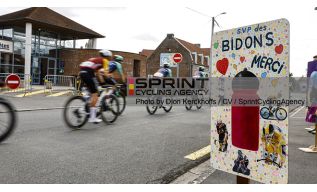
















As has happened on several occasions in recent seasons, this year some controversies are once again mounting regarding the excessive proximity of motorcycles during races and the impact they are having on certain competitions.
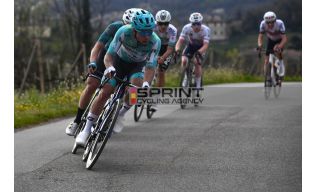
In Belgium, but also in France at Paris-Nice, some riders (promptly followed by some insiders) have highlighted how the distance between the riders and the motorized vehicles carrying photographers, race officials, and television operators has been excessively small and has ended up significantly influencing the outcome of certain actions.
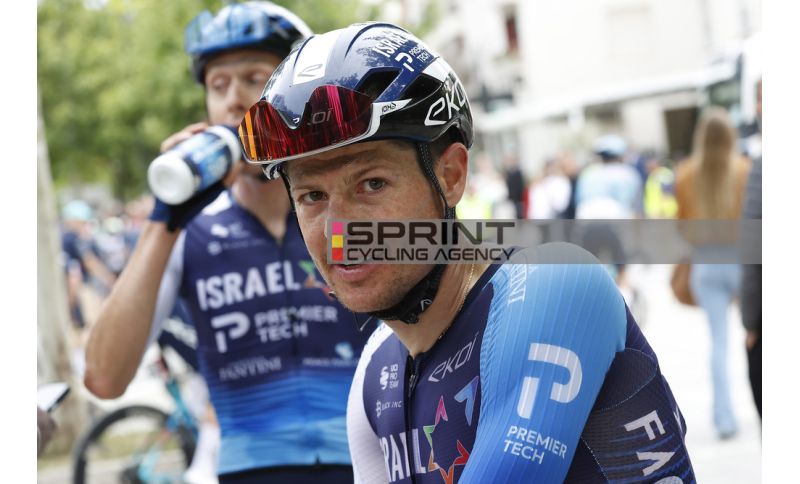
To emphasize the weight that motorcycles are having in today's cycling and to denounce the need to take adequate countermeasures in recent hours, a long-time veteran like Jakob Fuglsang has intervened, telling Feltet that he has not at all downplayed this problem.
"For several years now I have believed that motorcycles are more decisive than anything else. They help determine whether someone who is in a breakaway will be able to maintain their gap or not, depending on how close they are" said the determined forty-one-year-old Dane.
"It's all about attacking first because if you do, you can take the slipstream of the motorcycle that will be in front of you and whoever is behind won't be able to catch you, even if there are four of them working together. Van der Poel probably wouldn't have won the E3 Saxo Classic if he hadn't had a motorcycle in front of him. It was one against four" Fuglsang continued before revealing how some teams have already made abundant use of this strategy in the past.
"I know that Quick-Step also used that tactic when they raced the Belgian classics: you have to attack first (and reach the first motorcycle, editor's note) because then in those races, due to the winding nature of the roads, it's unlikely that the motorcycles will be too far away if they want to provide decent television images".
All of this, clearly, affects the average speeds and velocities expressed by riders today, thus contributing to fueling another much-debated issue: that of reduced safety in the peloton, which according to Fuglsang the UCI is approaching from the wrong perspective.
"I don't think that limiting gear ratios is a solution that can make a difference in reducing speed in the peloton, whereas intervening on the motorcycles would" declared the former Astana and Israel-Premier Tech rider convincingly.
"When whoever is at the front of the group has a motorcycle that's a bit too close, they can go faster than someone in 100th position. There were moments last year at the Tour de France when we got dropped from the back of the group because physically, at the back, we couldn't go any faster. When at a cadence of 120 pedal strokes per minute you can't close a gap, it's because those in front have taken the slipstream of a motorcycle that allows them to go faster".
For Fuglsang, therefore, also in light of what we are witnessing at the start of 2026, the motorcycle issue needs to be treated seriously, involving all parties concerned, starting with the riders themselves.
"I am of the opinion that they have much more weight than people think. I think motorcycles have too much influence and something needs to be done so that they stay further away, perhaps by finding a gentleman's agreement within the peloton, something that probably will never be possible, because riders won't go along with it" concluded realistically the winner of the 2019 Liège-Bastogne-Liège.

 6
6


 6
6


 1
1
2
2
1
1
4
4
12
12
5
5
1
1
2
2
1
1
4
4
12
12
5
5

 Ritratti
 Oscar
Oscar Albi d'Oro

