
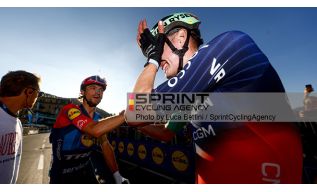
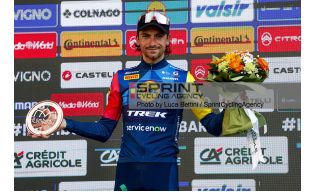
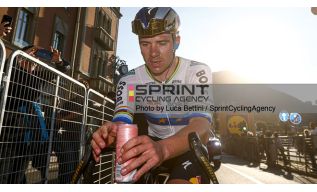


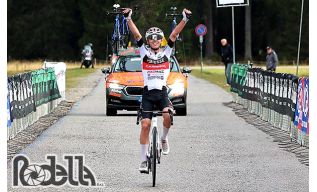

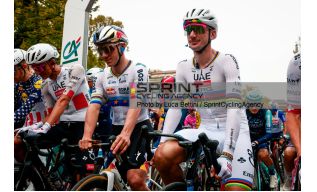
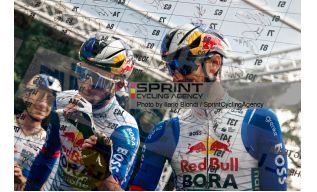
















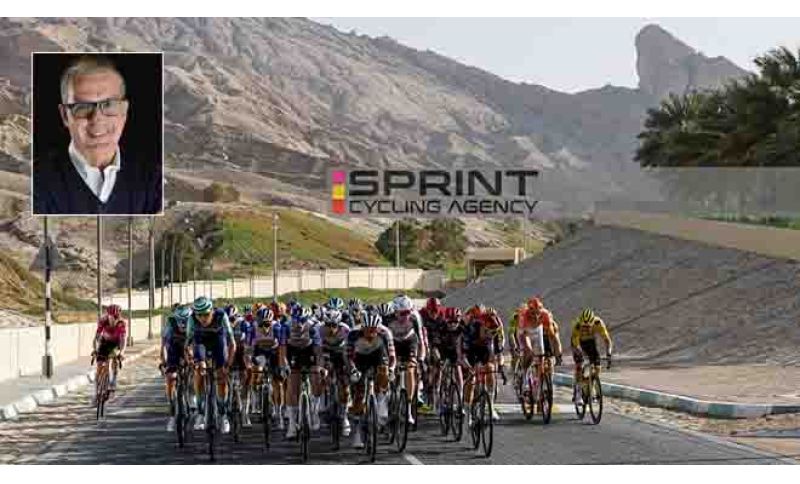
The helmet discourages bicycle use. It is not a priority. For some, it is even a mass distraction tactic: impose the helmet requirement and then do nothing more, avoid addressing the real problem. In recent days and weeks, the Professional Cycling League has taken action with Honorable Roberto Pella presenting a bill to reform the road code, aimed at protecting bicycle users.
A few weeks later, the Italian Cycling Federation, led by Cordiano Dagnoni, responded. Among the many proposals now to be reviewed by the Chamber and Senate, there is the helmet requirement. For the League, it is clearly mandatory for all those who ride bicycles and wear clip-in shoes—essentially mandatory for those engaged in competitive cycling. For the Cycling Federation, the helmet requirement applies to everyone. I believe that both parties, now more than ever, must find a way to communicate and engage in dialogue, for the common good, for the benefit of all those passionate about two wheels.
To wear a helmet, you need to have a head. You need to use it, properly, for our own good. The helmet is absolutely not a disincentive to cycling, but a necessary step toward safety. It is not everything, to be clear, but it is the first step. Exactly like for any car driver. You get in the car, sit down, and before even starting the engine, you fasten your seatbelt. If you have passengers on board, they must do the same. It is not a whim, but a correct and respectful approach toward ourselves and others.
When the decision was made to make helmets mandatory on ski slopes, there was also an outcry. Many predicted a sharp decline in participants: it did not happen. It is simply a matter of habit and education. Those who ride bicycles competitively already wear helmets consistently. Those who use bicycles as an alternative means of transportation will have to accept it and get used to it.
It is true that once a mandatory helmet requirement without age limits is introduced, we are only halfway there. We still have much to do; we must ensure that Pella's Law passes and is perhaps enriched, improved with suggestions from the Cycling Federation, together with lawyer Federico Balconi, the gentleman known as "Zerosbatti", who is a compendium of experience in this field.
The problem of the one-and-a-half-meter distance remains. On one hand, motorists should maintain this safety distance when overtaking cyclists, but it is also true that this new law essentially absolves the motorist if road conditions do not allow it, relieving them of the responsibility to ensure they can complete the maneuver in complete safety.
Numbers often help us understand better: in 2025, 225 cyclists died on the road, while almost 20,000 were injured. Almost all of them were traveling alone on the right edge of the road. Ninety percent of them were wearing helmets. The legislator—as Federico Balconi explained to me—should have drawn inspiration from these very data to write a more effective and protective code for all cyclists, both professional and recreational.
The overtaking regulation (article 148 of the road code) has shown all its shortcomings so far, to the point of being unenforced. To date, there is no record of any motorist being sanctioned or stopped for an overtake that did not respect the one-and-a-half-meter distance, not even following an accident. The bill presented in recent days by Honorable Roberto Pella, with the involvement of some of our most representative champions, such as Francesco Moser and Gianni Bugno, Claudio Chiappucci, Maurizio Fondriest, and Paolo Bettini, is hoped to improve the current situation.
Commendable, in any case, is Pella's legislative proposal that would allow cyclists to ride two abreast, even outside built-up areas, considering that Italy remains one of the last European countries to require cyclists to ride single file. Riding two abreast, as in the rest of Europe, would allow for safer and faster overtaking because the motorist would have better perception of the group of cyclists and would therefore be forced to slow down and wait for ideal spacing conditions before attempting the overtake. Pella's proposal would introduce this text: "outside built-up areas, if the road is sufficiently wide (at least 1.5 meters lateral distance for overtaking), cyclists may proceed side by side up to two and in groups of a maximum of ten people".
Good, but not excellent. The regulation is not entirely clear and would require the cyclist to calculate the road width, undermining the effectiveness of the rule. The maximum number of ten? As Balconi explained to me, it would be more appropriate to require cyclists not to obstruct traffic and to facilitate overtaking under certain conditions, as has been written in other European countries, such as Spain. There, the regulation is written this way and, frankly, it works: "it is not permitted to ride side by side for the vehicles listed in the previous sections, with the exception of bicycles, which may circulate in a column of two, keeping as far as possible to the right edge of the roadway, arranging themselves in single file when visibility is reduced or when traffic may create problems for other road users due to traffic congestion". No limit on the number of cyclists, therefore, but simply an invitation to respect the right side and other road users.
Then there is the question of the frame with an identification number. The principle would be not only just, but sacred, and the question would naturally arise: how to implement the regulation? Am I being defeatist? Absolutely not, and I will explain by appealing to recent history. Following the Road Code reform (Law 177/2024), electric scooters should be equipped with a license plate (adhesive sticker), mandatory liability insurance, and turn indicators (lights), while helmet use is mandatory for all riders, regardless of age. These rules have been in effect since December 14, 2024, but it is as if they do not exist. It is often said: make the law, find the loophole. Here, no subterfuge has been employed. It was sufficient to make the law... and then pretend it does not exist. C'est plus facile.
Editorial from tuttoBICI, February issue

 18
18


 18
18


 2
2
2
2
14
14
25
25
2
2
3
3
1
1
2
2
2
2
14
14
25
25
2
2
3
3
1
1

 Ritratti
 Oscar
Oscar Albi d'Oro

