
















Every rider has at least one story, a wonderful story, to tell. Their own. This is something I have always thought, known, and continue to ask all riders to tell me. Because that's exactly how it is. It doesn't matter if they are (or were) a puncheur or a sprinter, an old glory or a young talent, an amateur or a professional, a road cyclist or a track cyclist, from Tuscan Valle a Ema or Burkinabe from Ouagadougou, there are wonderful stories even of those who have only ridden bicycles to go to school, to the market, or to the factory. Therefore, it doesn't matter if they are (or were) a winner or not, on the bicycle (and thus in cycling), there are no losers, everyone wins, if nothing else, against themselves: one wins against fear, laziness, boredom, one wins against cold or heat, one wins against loneliness, often - and it's a paradox - one wins loneliness with loneliness.
Alessandro Vanotti had (and has, and will have) a wonderful story to tell: his own, obviously. And in "Domestique", the title, "My Life in Service of Champions", the subtitle, written with Federico Biffignandi (Bolis, 200 pages, 16 euros), he recounts his years of racing from one race to another, as an assistant and helper, as a rescuer and companion, as a friend and confidant, as a working-class cyclist on a bicycle, not just legs and lungs, but always head and heart. In his case, with admirable and exemplary cleanliness and loyalty. "There would have been no Nibali," writes Paolo Marabini in the preface, "without a Vanotti".
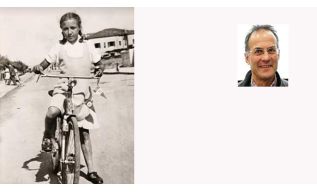
Vanotti (I, half-jokingly but not really, argue that his name is Van Otti and that he is a Flemish emigrant in the Orobie) owes much to his parents, he knows this and passes it on: "My mother was sweetness, education, and respect. She had moved to Marseille as a child because her father had found work there, in the fields. She would wake up at 5 in the morning to work and then go to school. She transmitted this sense of sacrifice, of effort, of earning everything with one's own strength, despite everything. She loved France, the Tour de France, the sunflowers that were never missing in the garden at home. My father, instead, worked as a bricklayer and then as a worker in some companies in Bergamo. I remember him vividly, in every daily gesture. He would get on his Bianchi early in the morning to go to work in Dalmine. Between going and returning, he would do 30 kilometers a day, working 10 hours to guarantee us the bare minimum to live." And so the first bicycle arrived: "At 6 years old, one winter, my father Luigi decided it was time to buy me my first bicycle. We went to Alfredo Piazzalunga, who built bicycles like an artist. We arrived at his place and everything smelled of cycling. The scent of frames, rims, brakes filled the air. Standing next to my father and looking up at Alfredo, I chose my first racing bicycle. Blue."
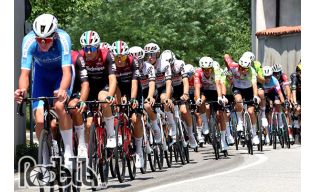
The racing bicycle - many would follow, one after another, even now - would be his faithful companion, a tuned instrument, until becoming a part of himself. At 7 years old, the first team, the first race, the first dream, the first round story. For a career - youth, amateur, professional - extraordinary even if personal victories were rare, but collective ones (cycling lives in this paradox: an individual sport of the team) were many, very many, Giros and Tours, Vueltas and Switzerland, Tirreno-Adriatico and Lombardy. I remember a stage of the Tour de France, I obtained permission to follow it by motorcycle, embracing an experienced pilot and, as my shivers proclaimed, crazy, but even crazier was Vanotti himself. I asked the pilot to follow him: a back-and-forth, between climbs and descents (it was a mountain stage), between giving up and pursuing and finally reaching the finish line within the maximum time, far from the battles for primacy. Vanotti seemed to me valiant, stoic, wonderful in his effort, in his leanness, in his very personal victory.
Here we go from Ukrainian Sergej Gonchar to Michele Scarponi, from Ivan Basso to Danilo Di Luca up to - precisely - Vincenzo Nibali, passing through Armstrong, Wiggins, and Froome. This is the cycling of the early 2000s, more scientific and technological, but also, once again, wonderfully human. And Vanotti's memory (and Biffignandi's research) is truly prodigious: indelible memories and emotions. Until the day when, if not the legs, it is the head that seeks other paths that are not those of racing. And if for Saint Paul the revelation of a new path was on foot, for Vanotti it could only be on pedals. November 2015, from Soncino to Rome, four stages, finally the meeting with the Pope: "Pope Francis, at that moment, I saw him like a great cyclist at the end of his career: tired, with wrinkles, with the marks of an extraordinary life clearly etched on his skin, a cyclist who doesn't want to give up".



 5
5
 5
2
2
5
2
2

 Ritratti
 Oscar
Oscar Albi d'Oro


Se sei giá nostro utente esegui il login altrimenti registrati.