
















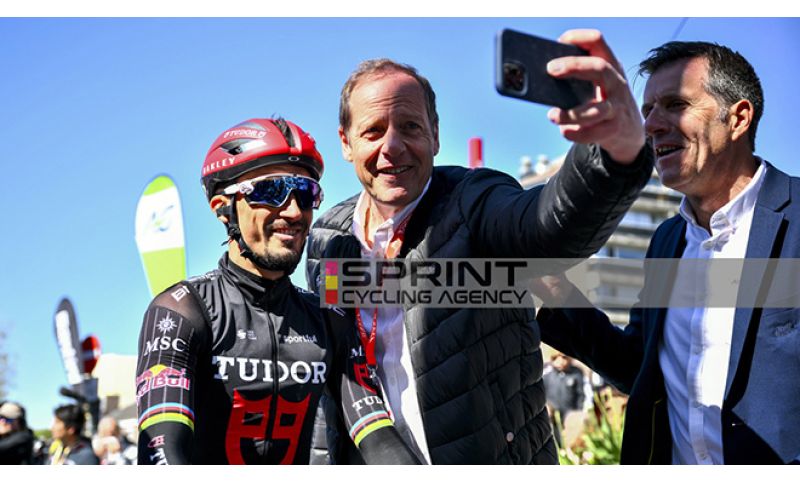
The time trial issue at the Tour de France is always a hot topic: we discussed it in the September issue of tuttoBICI and then on these pages. Christian Prudhomme, the head of the Tour de France, answered many questions from the press yesterday, and among them one concerned the two time trial stages of the next edition, seen by some as a possible advantage for Remco Evenepoel.
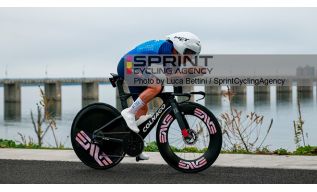
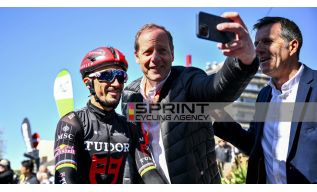
Seventy-one kilometers against the clock, it's the highest total since 2012. The choice of the 2027 Tour de France route brings back a central question: were the two time trials designed with Remco Evenepoel in mind? Christian Prudhomme, the race director, answered without hesitation: «The Tour is not built by looking at the characteristics of a single athlete, but at those of different types of riders».
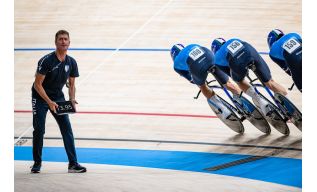
History provides many examples, and Prudhomme cited some before returning to the heart of the question. «In recent years the route had offered more opportunities for attackers, the so-called breakaway specialists, but this time it will be different». In this edition, the organizers wanted to also highlight the great time trial specialists. Evenepoel, European, world and Olympic champion in the discipline, is the most obvious name, but not the only one: Prudhomme also mentioned Paul Seixas and recalled that Tadej Pogacar is capable of excelling on any terrain.
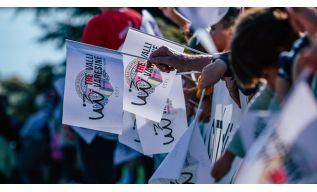
The route features two individual time trials: 38.3 kilometers of flat terrain in the Loire Valley castles time trial and 33 kilometers in Toulouse. The second stage, along the Garonne, hides a surprise about two-thirds through the course: a climb of 800 meters with an average gradient exceeding 12% and initial ramps reaching 20%. «It's a detail that recalls the duel between climber Federico Bahamontes and time trial specialist Jacques Anquetil: to each their own terrain, with the possibility of gaining time and then recovering».
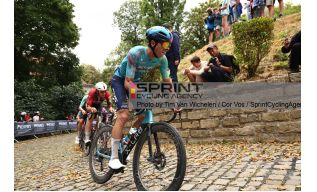
But Prudhomme doesn't expect the route alone to reshape the balance of power. Experience with cobblestones and gravel roads teaches that when racing becomes more selective, champions tend to emerge even more. On those roads, he recalls, we saw a three-way breakaway with Pogacar, Jonas Vingegaard and Evenepoel. «A few years ago we included cobblestone sections. And what happened? We saw a three-way breakaway. Essentially, when the route becomes more selective or new elements are introduced, the best riders emerge even more. It could happen again: perhaps it will be Tadej Pogacar himself who wins both time trials at the next Tour de France. Who can say?».
So the question is not just who might benefit from the kilometers against the clock. It's rather: will the two time trials be enough to spark a more open competition before the mountains? Prudhomme doesn't rule out that Pogacar could win both; but the 2027 design also offers specialists the opportunity to test the great climbers on their own terrain. And, after years in which the same names have dominated on different routes, it's precisely this balance that makes the challenge more intriguing.

 4


 4


 4
4

 Ritratti
 Oscar
 Albi d'Oro


