
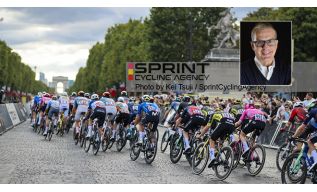
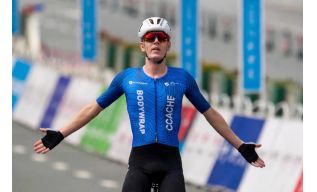













Today they go fast, much faster than before, and they race fairer Tours. The cycling of Tadej Pogacar, Remco Evenepoel, Jonas Vingegaard and Paul Seixas is clearly more "democratic". Numbers, as always, help us with the analysis.
In the days of Miguel Indurain, the great time trialist of the Nineties, who battled our Bugno and Chiappucci, the Tours were designed in his image and likeness. Jean-Marie Leblanc, the great patron of the French race, would tailor courses for him that could showcase his time trial abilities. An example? Let's take the time trial kilometers: in 1991, Indurain's first Tour victory, there were a whopping 171 kilometers. In '92 it rises to 200, in '93 it drops slightly: 194. In '94 a mere 184 kilometers and in '95 a paltry 174 kilometers.
Indurain, in those years, built his successes in time trials, being by far the strongest among Grand Tour contenders. What he gained in time trials, he then managed in the mountains. In recent years the music has changed radically. Despite talk of Slovenian dictatorship - Pogacar goes strong on all terrain and has no weak points - we are facing the democratization of cycling: a bit of everything, to bring out talent.
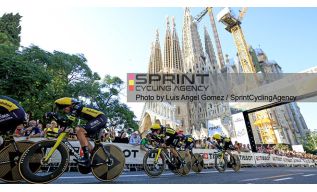
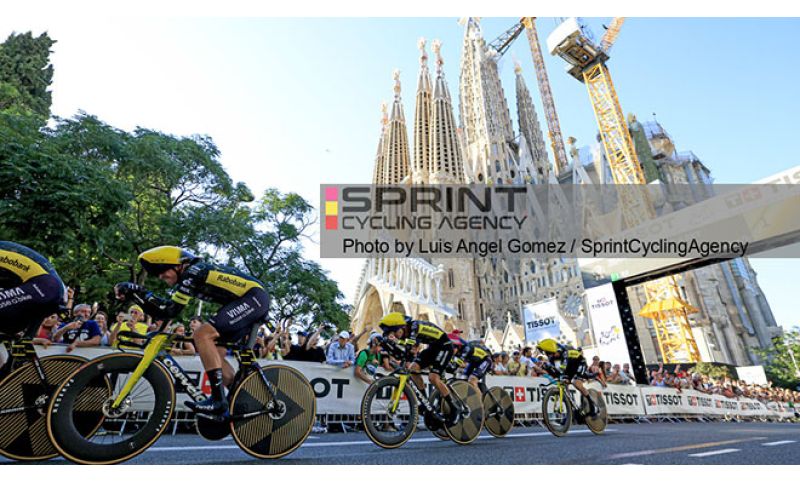
Time trial kilometers? Compared to Indurain's era, simply ridiculous, just look at those faced in the last seven years, those that saw Pogacar's five victories and his two second-place finishes behind Vingegaard: 36 kilometers in 2020, 58 in 2021, 54 in 2022, 22 in 2023, 59 in 2024, 44 in 2025 and 45.7 this year, by the way with the first 19 tackled in a team time trial (which had been missing from the Grande Boucle's design since 2019).
Nothing compared to Indurain's years, who truly benefited from tailor-made courses that were decidedly penalizing for Bugno and Chiappucci, who would probably win some Tours today. And the same goes for Remco Evenepoel, an exceptional time trialist and second in the standings behind Pogacar: if they gave him a Tour with 200 km of time trials, he would very likely make Tadej tremble too.
That said, for Jacques Anquetil, the first man in history to win the Tour de France five times, we can speak of times still linked to the epic of cycling, but from Merckx onwards we can consider ourselves to have entered the era of modern cycling and therefore it is right that the examination includes the exploits of the Cannibal at the Grande Boucle.
Because in Merckx's years time trials certainly did not lack. In fact, in a single edition the organizers would put in five, six, four and one of these was always a team time trial. In 1969, his first victory, he started with 90 km of time trials and reached 139 in 1971, but in 1972 he only raced 66.
Much more "monstrous" the time trial kilometers in the Hinault Era. In his first Tour victory, the year of Our Lord 1978, there were 270 km of time trials. The maximum was reached the following year, when they rose to 342 km. In any case, just look at the tables we've prepared and even to the naked eye you notice that today's cycling is very different.
The Lance Armstrong years? Even though they were rightfully erased, they were editions that averaged 140 km per edition.
It is evident, therefore, that the patrons of the Grand Tours have the power to shape the races. The former professional cyclist and then journalist Jean-Marie Leblanc tamed the Grande Boucle for years. Then came Christian Prudhomme, another journalist (the Giro was conceived by a journalist, Tullio Morgagni; the Tour by journalist Henri Desgrange: and the Vuelta? Always a journalist, Juan Pujol: this is history, editor's note), who harmonized the courses, putting a bit of everything, to favor no one but to exalt the talent of complete riders like Tadej Pogacar.

 3
3


 3
3


 4
4
3
3
4
4
7
7
4
4
3
3
4
4
7
7

 Ritratti
 Oscar
Oscar Albi d'Oro

