
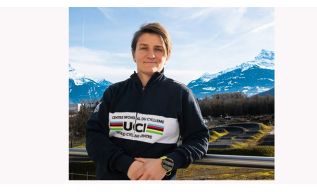
















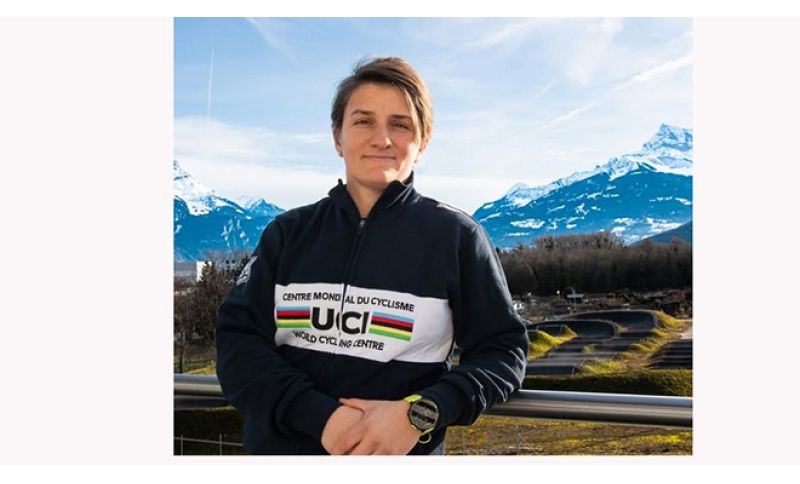

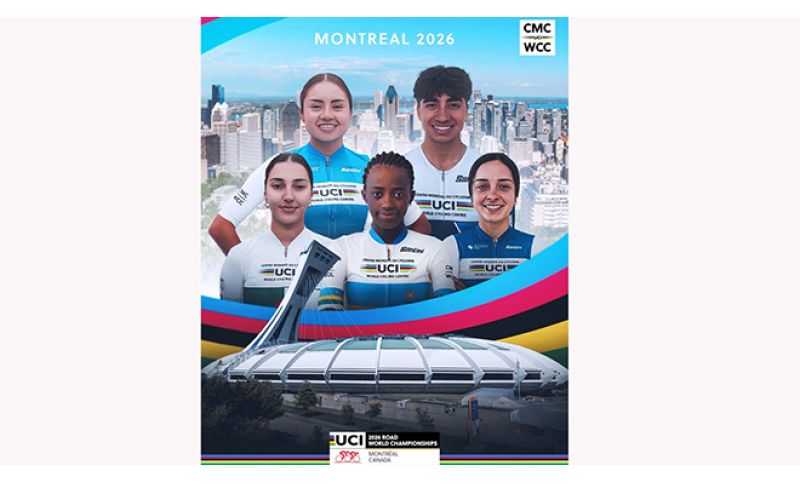
"I'm living an incredible personal experience, enriching to the nth degree because of the mix of cultures you come into contact with. I was in the group as an athlete and I know what it means to find yourself in an international context, but here at the World Cycling Center you get to know very peculiar personal backgrounds, even in their tragedy, I think of the Afghan girl currently competing at the Asian Games who escaped Taliban violence" recounts Valentina Scandolara, who has lived an intense racing season at the helm of the WCC support vehicle, also participating in races on the Italian calendar.
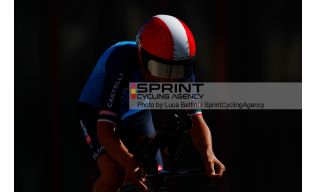
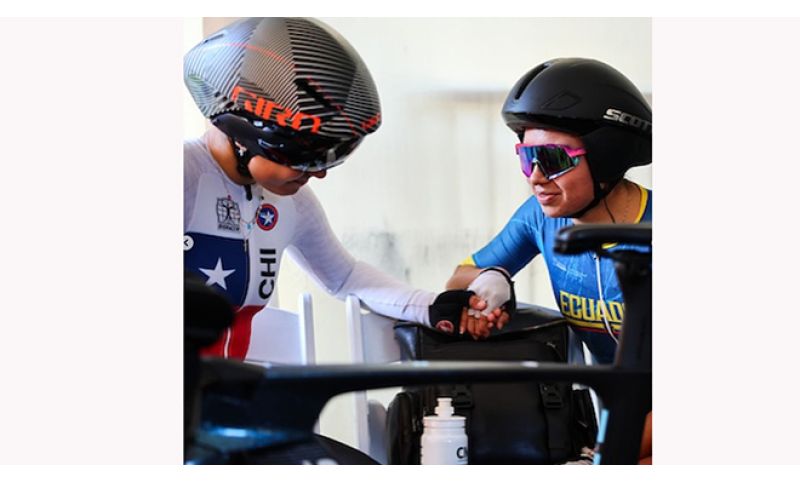
Now there's Montreal 2026. Canada, a country with a marked sensitivity for welcoming (which rhymes with new citizenship), observes with interest the activity of the UCI World Cycling Center, competing yesterday among the 15 teams in the Team Relay. Two refugee athletes were racing, both returning from the Paris Olympic Games, and with them the multinational team was composed of Bolivian Mario Sanchez, Algerian Nesrine Houili, Rwandan Jazilla Mwamikazi, and Honduran cyclist Natalie Revelo.
While the mix of nations may be intriguing, there is something else—deeper and more articulated—in the mission of this UCI project, aimed—not just recently—at developing cycling on every continent. The 22-year-old Rwandan athlete, who arrived on European roads in 2024, can speak to this.
She experienced the epochal world championship in Kigali as a home competitor, yet the very world championship at the equator emphasized above all the intercontinental dimension of cycling. The focus, starting from the African case, rests on actions to promote the development of two-wheeled racing, from the awareness of how much they can find new ground without easily sidestepping the problem of the gap created by a low number of races. Adding a socio-economic context that can make a bike a rare commodity. In short, much also rests on values of universality, of creating premises in the name of equal opportunities.
In the thick succession of athletes to follow, Scandolara adds: "indeed these are full days, because in addition to direct participation in the Team Relay from Sunday we have provided support to refugee riders as well as to other teams that need mechanical assistance. Personally I followed an elite Kenyan competitor and then Wais in the elite time trial, then it was the turn of under-23 Jazilla Mwamikazi, whom I coach, alongside the Rwandan coach. And then Aziz Dellai, Tunisian. All representatives of worlds proudly on the cycling map".
Scandolara outlines the continental team's season: "A rich calendar honored with special attention to the world championships. The objective was and remains to teach, to accompany our athletes in their dream, perhaps very remote, of finding a professional team, knowing that only a minimal percentage can achieve that ambition. The project provides know-how and equipment, providing three road bikes and one time trial bike for the cyclists hosted in Aigle".
In short, while paying attention to the stopwatch results, broader horizons are not lost sight of: "in Monday's race I followed the Beninese Vignonfondo and Mwamikazi, while among the Elite the Mauritian Lagesse finished with an excellent 26th place overall".
Scandolara brings to mind the dramatic story of Anna, a 22-year-old Ukrainian based at the Fiorenzuola velodrome, who returned to her own country to race the national track championships: "the anti-missile alarm would sound and she would race in shelters, then resume the omnium race. And it's a stark contrast of situations that cannot leave anyone indifferent".
So, Team Relay archived, for the record with the World Cycling Center's placement, whose staff will now be called upon to work with the Refugee Cycling Team riders. On Sunday, the world championship will see Iranian Mohammad Ganjkhanlou (multiple Asian champion), whose recent arrival in England goes hand in hand with the explosion of conflict in the Gulf. The bicycle alone cannot be an antidote to suffering and distance from loved ones, yet Mohammad and 27-year-old Amir Arsalan Ansari, who fled Afghanistan, are witnesses to a path of rebirth with multiple geographic trajectories, one arriving in Great Britain and the other in Sweden.
It was June 29, 2025 when the Elite road cycling Swedish championship was held from Uppsala to Uppsala. Amir, born in Iran but raised in Afghanistan, finished fourth. The basic condition for that nearly-podium finish was Ansari's participation in the support school program launched by the International Olympic Committee: "when the form I had filled out received a positive response, the world, my world, changed completely. I was provided with housing and food, as well as enrollment in the scholarship for refugee athletes, which reopened the door of hope". After Paris, his horizon is called Los Angeles, inspired by what has become a mantra: "cycling saved my life".

 2
2


 2
2


 2
2
4
4
1
1
4
4
2
2
4
4
1
1
4
4

 Ritratti
 Oscar
Oscar Albi d'Oro

