























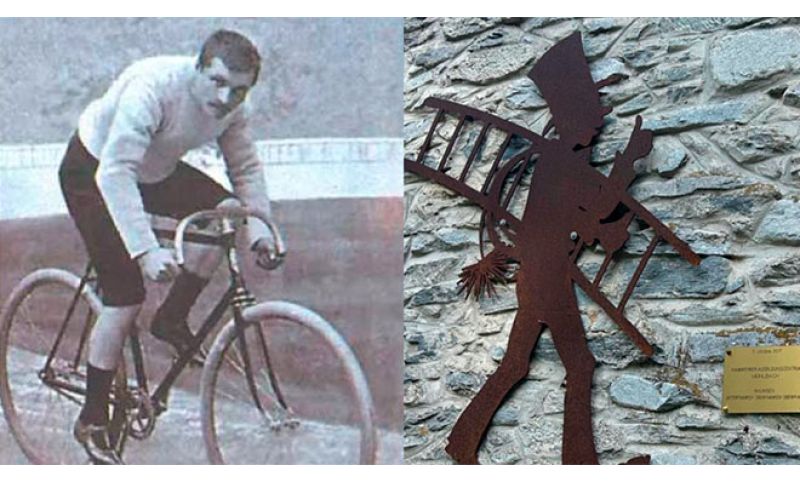
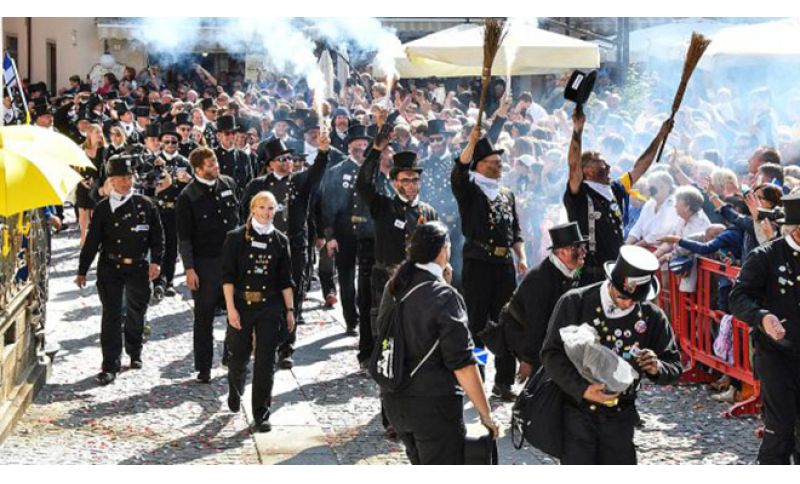
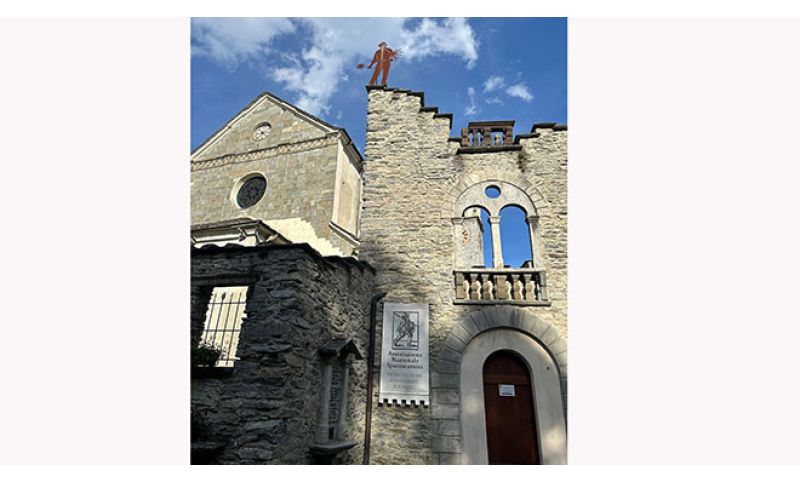
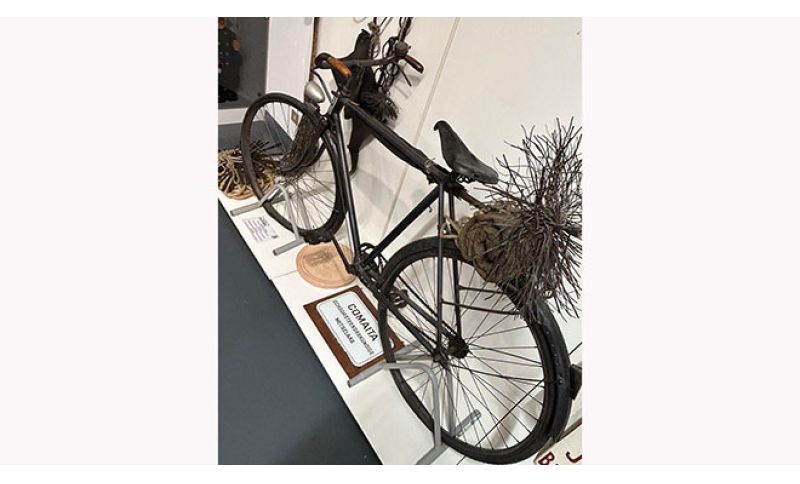
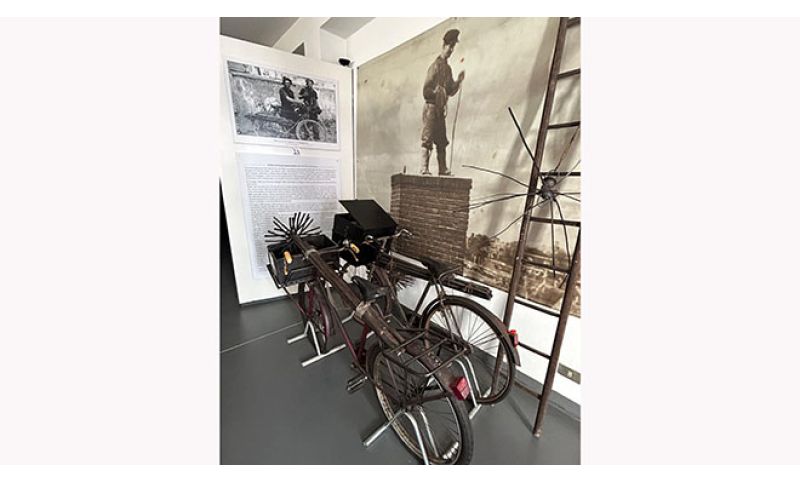
They arrived as they do every year by the thousands, particularly from Northern Europe but also from further afield. They invaded Santa Maria Maggiore and the entire Vigezzo Valley with their joy, their enthusiasm, their work uniforms, their desire to reunite and celebrate. Yet it is also a desire to remember what was the true history of chimney sweeps, the cold and hunger experienced by those children who were forced to leave their families to face grueling work. And among the many stories that intertwine during these days of the International Chimney Sweeps Gathering, there is one inextricably linked to cycling and it is no ordinary story, because its protagonist is Maurice Garin, the first winner of the Tour de France.
Born in 1871 in a poor stone house in Chez-les-Garin, a hamlet of Arvier in the Aosta Valley, Maurice was the fourth of nine children of Maurice Clement and Maria Teresa. At 14 years old, his father let him leave—in exchange for a wheel of cheese—as an assistant to a chimney sweep. From Savoy, Maurice moved to Reims, to Fontaine-l'Evêque, to Charleroi, to Maubeuge. And it was precisely here that he bought his first bicycle and where in 1902 he took French citizenship.
He became passionate about racing, joining that group of "madmen"—because that's what people called them—and in 1903, on the threshold of his 33rd birthday, he lined up at the start of the Tour de France. His wife made him promise that he would participate in only that race, win or lose, and the master chimney sweep kept his promise. He won and never raced again.
Four hundred riders departed on that July 7th, 1903, from Villeneuve-Saint-Georges: almost all wore wool pants and caps, but Garin had a full suit tailored for himself that would later become fashionable. Tied to his chest were the inevitable spare inner tubes, and on the handlebars a bag with two bottles of mineral water.
Garin attacks from the start, dodging cars and farm carts, risking—like everyone else—being beaten with sticks by frightened villagers intimidated by these madmen who scare the chickens. Maurice arrives first in Lyon in 17 hours and 35 minutes; after the finish line he faints and is carried to the hotel.
There is a week of rest before the second stage and Garin disappears, retiring to a small village in the Rhône to fish. When he reappears, he discovers they had already given him up for retired, so much so that his manager had fallen ill from the disappointment.
The race is a flowering of incredible episodes: at Montélimar he arrives first at the checkpoint but no pen can be found for him to sign with; meanwhile several rivals catch up until Maurice, exasperated, dips his finger in the inkwell and signs without a pen just to get going again. At Marseille he hits a goose, falls, and before he can get back up he takes a beating from the farmers.
Then on to Toulouse, Bordeaux, Nantes and finally Paris, with an enormous advantage (2 hours and 59 minutes over Lucien Pothier, second) over his rivals: at Parc des Princes he is welcomed by an enthusiastic crowd and a prize of 6,000 francs, a true fortune at the time.
At Lens, 50 years later, with graying hair but with an always attentive and sharp gaze, the old chimney sweep would recall: "That's how I won the first Tour de France. And as I had promised my wife, I never raced again".
But Maurice never stopped being a chimney sweep at heart, never forgot the cold winters when he traveled around France offering his services in exchange for lodging on frozen straw and sometimes not even a crust of bread.
It was a grueling life, that of those children straddling the nineteenth and twentieth centuries: today things have changed but chimney sweeps do not forget their ancestors, their stories, nor that strange champion who, having left a small village in the Aosta Valley to face a difficult life, was able to excel and become the first winner of the Tour de France.



 1
1
 1
1


 Ritratti
 Oscar
Oscar Albi d'Oro


Se sei giá nostro utente esegui il login altrimenti registrati.