

















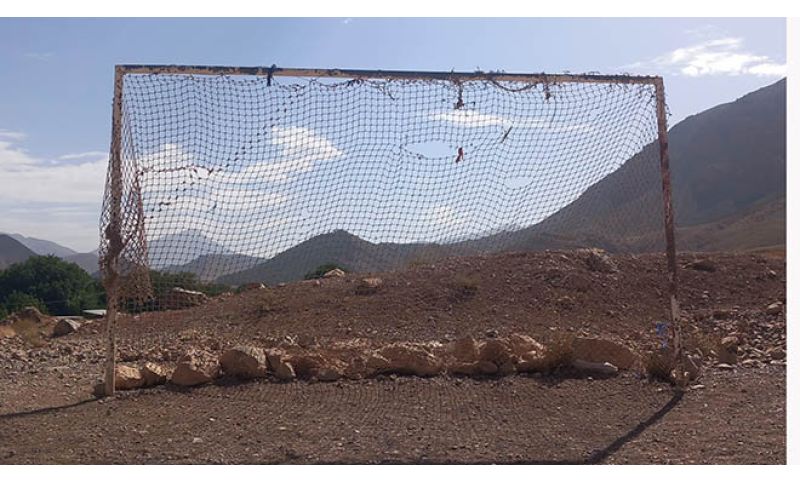
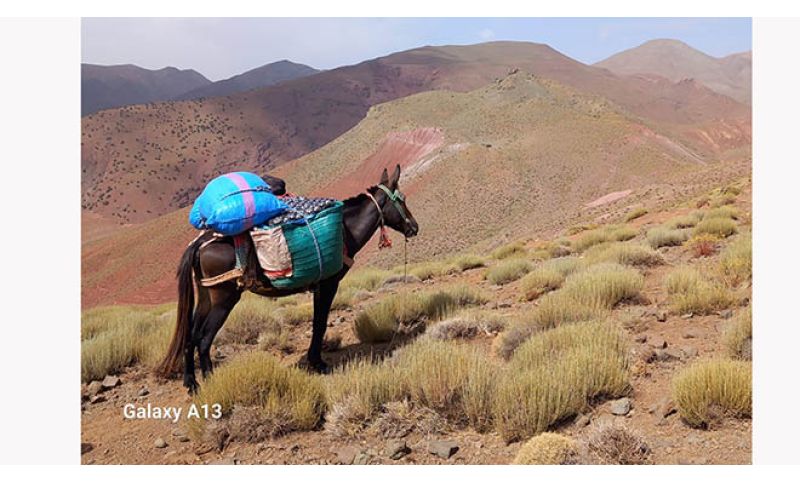
Morocco, High Atlas, M'Goun. The peak beyond 4,000 meters, the road climbs slowly and steadily through mineral and volcanic cathedrals and, as you ascend, life – population and vegetation, even oxygen – seems to fade away. It takes days of walking to reach the summit and fill yourself with nothing. Up there, solitude becomes an inescapable, inseparable, invasive companion.
Trekking. On foot. A guide who knows the trails, rarely marked. And, if desired, mules and muleteers to carry backpacks, transport tents, set up camps. Technical equipment, essential clothing, needs reduced to the bare minimum. Stripping down, depriving yourself, eliminating the unnecessary costs no effort. What weighs you down, what slows you down, what clutters, what hinders – that is the superfluous.
As long as the valley floors are crossed by rivers, streams, brooks, and rivulets, a strip of shrubs and plants remains, which farmers cultivate without wasting a single centimeter. Figs, apple trees, walnuts, almonds, corn, tomatoes. But where the water from these sources doesn't reach, then only cliffs, boulders, and stones reign. Rolling stones among mosses and lichens, tufts of succulent plants and specks of animal droppings. Sheep, goats. Mules, donkeys. One dromedary. Rare huts and shelters.
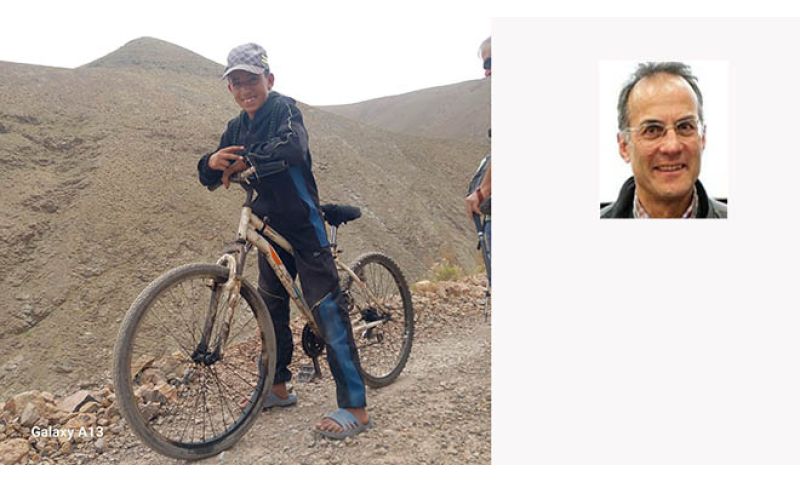
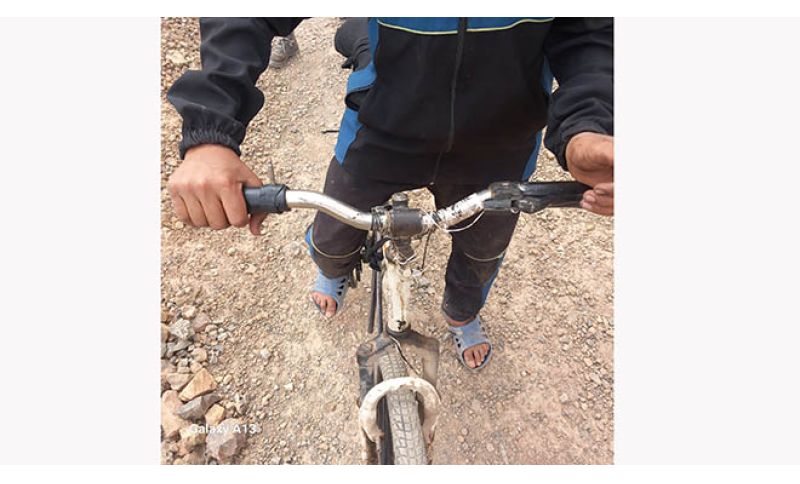
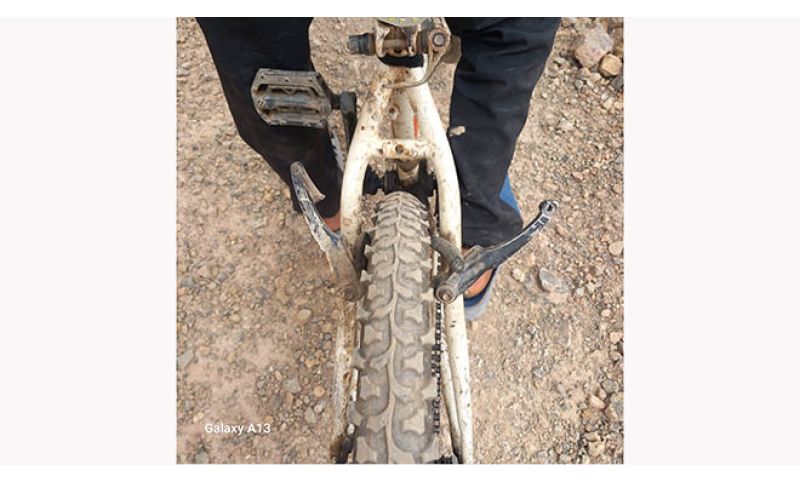
Thus, last August, among cathedrals of limestone and basaltic layers, resilient shrubs and fierce thistles, on a rough and stony dirt road, in the apparent nothingness of an infernal paradise that seems like purgatory or limbo, behold, suddenly, a boy on a bicycle. The boy appears to be about ten years old, the bicycle three or four times older. The boy wears worn, faded clothes. The bicycle, a mountain bike, seems to have survived a war or an earthquake. But the boy and the bicycle, together, up there, shine with life. Luminous. Beautiful.
The distance in time and space and the difference in age and language are erased by smiles. The boy understands that our words are ones of amazement and compliments, and so he shows us the brakes, which don't exist, reveals the expedient, a makeshift shoe pressed directly against the rear tire. We admire him as he launches downhill, one with that skeletal metal frame, shaken by rocks and jumps. Happiness, if it exists, lies in that display of skill, lies in that cart track in the desert, lies in that wind of freedom, lies in that freedom of wind.

 1
1


 1
1




 Ritratti
 Oscar
Oscar Albi d'Oro

