




















We owe an apology to African cycling, where "things are happening," as Nanni Moretti would say. Because at the conclusion of the Tour de France Femmes, an authoritative announcement almost went unnoticed—or took a back seat—made by Ashleigh Moolman Pasio ("in 2028 our concrete ambition is to field Team Amani, composed entirely of African female cyclists, at the start of the world's greatest stage race"), as she prepares to conclude her important professional career to become general manager of the team entrusted with a fascinating, certainly immense task: but after the world championships in Kigali 2025, weren't we talking about the challenge of creating a lasting legacy on a continental scale?
Yes. Unless Rwanda and the related stories of passion for two wheels, from Algiers to Cape Town, were simply a caricature of globalism, not the universe in which cycling finds its promised land, between the desire to emerge on a world scale and the overcoming of geographical barriers (sidereal distances between countries and a calendar to be enriched first and foremost with blessed 2.2 races), equal opportunities (shall we talk about how much those certain bicycles weigh in the boxes at world championships?), good practices to be disseminated (training techniques and nutrition). Throughout Africa there is a groundswell of interest and primordial passion for cycling that is not channeled by worthy regulatory or promotional actions.
Amani embraces the watchword "planning," doing so in this case at the women's level, without losing sight of the focus on growth not of a single team but of an entire context, because the continuity of a project, symbolic as it may be, resides in the enthusiasm of cycling schools, in fruitful scouting symbolized by the rise of a very young Ethiopian like rising star Tsige Kiros, who joined Canyon Sram Generation after an impressive seventh place at the junior world championships.
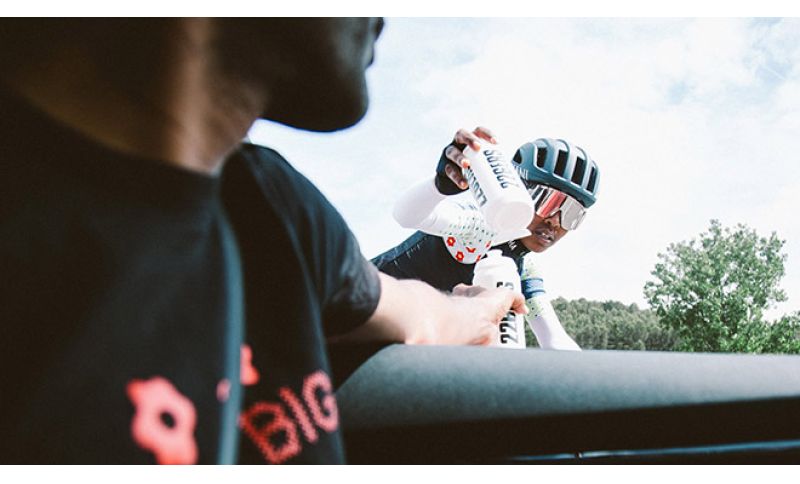
"A native of Tigray like me, she who is only 19 years old went in a few months from national races to international competitions faced with the UCI's World Cycling Center, a structure that today as yesterday plays a strong driving role in discovering African talent," recounts former professional Tgsabu Grmay, a long stint in the World Tour, now at the helm of Amani's support vehicle: "I know you'll ask me if one day an African rider can win the men's or women's Tour. And I answer yes, aware of the importance of racing in Europe to raise the competitive level of our boys and girls. I saw it firsthand on the slopes of the Tourmalet when at the Cic Tour Féminin de Pyrénées the Ethiopian national champion performed excellently. Team Amani can manage to participate in the Tour de France Femmes, that's what the beautiful immersive experience meant that this year in the caravan was lived by Rwandan Xaverin Nirere and Ugandan Mary Aleper".
Moreover, sharing with his future General Manager the experience in the group. "It's time to make others' cycling dreams come true, after seeing mine come true," says Ashleigh Moolman Pasio, South African who like Grmay lives in Catalonia. In the summer of 2026, in short, it might have seemed like déjà-vu the stage win of Mauritian Kim Le Court, while on the Eritrean side—beyond the school leader Biniam Girmay—Natnael Tesfatsion managed to stir the spirits of his countrymen (with prime-time news coverage), winning in Spain at the Circuito de Getxo. "Little Natalino," friend of Italy and like many others a product of the academy called WCC: bring on the next ones, with trajectories only partly imaginable. What will happen? At most, a new Bini is born.



 1
1
 1
2
2
3
3
2
2
1
2
2
3
3
2
2

 Ritratti
 Oscar
Oscar Albi d'Oro


Se sei giá nostro utente esegui il login altrimenti registrati.