
















The detailed and comprehensive account published yesterday by Francesca Monzone on this site regarding the Orcières-Merlette stage of the 1971 Tour de France, the year in which the Belgian champion skipped the Giro d'Italia won by Swedish rider Gösta Pettersson, brings to mind, without any statistical pretensions, other "revenge" moves orchestrated by the great Belgian also at the Giro d'Italia.
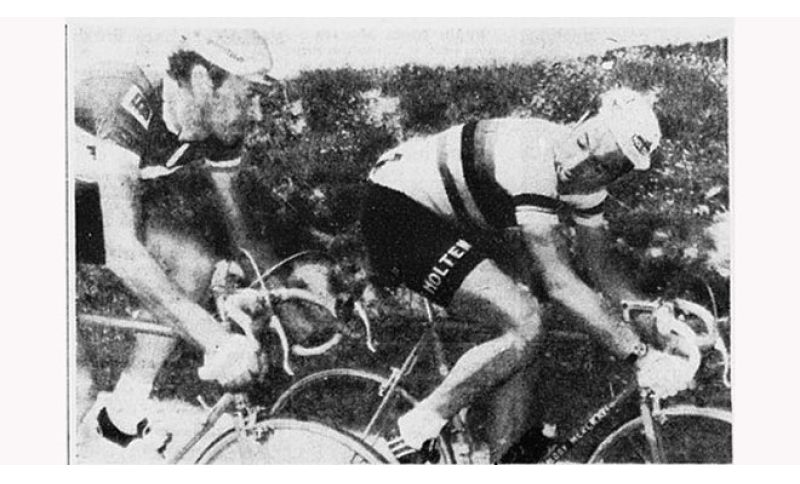
Notably, in chronological order, the Cosenza-Catanzaro stage of the 1972 Giro, when the day after the numerous pinpricks inflicted by Spanish climber José Manuel Fuente, perhaps with questionable tactical timing on his opponents, Merckx attacked immediately after the start, followed by the strong time-trialist Gösta Pettersson, winner of the 1971 Giro, guided by the sagacity of Alfredo Martini who had noticed the Belgian's prolonged absence from the start line, arriving just in time to sign the start sheet after having completed an intense (intentional repetition) warm-up ride, up and down around Cosenza, arranged in agreement with his sports director, the shrewd Monza native Giorgio Albani.
Gösta Pettersson took the stage victory, while Eddy Merckx, in second place, seized the pink jersey from Fuente and held it until the final finish in Milan with the small Spaniard in second place. Third place of the day - at 4'322" - went to Spanish rider Miguel María Lasa, Fuente's teammate at Kas. The two staged a sort of Trofeo Baracchi along the 151 km through the tormented roads of Calabria.
Giro d'Italia 1974, 20th stage, from Pordenone to Tre Cime di Lavaredo won by Fuente but with everyone's attention focused on the thrilling climbing duel between the very young and highly promising Gian Battista Baronchelli and an Eddy Merckx who suffered tremendously on the steep slopes in front of the majestic Tre Cime – a climb he knew well – but managed to preserve the 12" that allowed him to win his fifth Giro rosa.
The next day saw the Misurina-Bassano del Grappa stage scheduled. Merckx's pride led him to launch an attack, a numerous breakaway that included all the big names in the general classification, which was literally flown and brought the race leaders to arrive more than an hour and a half ahead of the highest average speed predicted by the official schedule.
A circumstance that created emergency situations especially along the final part of the route for law enforcement, regular traffic, and the race itself, creating critical issues with normal traffic flow and surprising even the finish line services on the cement track of the Mercante velodrome. At that time, mobile phones were not yet in common use and due to contingent circumstances, even Radiocorsa, managed very artisanally, had "gaps" long and deep in communications. In fact, the following year the service was entrusted to the ARI (Italian Radio Amateurs Association) of the Milan section, with a then young doctor, namely Enrico Fagnani, who can be said to have been responsible for this indispensable and most important service ever since.
Naturally, one might say, it was Eddy Merckx who won the track sprint ahead of Francesco Moser and Felice Gimondi.



 1
1
 1
1
1
1
1
1
1
1
1
1

 Ritratti
 Oscar
Oscar Albi d'Oro


Se sei giá nostro utente esegui il login altrimenti registrati.