



















Eight years after the tragic death of Michael Goolaerts during Paris-Roubaix 2018, French magistrates have decided to definitively close the investigation opened to shed light on the causes of the young Belgian cyclist's death. The investigation failed to establish any criminal offense or demonstrate a connection between the cyclist's death and any possible use of doping substances.
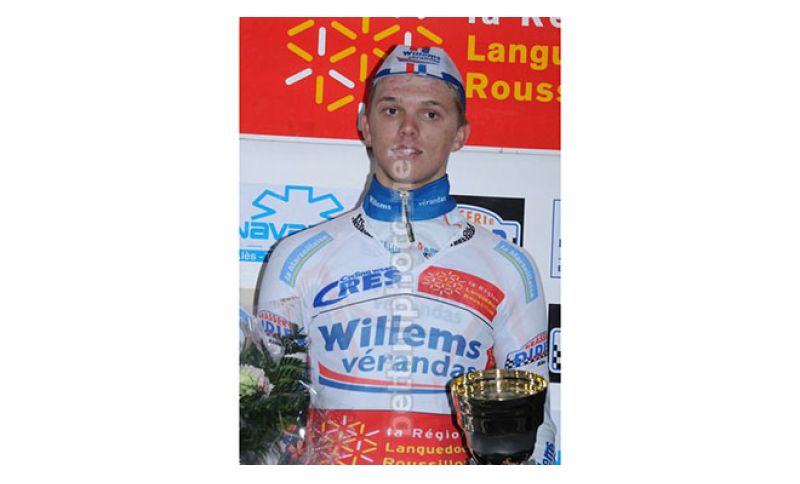
A conclusion that brings an end to one of the most painful cases experienced by modern cycling, while leaving unchanged the memory of that tragic Sunday, April 8, 2018. Michael Goolaerts was only 23 years old: the Belgian cyclist from Veranda's Willems-Crelan was competing in his first Paris-Roubaix, sharing the team with a young Wout Van Aert, when the race suddenly turned into tragedy.
In the second cobblestone sector, near Viesly, Goolaerts suddenly lost control of his bicycle and fell violently to the ground. Emergency services intervened immediately, finding the cyclist already in cardiorespiratory arrest. After lengthy resuscitation attempts on site, the Belgian was rushed to the hospital, where he died at 22:40 that same evening.
A sudden death that immediately prompted the Cambrai Public Prosecutor's Office to open an investigation to clarify the circumstances of the death. The investigation lasted much longer than expected. Over the years, several magistrates succeeded one another, inevitably slowing down the proceedings and leaving the family without definitive answers for a long time.
Aware of the excessive duration of the investigation, the Cambrai prosecutor, Ingrid Görgen, decided in early July to definitively close the case file. "The procedure aimed to clarify the circumstances of the death of a young athlete without presupposing the existence of a criminal offense - the magistrate explained - there are no elements suggesting the commission of any criminal offense, such as possible involuntary manslaughter".
The prosecution further clarified that it was not possible to demonstrate that any substance played a causal role in the cyclist's death. Over the eight years of investigation, investigators examined every possible lead.
The French Central Office for Environmental Crime and Public Health Offenses (OCLAESP) coordinated numerous verifications, in the initial belief that the case could potentially uncover doping practices in professional cycling. This hypothesis, however, did not materialize due to lack of evidence.
In addition to a complete autopsy of the cyclist, thorough toxicological tests were conducted, searches were carried out at the team's headquarters and the Flemish anti-doping agency, verifications were made by the UCI regarding any therapeutic authorizations. There were also interrogations of teammates, including Wout Van Aert, who shared a room with Goolaerts during the race; interviews with the team doctor, the medical director, and other staff members.
The objective was to precisely reconstruct the young Belgian's final hours and rule out any external responsibility. Laboratory analyses had revealed the presence of a significant amount of caffeine, as well as traces of Ventolin and Valium found in the cyclist's hair.
However, as early as 2020, prosecutor Rémi Schwartz had clarified that such concentrations were "far below significant levels" and that no prohibited substances had been detected.
Subsequent verifications confirmed this conclusion. Experts also examined some statistical anomalies that emerged in the athlete's biological passport data, initially hypothesizing the possibility of previous doping practices. However, the medical and investigative inquiries conducted over the years did not allow confirmation of such suspicions or establish any connection with the cyclist's death. According to the conclusions of forensic medical examinations, Michael Goolaerts suffered from cardiomegaly, a pre-existing heart condition.
Investigators believed that the young man had suffered a cardiorespiratory arrest while still in the saddle, losing control of his bicycle before hitting an embankment. The fall would therefore have been the consequence of the medical emergency and not its cause.
For this reason, after eight years of investigation, French magistrates concluded that the most plausible hypothesis is that of acute decompensation related to the heart condition from which the cyclist suffered, ruling out third-party responsibility and any evidence of doping practices.
The death of Michael Goolaerts remains one of the most painful pages in the recent history of cycling. The dismissal of the investigation does not erase the pain of a life cut short at just 23 years old, but finally provides a judicial conclusion to a matter that for too long remained without a definitive answer. The investigation ruled out criminal liability and found no elements capable of demonstrating doping practices, indicating as the most probable cause of death a serious pre-existing heart condition, which manifested itself tragically during his first and only Paris-Roubaix.

 2
2


 2
2



 Ritratti
 Oscar
Oscar Albi d'Oro

