














From "Vingegaard, the darkest day" to "Out of the game", or again: "Anti-doping control and crash: Vingegaard's dark day". The small town of Amancy, 23 km from the sharp finish line of Plateau de Solaison, has unwillingly entered the history of this Tour, dominated far and wide by Pogacar. It was thought that only the final climb would speak, instead the Danish rider's exit was matched by anti-doping controls in the middle of the night.
Ciro Scognamiglio on Gazzetta: "The culmination of a very dark day, which began with waking up at 2 in the morning for a surprise anti-doping control that inevitably brought with it a trail of controversy".
It is Marco Bonarrigo for the Corriere who bitterly emphasizes, regarding the crash episode, how jarring it is that "Ten thousand kilometers trained and eight thousand raced in the last seven months", and also "the anti-doping vampires who wake you up at two in the morning". Because, as Cosimo Cito reminds us on Repubblica: "Races are won in bed. Sleep is fundamental at the Tour for the general classification riders, called every day for three weeks to stay ahead, alert, lucid, brilliant". Instead, in the middle of the night, the controllers came knocking.
Pier Augusto Stagi on Il Giornale recalls: "If the morning shows the day, Jonas Vingegaard must have had his chain come off. Surprise anti-doping controls at 2 in the morning (the race is in France and here the Sports Code allows it: from 11 pm to 5 in the morning. Especially when there are "serious and concordant suspicions against the athlete that he has violated or is about to violate anti-doping provisions", editor's note)". The sincere regret for what happened to Vingegaard is summarized this way by Alexandre Roos on L'Equipe: "it was heartbreaking to see the Dane get into the ambulance: one of the greatest fighters of the 'Grande Boucle', a valiant, distinguished and humble rider". Another debt to fortune.
GAZZETTA DELLO SPORT
VINGEGAARD, THE DARKEST DAY
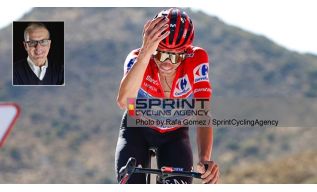
A right-hand curve in a poorly marked roundabout, about 24 kilometers from the finish line of Plateau de Solaison that will be conquered by Remco Evenepoel, ahead of Pogacar still in yellow. The camera frames—from behind—the number 11 with the battered red helmet on the ground: there is no doubt it is Jonas Vingegaard. "I'm in pain," he will say to those who give him first aid. It is immediately clear that his Tour de France has ended there. Even before the ambulance arrives to pick him up, long before the diagnosis a few hours later: "Fracture of the right collarbone. He will be operated on in the coming days". The culmination of a very dark day, which began with waking up at 2 in the morning for a surprise anti-doping control that inevitably brought with it a trail of controversy. (Ciro Scognamiglio)
CORRIERE DELLA SERA
VINGEGAARD CRASHES AND BREAKS, POGACAR RULES
Ten thousand kilometers trained and eight thousand raced in the last seven months, the grueling effort of racing and winning a Giro d'Italia and having to recover from the effort, fearsome sacrifices, endless altitude training camps, the anti-doping vampires who wake you up at two in the morning (it happened just yesterday) to certify that you are above all suspicion. But in the end your Tour de France is decided in a sharp curve poorly marked, twenty kilometers from the finish line, in an unknown corner of the Upper Savoy called Amancy. "Do I take it wide or tight?" Jonas Vingegaard had to decide in a fraction of a second. (Marco Bonarrigo)
REPUBBLICA
ANTI-DOPING WAKES UP THE TOUR
NIGHT RAID AMONG THE BIG NAMES
POGACAR: "THIS IS ABSURD"
The old riders knew it well: "Races are won in bed". Sleep is fundamental at the Tour for the general classification riders, called every day for three weeks to stay ahead, alert, lucid, brilliant. An anti-doping raid in the middle of the night pulled Vingegaard and Pogacar out of bed at 2 and 5 respectively. Controls that the ITA, the agency that handles doping matters on behalf of the UCI, has arranged in derogation from the International Cycling Union regulation that provides for tests from 6 in the morning to 11 at night. With one exception: "Unless there is a serious or specific suspicion that the rider is engaging in doping activity". (Cosimo Cito)
IL GIORNALE
ANTI-DOPING CONTROL AND CRASH: VINGEGAARD'S DARK DAY
If the morning shows the day, Jonas Vingegaard must have had his chain come off. Surprise anti-doping controls at 2 in the morning (the race is in France and here the Sports Code allows it: from 11 pm to 5 in the morning. Especially when there are "serious and concordant suspicions against the athlete that he has violated or is about to violate anti-doping provisions", editor's note). Control at 2 in the morning for the Dane, at 5 in the morning for Pogacar. "Jonas was controlled at 2 in the morning, me at 5: basically I only slept 4 hours – the yellow jersey commented to Eurosport at the start of the stage -. Let's say I had a pleasant and long morning! I relaxed listening to Eminem and enjoying several coffees, but it was certainly not nice to be woken up. (Pier Augusto Stagi)
L'EQUIPE
OUT OF THE GAME
He must have thought he was living a bad dream when, at two in the morning between Saturday and Sunday, someone knocked on his door for an anti-doping control; however, Jonas Vingegaard's day transformed into a real nightmare at the height of a roundabout and a right-hand turn, 23 km from the finish line, where he ended up on the asphalt suffering a fractured collarbone.
No one deserves to leave the Tour de France this way – a race that strikes without warning and without making distinctions – but it was heartbreaking to see the Dane get into the ambulance: one of the greatest fighters of the "Grande Boucle", a valiant, distinguished and humble rider who, since 2021, had achieved two victories (2022 and 2023) and three second-place finishes in his favorite race. (Alexandre Roos)



 3
3
 3
8
8
10
10
6
6
3
8
8
10
10
6
6

 Ritratti
 Oscar
Oscar Albi d'Oro


Se sei giá nostro utente esegui il login altrimenti registrati.