
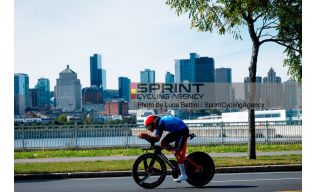

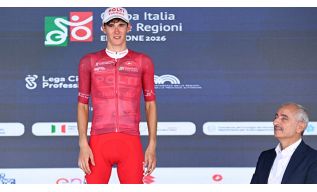


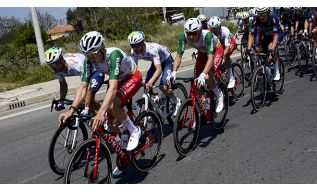















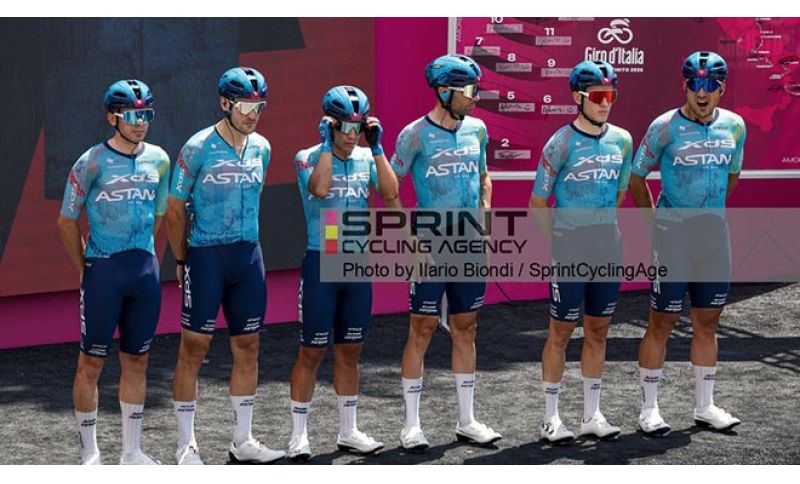
Not the most winning team, but the one with the best average placements. A well-stocked battery of stage hunters and one-day race specialists, who alternate peaks of form and domestique-leader roles, so as to always have someone performing well, reach the finish with several cards to play and fill the top 15, top 10 and perhaps the top 5. That is the strategy of XDS Astana. The one applied throughout the entire season, certainly, with the remarkable salvation in the World Tour and the current fifth position in the UCI team ranking.
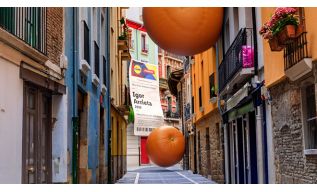
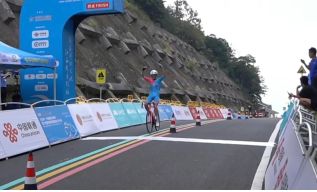
But also the one concentrated in the three weeks of the Giro d'Italia: three victories (Thomas Silva, the first Uruguayan ever at the Giro, in stage 2 in Veliko Tarnovo, with a couple of days in the pink jersey; Davide Ballerini, on the slippery cobblestones of Naples in stage 6; Alberto Bettiol, with the classy move from Verbania in stage 13) but above all the strong density in the finishing orders, which we have come to know as the trademark of the most Italian among the World Tour teams.
«We assembled a well-balanced lineup for the Giro, varying the protagonists and enhancing the pipeline of our work, from the upstream selection of riders and calendar choices to preparation methodologies and race tactics,» explains, with expository clarity worthy of a university professor, the man behind all this: Maurizio Mazzoleni, who moved in 2024 from the role of performance manager to Sport Manager of the Chinese-Kazakh team.
«In the first two-thirds of the Giro we collected as much as possible: emblematic already was Silva's victory in Bulgaria, with the closing work of Harold Lopez and the lead-out from Christian Scaroni for his perfect finishing. In the third week we took advantage of opportunities and inserted ourselves where we could, crowning a solid "corsa rosa," in which we were able to divide roles with maximum unity of purpose. From leaders tasked with bringing home a good haul of points, to a precious and experienced domestique like Arjen Livyns.»
If we wanted to identify some "shortcomings" on your part, Lopez failed to be the general classification man one might have expected, and in the Cassano d'Adda-Andalo stage (stage 17) you missed the breakaway of 29 riders…
«Harold's was more of an attempt to manage the general classification, unfortunately he was one of our two athletes caught by the viruses circulating in the peloton (albeit less severely than Scaroni) and lost time on several days. However, he's 25 years old and will have the chance to make up for it. As for the missed breakaway towards Andalo, it's understandable that you pay the price for almost three weeks of all-out effort, and on that same stage we had asked a lot from the guys in the initial flat section where attacks and counterattacks had already exploded. Let's remember though that we were down to six riders and that, in this Giro, we managed to execute 90% of what was said on the bus in the mornings during the race. That's not nothing!»
Let's try to find another flaw: Silva's pink jersey lost immediately upon returning to Italy.
«I admit we expected him to hold it until the Blockhaus, but in Calabria he had a post-rest défaillance highlighted by Movistar's superb work. However, he immediately showed both his athletic and human qualities, the ones that intrigued us when we observed him in Caja Rural between the Asian calendar and the Omloop Het Nieuwsblad, and that make him appreciated by everyone. Already the next day, in fact, he reacted with a third place in the downpour at Potenza, then we saw him lively on the Fermano walls, at Novi Ligure (another podium) and at Ca' del Poggio. At the start of the season he was a fundamental man for Scaroni, who at the Giro had the chance to repay him: in almost every stage where Thomas placed well, Christian was with him.»
Speaking of which, Scaroni's withdrawal was a sour note of pure bad luck: did the crash he was involved in during the Chiavari stage somehow influence it or was it just the illness?
«That had nothing to do with it. The way he powerfully returned to the top ten after the crash was a sign of his excellent condition. Unfortunately, the worst moment of his health coincided with one of the hardest stages, the one in Val d'Aosta, which presented the bill with the climb right at the start and forced him to abandon. In any case, antibiotic therapy worked and he's fine. Now, however, he needs a good period of rest to recover his condition: the Giro was the culmination of a block that started back in January. We'll see him again at the end of July at San Sebastian and then perhaps in Poland, but he'll definitely be ready for the Italian classics in September and October.»
Speaking of your other withdrawal, how is Davide Ballerini?
«Last Tuesday he tried to get back on the bike and it's not ruled out that, depending on his condition, he could be called up for the Tour de France. He hit hard on a sidewalk in stage number 11, the one where Scaroni later crashed and Diego Ulissi went to the podium. After doing great work to help his teammates get into the breakaway, Ballerini touched another rider in a left turn and went down: he broke the thumb of his right hand and suffered a bothersome quadriceps contusion that prevented him from continuing.»
His victory in Naples was "a coincidence" due to the massive crash in the curve at Piazza Plebiscito, which also involved your sprinter Matteo Malucelli, or was it not by chance that he was right inside and escaped it?
«It's clear that our designated finisher was Malucelli, with Ballerini as "lead-out man," and I must admit that they had gotten a bit separated in the approach to the finish. At the same time, Davide's mastery on the cobblestones and rough terrain came into play: he had just made a MotoGP-style overtake on Stuyven and, when the crash happened, it was no accident that he was on the right side of the road. There it was a matter of pushing all the way to the end.»
Encouraged by Malucelli himself!
«Beyond the good placements he achieved when he could actually sprint (even before the Naples crash, he went down in the inaugural stage at -650 meters in Burgas), Matteo repaid, with the professionalism that distinguishes him, the choice to have him race his first Giro. We're happy with him.»
We've mentioned the victories of Silva and Ballerini, but we're missing Alberto Bettiol: where does his triumphant move come from in stage 13?
«It comes from the presence in Verbania of his girlfriend Lisa and her family, who live right in that city, now a "second home" for Alberto. It comes from the pre-Giro training camp on Tenerife, where during massages he would show me every single curve of the final and expressed a great desire to win that stage. It comes from his countless reconnaissance runs on the Ungiasca climb. It comes from the domestique work for Ulissi and Scaroni a few days earlier, emblematic of the team spirit we talked about before. It comes from the day before towards Novi Ligure, where he tested himself "quietly" on the Bric Berton. When Bettiol gives 100% in that way, he can't be beaten.»
Last but not least, what do you tell us about his "alter ego" (both experienced Tuscans, often in service of Scaroni both in XDS Astana and in the National team, but still able to take personal satisfaction) Diego Ulissi?
«Eighth in Cosenza, third in Chiavari when he received the okay from the sports directors and from Scaroni, he is an absolute point of reference for us who retains intact the spirit of victory.»
On the subject of crashes, finally, in our BlaBlaBike podcast after the Bulgarian start of the Giro you had emphasized the importance of better preventive communication between organizers and teams to avoid reckless finales: what do you think of the events in Milan, with Vingegaard as the spokesperson of the group obtaining the neutralization of times 16 km from the finish?
«I reiterate: prevent! Weather and routes are known today in advance, legitimate complaints can and must be raised the day before. Don't start "negotiating" in the middle of the race once you've entered the circuit, unless there are absurd and unforeseen dangers. Scenes and decisions like that are a damage to the image of cycling and those who follow it with passion. There must be more effective communication, you have to know how to speak in advance.»
Let's conclude by looking ahead to the next major objective: what should we expect from you at the Tour?
«Compared to the Giro, at the Tour stages tend to respect the script more. So we'll be a bit less focused on "mixed" riders and will work more on "specialized" characteristics. We'll have a general classification man in the top-10 like Tejada and in the sprint we'll count on Kanter with Teunissen. We'll decide the final lineup in the coming hours.»
from tuttoBICI of June



 7
7
 7
2
2
5
5
3
3
7
2
2
5
5
3
3

 Ritratti
 Oscar
Oscar Albi d'Oro


Se sei giá nostro utente esegui il login altrimenti registrati.