















Not only prestigious victories, glory and attractive prize purses. The 2026 Giro d'Italia indeed offered, between stages and general classification, a substantial haul of points that could prove useful to many teams both in terms of the three-year 2026/28 ranking and the annual one, the latter pursued especially by teams with ProTeam licenses already seeking the points necessary to secure invitations (or at least the possibility of being invited) to the most important World Tour races of the next season.
The first major stage race of the season, therefore, from this perspective, was an appointment that many had targeted but, as expected, it did not prove equally satisfying for everyone: let us therefore take stock of who actually maximized their presence at the Pink Race by improving their UCI ranking position and who, conversely, failed to fully exploit the Italian event.
THE TOP TEAMS
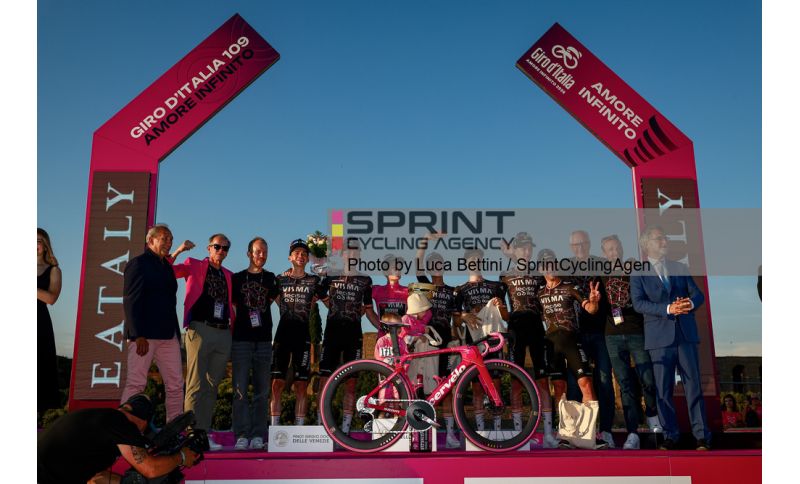
Dominating the field were the teams able to place one or more riders in the upper echelons of the general classification, starting with Visma Lease a Bike which, between winning the Trofeo Senza Fine, days in the pink jersey with Jonas Vingegaard and six stage victories, totaled 3,157 points, proving to be the best among the 23 teams that started from Nessebar.
Behind the Dutch team, in order, came Decathlon CGA CGM (a team that, in addition to second-place finisher Felix Gall in Rome, saw three other riders finish in the top 35 of the final standings, obtaining a total of 2,037 points), Lidl-Trek (1,975 points) with Jonathan Milan, Giulio Ciccone (wearer of the blue jersey and multiple stage placements) and Derek Gee-West (5th in the general classification), Netcompany INEOS (1,772 points) of time trial winner at Massa Filippo Ganna, Egan Bernal (10th in the standings) and Thymen Arensman (4th), Red Bull BORA hansgrohe which, despite no stage wins, brought home the podium with Jai Hindley (author of 411 of his team's 1,744 total points) and Bahrain-Victorious (1,723 points) of revelation Afonso Eulalio (white jersey wearer and nine days in pink) and veteran Damiano Caruso (9th in the standings).
Considering the situation before the Giro, these results (along with those obtained in races held during the Pink Race) allowed Decathlon, Visma and Red Bull to confirm themselves among the world's top four teams behind UAE Team Emirates (10th at the Giro for UCI points with 1,045), Bahrain to defend its sixth place in the world ranking and Lidl and Netcompany to climb four and two positions respectively, with the former moving from eleventh to seventh place and the latter from tenth to eighth.
THE PROTEAM SQUADS
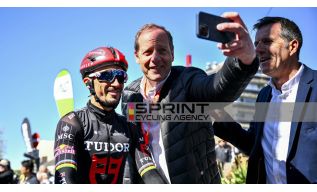
Continuing to review the names of teams able to accumulate more points between May 8 and 31, the name that stands out is certainly Tudor: the Swiss team, in fact, brilliantly established itself in ninth place with 1,217 total points, a sum that allowed it to remain the third-best ProTeam formation in the annual ranking and, above all, to widen the gap compared to the fourth-best team in the category, Unibet Rose Rockets, now 305.7 points behind (before the Giro it was 184.98).
The team of Bas Tietema, Josse Wester and Devin van der Wiel, at its first Grand Tour in history, concluded its pink adventure with 450 points (17th out of 23 teams), likely paying the price for the lack (by choice) of riders capable of contending for the general classification and a stage victory only narrowly missed multiple times with Dylan Groenewegen.
Slightly better than the young French-flagged team performed Pinarello-Q36.5 which, however, with 562 points (16th place out of 23), obtained during the three weeks spent on the Giro roads, momentarily climbed to 14th position in the annual standings, becoming the best ProTeam of 2026 at the expense of Cofidis which, absent by its own choice, dropped from 12th to 15th position but will have the Tour de France and Vuelta España, limiting the discussion to major stage races only, to make up for it in the coming months.
THE ITALIAN TEAMS AND LESS PRODUCTIVE SQUADS
Finally closing the 2026 Giro team standings for UCI points were Alpecin-Premier Tech, Bardiani CSF 7 Saber and Picnic PostNL, teams whose Pink Race, assessed in terms of mere points earned, certainly cannot be described as positive.
Taking the start without Mathieu van der Poel and Jasper Philipsen and losing Kaden Groves in the very early stages of the race, the Roodhooft brothers' team attempted to give meaning to their Giro by repeatedly attacking with their riders without, however, obtaining particularly satisfying results: this impression was confirmed by the 295 points earned at the end of the three weeks of racing, equal to the third-lowest figure recorded in Rome among the 23 participating teams.
Performing worse than the Belgian team was unfortunately Bardiani which, unlike Polti VisitMalta (able to finish its effort with 585 points, 173 more than the 2025 Giro), failed to improve the haul conquered 365 days earlier (400 points), stopping at 252, a sum that did allow it to move from 35th place pre-Giro in the 2026 UCI ranking to 31st but which, at the same time, proved insufficient to cross the threshold of the top 30 that qualifies for invitations to the 2027 Grand Tours.
Even less performant, however, was the Dutch team of Iwan Spekenbrink, a formation whose difficulties in achieving significant results manifested during the first months of 2026 were fully confirmed at the Pink Race. Here the eight riders guided from the team car by Matthew Winston and Philip West accumulated a mere 67 points (40 of which with Warren Barguil alone and, in general, 1,002 fewer than the 2025 Giro) without actually improving their difficult situation in the annual standings, which saw them move from thirtieth to twenty-ninth place, remaining behind teams like Equipo Kern Pharma and Euskaltel-Euskadi who only watched the Giro d'Italia on television.



 1
1
 1
4
4
1
4
4

 Ritratti
 Oscar
Oscar Albi d'Oro


Se sei giá nostro utente esegui il login altrimenti registrati.