
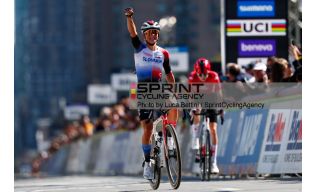
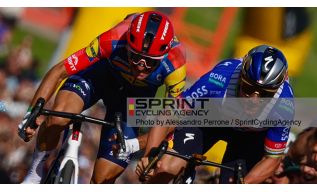
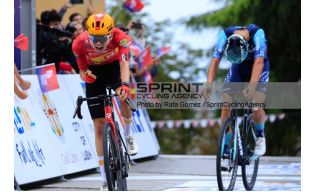
















At Piancavallo, at a certain point, the group fell silent. The legs kept turning and the kilometers kept passing. But anyone who was there—or who was watching carefully—could see that something was about to happen. Not on the roads of Friuli, but inside the head of every rider still in the race.
And then it came: a change of pace. A few seconds, and everything changed. From the outside, we saw an attack. We saw a gap open, a missed reaction, a rider pulling away and others falling back. But what you don't see—and what is often far more interesting than what you do see—is what happened before. Inside. In those three seconds that, from a neuroscientific perspective, have already decided everything.
In recent years cognitive neuroscience and behavioral sciences have begun to map with even greater precision a mechanism that anyone who has experienced a high-pressure situation knows well, even if they've never heard its name: the thought-choice-action sequence. Three distinct mental operations that under normal conditions follow one another in a fluid and almost invisible way, but that under pressure—physical, emotional, cognitive—tend to degrade, to short-circuit, to blur into one another until they become a single, automatic, and often counterproductive reaction.
It is exactly the mechanism that, together with Ivan Basso, we analyzed in depth within Accendi la mente (Bompiani): the true challenge of performance is never purely physical, but rather protecting the quality of this sequence when everything—fatigue, fear, pressure, uncertainty, and so on—pushes in the opposite direction. And the Giro d'Italia, as we've seen in recent weeks, is the most extreme and fascinating demonstration of this that exists.
Let's start with a question that seems simple, but really isn't: how is it possible that riders trained at the same level, in similar physical condition, in the exact same circumstances, react completely differently to the same attack? How is it possible that the same acceleration on a climb can send one person into crisis and leave no trace on another?
The standard answer, the one we hear most often, is physical: legs, watts, current condition, kilometers accumulated in the legs. All real elements, mind you. But anyone who truly knows professional cycling and who studies human behavior under pressure knows that this answer is incomplete. Because what we see from the outside (the gap, the late reaction, the sudden collapse) is only the visible effect of something that had already happened before, much earlier, inside that rider's head.
And that's where we need to look.
When we're in optimal conditions, the Think → Choose → Act sequence works almost automatically: the brain processes available information, evaluates options, selects the most appropriate response, and translates it into action. A process that in top-level riders has been refined over the years until it becomes almost instinctive, but which remains, in all respects, a precise cognitive sequence.
The problem arises when this sequence is subjected to prolonged pressure. And at the Giro d'Italia, after hours of racing, after weeks of accumulated effort, the pressure is not only physical: it's cognitive, emotional, decisional. This is where neuroscience shows us something fundamental, something that applies as much in racing as in everyday life.
Here's what happens to this triad when fatigue really starts to set in.
1. Thought slows down and becomes distorted. After hours of intense effort, the prefrontal cortex—in other words: the seat of clear reasoning and the ability to inhibit impulsive responses—undergoes a measurable reduction in its executive functions. In simple terms: the brain thinks more slowly, tends to amplify negative signals, and struggles to distinguish signal from noise. A climb that has been tackled dozens of times in training can suddenly seem insurmountable. Not because the climb has changed, but because the way the mind interprets it has changed.
2. Choice becomes automatic instead of conscious. When cognitive resources decline, the brain activates what Nobel laureate Daniel Kahneman called System 1: fast, intuitive thinking based on patterns and shortcuts. In other words, it stops processing thoughtfully and starts reacting. For example, the rider who responds to every attack without evaluating, the one who follows out of inertia instead of choosing with intention, is experiencing exactly this: conscious choice has been replaced by automatism. And automatism under pressure, in most cases, is a choice already lost from the start, unless you employ the right cognitive strategies.
3. Action loses direction. Without clear thought and conscious choice behind it, the resulting action is reactive rather than intentional: it's the difference between responding and choosing to respond, between chasing blindly and deciding to attack, between being subject to others' pace and imposing your own. A difference that from the outside might seem subtle, but that in the numbers—in gaps, in standings, in results—is often enormous.
And it is precisely here that the Piancavallo stage, the penultimate stage of this Giro d'Italia, becomes something more than a mountain stage. It becomes, if you look at it with the right eyes, one of the clearest representations of how this sequence works, or stops working, in the human mind under extreme pressure.
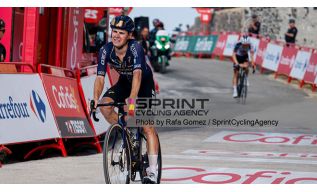
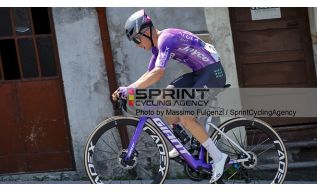
Vingegaard didn't win only because he had more watts than the others, but because in the few decisive seconds that make the difference within a stage his triad was still functioning, while that of the others had already begun to degrade. He thought the right way: he read the situation without amplifying or distorting it, he evaluated the moment without being overwhelmed by the emotion of the context. He chose with intention: he didn't react, he didn't let himself be swept along by others' pace, he waited for his moment and built it. He acted with precision: when he went, he really went, without hesitation, without procrastination, with a choice executed with the clarity of someone who knows exactly what he's doing and why (technically, this is called cognitive agency: the ability to remain conscious authors of your own actions even when the context would push toward automatic response).
Now take a step back. Leave the finish line at Piancavallo and leave professional cycling, watts and standings. Instead, think about the last time you found yourself in a high-pressure situation, like a meeting that was going in the wrong direction, a conversation—even a personal one—that was heating up, a deadline approaching while your energy was declining.
In that moment, what happened inside you? Almost certainly, without realizing it, your sequence short-circuited. Your thought became more hurried and less clear, you responded out of inertia, maybe out of fear of making a mistake or fear of disappointing. And the action that followed wasn't the one you would have chosen with a clear head: it was the first available response, not the best one.
It's not a matter of character, nor weakness, nor talent: it's pure neurobiology. When the nervous system perceives a threat—real or imagined, physical or emotional—the amygdala takes over the prefrontal cortex with a speed that leaves no escape unless we're trained to recognize it. The result is always the same: less thought, less choice, more reaction. And it is precisely there, in that microscopic space between stimulus and response, that the quality of a performance—whether athletic, professional, or personal—is truly decided.
So the real question is not how to avoid stress. Pressure—both at the Giro and in life—exists, will always exist, and we can't eliminate it. The real question is different, and it's the one we explored from every possible angle in Accendi la mente: how do we protect the quality of our sequence when pressure rises, resources decline, and everything pushes toward automatic reaction?
The answer lies in training the sequence itself: learning to recognize when thought begins to distort, when choice becomes automatic, when action loses direction. Because the moment you can observe the sequence—instead of being swept along by it—you've already recovered some control.
And it is precisely this that the Giro d'Italia told us (and taught us) this year, stage after stage, climb after climb. Sometimes brutally, sometimes almost poetically.
It didn't just tell us about legs, watts, tactics, and standings. It told us about minds under pressure. About sequences that worked and sequences that failed. About riders who remained authors of their own choices and riders who instead became executors of reactions they hadn't chosen, and who simply had to endure.
It told us, ultimately, something that concerns all of us: that the quality of our lives—in the big challenges and in the small ones—depends largely on the quality of that invisible sequence we go through dozens of times every day, often without noticing.
Because turning on the mind doesn't mean thinking more, choosing more, or acting more, but rather learning to do it better.
The Giro is over. But the mind's race never ends.
And the next climb is already there, around the corner. The only question is: with which sequence will you face it?
FOR MORE INFORMATION
The Giro d'Italia tells us much more than just a cycling race. It tells us how we think, choose, react to pressure, and manage fatigue when the road gets harder. These themes are also at the center of Accendi la mente (Bompiani), the book written by Michele Grotto together with Ivan Basso, two-time winner of the Giro d'Italia.
A journey through neuroscience, human behavior, performance, and great lessons learned inside and outside professional cycling.
Click here to learn more.
3 - end
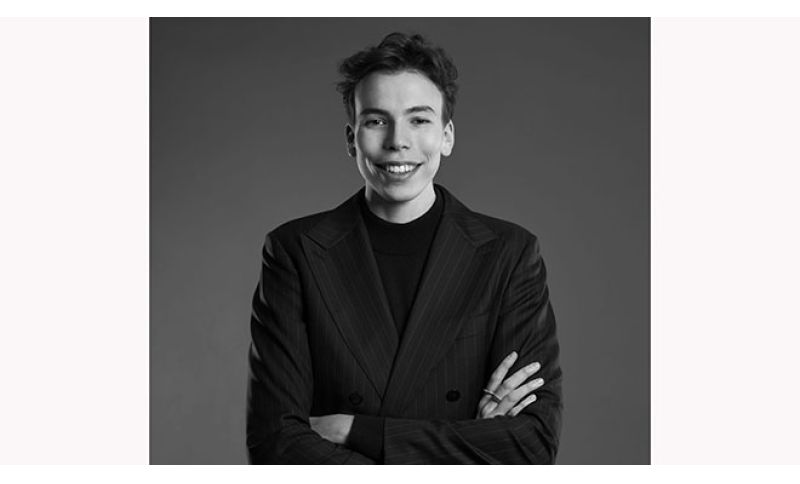
Michele Grotto is an architect of choices and behavioral strategist. He works with behavioral sciences applied to decision-making processes and improvement of human performance. He founded BrainHacking® and is co-author, together with Ivan Basso, of the book "Accendi la mente" (Bompiani).

 2
2


 2
2


 4
4
5
5
6
6
4
4
4
4
5
5
6
6
4
4

 Ritratti
 Oscar
Oscar Albi d'Oro

