

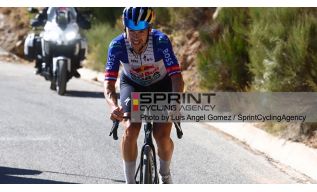
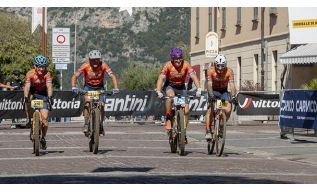
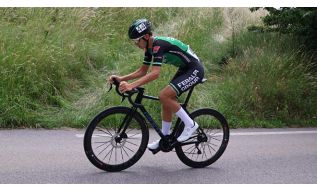
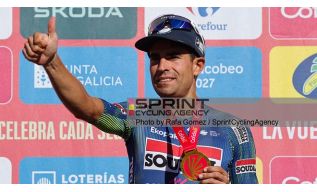
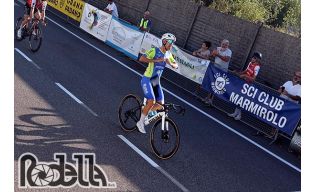














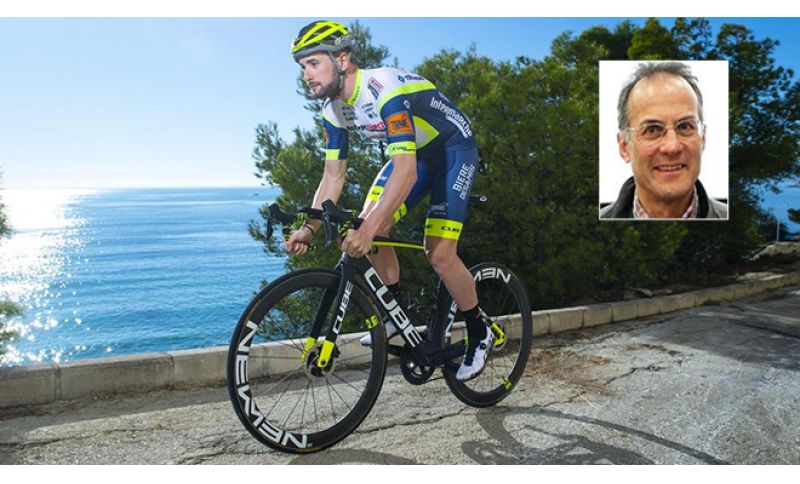
The black jerseys: the last riders in the general classification, the first in the sentimental one. Because the black jerseys belong to the domestiques, in perpetual struggle with the time limit and minimal energy. They are the most human and the most humble. The most like us. This is the fifth installment, dedicated to Riccardo Minali, last at the 2021 Giro d'Italia.
-
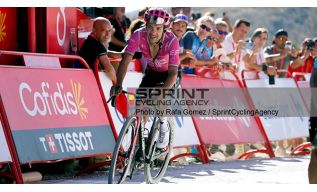
Ten minutes yesterday, ten today, ten tomorrow, at the end of the 23 stages he arrived five hours, 35 minutes and 49 seconds behind the winner, Colombian Egan Bernal. One hundred and forty-third and dead last. Beating the second-to-last, Attilio Viviani, by more than six minutes. Here we have Riccardo Minali, who also has two Italian titles behind the derny and two stages at the Tour of Malaysia, the black jersey wearer of the 2021 Giro d'Italia.
The truth?
“If I could go back, I would ask my team not to do the Giro. Because, beyond the climbs, I was allergic to poplars, grasses and olives. Despite antihistamines, I couldn't breathe, I was sneezing, suffocating. The first week was atrocious, the second terrible, the third, the hardest, the most infested with climbs, paradoxically turned out to be the least difficult. I had built up my legs and gotten used to it”.
The gruppetto?
“That of the sprinters, fast in the sprint, slow on the climbs, companions in adventure and, those days, also in misadventure. Elia Viviani and Fabio Sabatini set the pace: with their own rhythm, but together, on the climbs, then risking their lives on the descents, then like in a team time trial on the flats. That is, what was lost on the climbs had to be recovered on the descents and maintained on the flats. At the top of the climb there was always someone who told us the gap and we regulated ourselves accordingly. And there wasn't a single stage where there was danger of finishing outside the time limit”.
Not even one day of crisis?
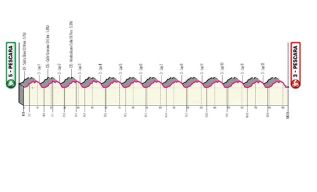
“One, yes. The Siena-Bagni di Romagna stage. More than 200 kilometers, all up and down, in the end the elevation gain was that of a Dolomite mountain stage. The selection was natural and, for me, physical. I couldn't go forward, as riders say, even with a push. I found myself in the gruppetto, then at the back of the gruppetto, until I got dropped from the gruppetto too, just two of us, me and American Matteo Jorgenson, who won Paris-Nice last year, but who that day was empty. We helped each other, we took turns, we encouraged each other, until we caught back on to three other desperate riders until the finish. Half an hour behind the stage winner. That day I secured last place in the general classification”.
The hardest stage?
“The one from Canazei to Sega di Ala, the uphill finish, but there had already been the San Valentino climb. On certain stages there's no gear ratio that helps, you cling to everything, even a water bottle, but always within the limits of dignity and regulations, and hoping for the generosity of the spectators. Even the pushes, just a little, about twenty meters, but they help. I had taught my Belgian teammates to say 'urta', which in Veronese means push. That year we also did the Zoncolan, but from the Sutrio side, so to speak, the easiest. The black jersey wasn't my objective, I found myself at the back of the classification by chance and fate, also because of the 41 retirements. On the last day I told myself it's better to be last, because someone will remember me, than to be second-to-last, beaten and forgotten”.
In 2021 he also raced the Vuelta.
“But without allergies and without antihistamines I went stronger and so I couldn't pull off the Giro-Vuelta double. It would have been a historic feat. In that Vuelta four times I placed in the top 10 of a stage. And in the end I finished one hundred and thirty-seventh out of 141 finishers from 183 starters”.
Was there a prize for the last rider at the Giro?
“No way, not even a recognition. However, one day I received a black jersey from those at Mitica, the vintage cycling event in the places of Fausto Coppi. I have it in a drawer”.
Learn the trade and put it aside?
“Cycling is my life. I learned to pedal almost before I learned to walk, at two years old I was riding a bike without training wheels. From my father I inherited the passion for cycling and also the instinct of a sprinter. After I stopped racing, I got a degree in Sports Science and for two years I worked in sales, first with Alé then with Scicon. Now I work for myself, I opened a center with eight smart bikes, cycling in a room, so you optimize time and don't run the risks of the road, not even those of allergies to poplars, grasses and olives, and I also deal with training and positioning. In short, you never stop racing”




 Ritratti
 Oscar
Oscar Albi d'Oro


Se sei giá nostro utente esegui il login altrimenti registrati.