


















The 2026 Giro d’Italia can be read through its route, the favorites, the mountain stages or the weight of the time trial. But there is also a less immediate and perhaps more revealing reading: that of the statistical quality of the starting field. It is not enough to count the most anticipated names; one must understand how competitive value is distributed within the startlist and how capable the race is of concentrating riders who are truly impactful in the global hierarchy.
To measure this aspect, a synthetic indicator has been constructed, the Startlist Gravity Index. The SGI combines four elements: the weight of riders within the Top 50 of the ranking, those within the Top 100, the depth down to the Top 200 and overall ranking coverage. In other words, the index does not merely measure the presence of superstars, but the competitive structure of the race. In the case of the 2026 Giro, the startlist considered comprises 184 riders (official announcements and team previews have obviously been considered, pending the definitive list of starters). Of these, 177 are ranked within the first thousand positions of the ranking, while the others do not have a ranking useful for weighting purposes. The overall qualitative score, calculated by assigning decreasing values to different ranking bands, equals 963 points. The average value per rider is therefore 5.18 points.
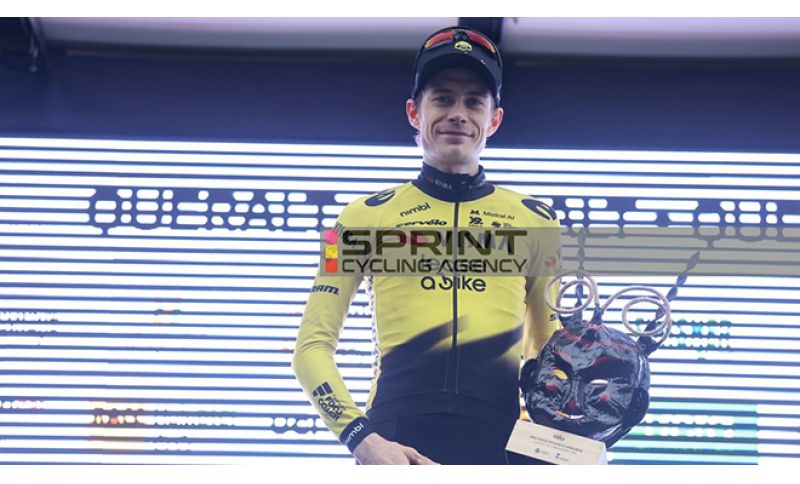
The most interesting data is the strong internal asymmetry. The first 16 riders within the Top 50, representing just 8.60% of the group, produce 455 points, or 47.25% of the entire qualitative value of the race. Even more evident is the weight of the Top 100: 36 riders, less than one-fifth of the group, generate 655 points, equal to 68.02% of overall quality. This means that the 2026 Giro is not simply a race with a big cover-story name. Jonas Vingegaard certainly constitutes the sporting and media apex of the startlist: the official Giro website presented his debut at the Corsa Rosa as one of the great events of the 2026 edition, also recalling the possible objective of the Giro-Tour and the completion of the series of three Grand Tours. However, the competitive structure runs deeper. Alongside the Danish rider sits a broad band of general classification contenders, stage racers, sprinters, climbers and specialists capable of making the race less dependent on the sole confrontation between favorites.
The SGI of the 2026 Giro equals 68.51 out of 100. It is a value that places the race in the upper tier of strong startlists, very close to the threshold of very strong startlists. The reading is clear: the Giro does not present an absolute concentration of superstars in the Top 10, but possesses notable density in the Top 100 and very consistent depth down to the Top 200. However, this numerical snapshot must be contextualized.
Vingegaard arrives at the Giro with a condition already certified by victories at Paris-Nice and the Volta a Catalunya, two WorldTour stage races won with authority in the early part of the season. The official Giro website itself indicated him, a month before the start, as the most obvious favorite for the pink jersey. The international press further reinforced this reading, also in light of the absences of João Almeida, Mikel Landa and Richard Carapaz, which redesigned the general classification hierarchy even before the start.
But precisely here the indicator adds something to the traditional narrative. A favorite so strong might make the race appear less open; the structure of the startlist, instead, says the opposite. The 2026 Giro is not weak because it has a man clearly above the others. It is a race with a very recognizable apex and, at the same time, with a broad competitive base. Giulio Pellizzari, Jai Hindley, Egan Bernal, Adam Yates, Felix Gall, Ben O’Connor, Giulio Ciccone, Santiago Buitrago, Jonathan Milan and Filippo Ganna belong to different technical categories, but together they construct a deep field of play, capable of producing tactical tension every day.
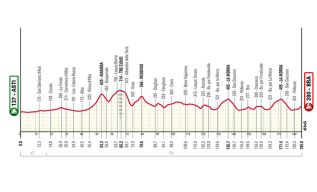
The route also confirms this reading. From the course starting in Nessebar to Rome emerge 3,468 kilometers and 48,700 meters of total positive elevation gain, a layout that does not allow theoretical superiority to be transformed into automatic race control. The Giro remains a race of accumulation, attrition, adaptation and crisis. Its recent history teaches that the pink jersey is not conquered solely against opponents, but against the variability of the third week, the weather, crashes, provisional alliances and the physiological fragility that every Grand Tour carries with it.
The conclusion, therefore, is more articulated than the simple presence of Vingegaard suggests. The 2026 Giro d’Italia is born with a clear favorite, perhaps a very clear one, but not with a statistically weak race. Its true gravity does not lie solely in the name of the man to beat, but rather in the quality distributed around him. Less than 20% of the group produces over two-thirds of the overall competitive value: this is the data that returns the depth of the startlist. Vingegaard is the center of the stage; the Giro, however, remains a complex competitive system. And precisely this tension between expected dominance and the density of opponents can become the most interesting story of the 2026 Corsa Rosa.



 9
9
 9
1
1
1
1
4
4
2
2
9
1
1
1
1
4
4
2
2

 Ritratti
 Oscar
Oscar Albi d'Oro


Se sei giá nostro utente esegui il login altrimenti registrati.