



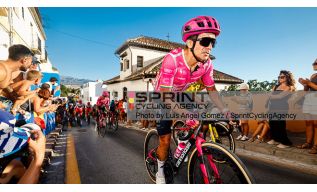
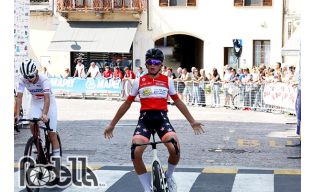














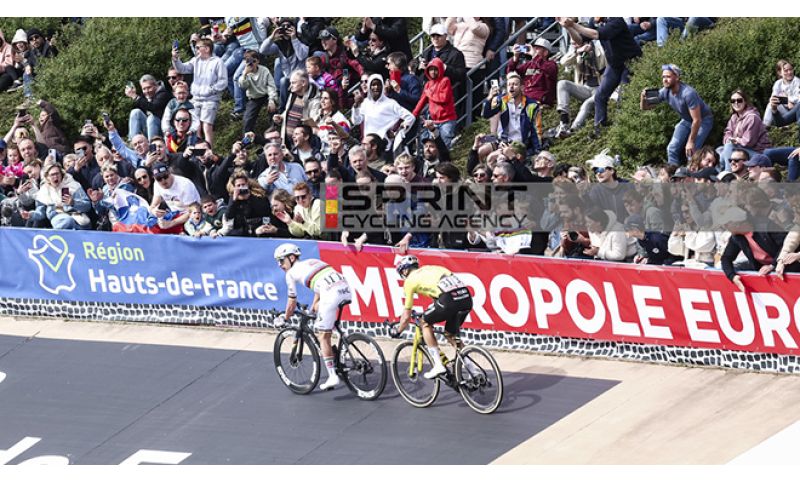
We have left the season of the Classics just a few days ago and we are heading towards the grand tours. Next May 8th we will all be in Bulgaria to see the grand start of the Giro d'Italia and after three weeks we will know the name of the winner. In every race there is always a winner, but how many times have we thought back to that athlete who finished second? Even in television quizzes, if we talk about cycling, we always ask for the name of the winner, but if we were to ask: who finished second behind Chris Froome at the 2017 Tour de France? Or behind Philippe Gilbert in his victory at the 2019 Paris-Roubaix? Or even behind Remco Evenepoel at the 2022 Liège-Bastogne-Liège? Most people wouldn't know the answer, because normally we always remember who crosses the finish line first. However, the answers to these questions are: Rigoberto Uran for the 2017 Tour, Nils Politt for the 2019 Roubaix and Quentin Hermans for the 2022 Liège. They are certainly not riders who have won grand tours or Monument Classics and for this reason they are remembered less, but the history of cycling often reminds us of the name of the second-place finisher, because perhaps that podium spot came at the end of a desperate breakaway, or because they were caught in the final after a day as a protagonist. The shadow that falls on second place is common to all sports disciplines.
Just a few days ago, we saw the Kenyan Sebastian Sawe make athletics history by becoming the first athlete to break the two-hour barrier in the marathon, on Sunday in London. All the media published his beaming photos, with his running shoes in hand and that photo immediately went viral. Without a doubt, 1 hour 59 minutes and 30 seconds is a historic time and Sawe not only won but set a new record.
Yet that day, the second-place finisher, Ethiopian Yomif Kejelcha, also achieved the feat of breaking the two-hour mark, posting a time of 1 hour 59 minutes and 49 seconds. But he did it using just a few seconds more than the Kenyan, and no one talked about it.
Returning to cycling, however, we can say that there are riders who have built their legacy not only with victories, but also with defeats, because in front of them, they found unbeatable giants. Let's think of Raymond Poulidor, who is remembered for never winning the Tour de France nor wearing the yellow jersey. Three times he came close to victory, but he never got to celebrate the final success. It happened in 1964, when he finished behind Anquetil, then the following year behind Felice Gimondi and again in 1974 behind Eddy Merckx. But Poulidor is not the first to be remembered as the eternal second. We have remembered Gimondi's victory at the Tour, and we must say that in his career the Lombard won a lot, but he is often also remembered as "the greatest second." The reason? He raced in the same era as Eddy Merckx, someone who won practically everything. But despite this, Gimondi always showed consistency by finishing second behind the greatest dominator of all time.
We can also mention Gino Bartali's second place in the famous Cuneo-Pinerolo stage at the 1949 Giro, when Fausto Coppi won at the end of an epic 192 km breakaway. That day Bartali was the only one who limited the damage, arriving with a deficit of 11'52". Alfredo Martini finished third with a deficit of 28'41". Cycling has many stories to tell, like that of Fignon, second at the 1989 Tour, by just 8 seconds behind Greg LeMond. Or Thibaut Pinot, who by putting too much heart and too little strategy into racing, won much less than what he could have actually achieved.
But there are also the stories of Cancellara or Valverde, in which we often find those placements that marked a truly great career. Coming to today's cycling dominated by Tadej Pogacar, something has changed. Behind him in the grand tours or in one-day races, we always find extraordinary athletes, such as Van der Poel, Van Aert, Evenepoel or Vingegaard. Men who lose, who finish second, but when they manage to beat the Slovenian champion, they do it more with strategy than with simple strength.
Often Van Aert has been talked about, defined as another eternal second, but this has allowed him to conquer the role of anti-hero rather than loser and for this reason today he is perhaps the most beloved rider by the global public. His victory at Paris-Roubaix indeed demonstrated how the Flemish rider was in everyone's hearts. Pogacar has certainly revolutionized today's cycling, winning on all terrains, but whoever finishes second behind him is not a loser, but is the athlete who despite everything, managed to follow a giant too strong for anyone.



 5
5
 5
1
1
3
3
5
1
1
3
3

 Ritratti
 Oscar
Oscar Albi d'Oro


Se sei giá nostro utente esegui il login altrimenti registrati.