















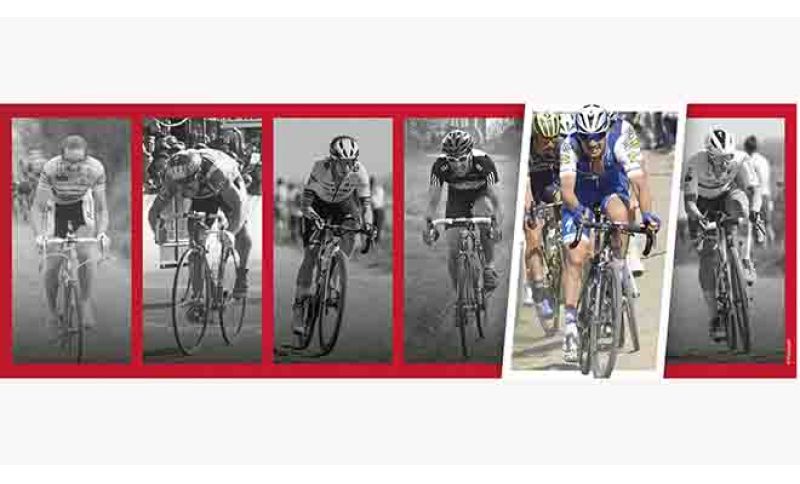

Winning the Queen of the Classics is the dream of a lifetime for an entire category of riders called "Flandriens" as well as for great champions who attribute particular prestige to Paris-Roubaix Hauts-de-France. But beyond the 95 different winners (5 for women), the history of the event is also marked by top-tier riders who repeatedly stumble at this objective, achieve places of honor, lose consecration due to a mishap, a puncture at the wrong moment. What did Adrie van der Poel need to win in the 1980s at the velodrome where his son triumphed in three consecutive editions? And Juan Antonio Flecha who came close multiple times to the feat on the cobblestones of the North? And Marianne Vos who has won everywhere? Do the memories of the podium have a bitter taste only for Zdenek Stybar, Steve Bauer or Lorena Wiebes? Questions and answers in a series of six interviews, conducted in collaboration with ASO, that will accompany us until the appointment on April 12.
Many cyclists argue that the Hell of the North actually has no secrets. That this race, like all others, is based on power, skill, tactics and luck. Zdenek Stybar agrees, but also emphasizes the multiple complexities of this event, in which every single piece of pavement can determine the success or failure of a champion. As a teenager, when he was already one of the most promising cyclocross riders in the world, the Czech was fascinated by the myth of the Tour of Flanders and the Queen of the Classics.
«I was in Belgium and in every pastry shop there were cycling-themed cakes: that's when I started wanting to be part of that world». And he certainly earned his place, with six top-ten finishes at Paris-Roubaix, including two podiums: one source of satisfaction, the other of disappointment.
A HIGH-LEVEL DEBUT... BUT FRUSTRATING
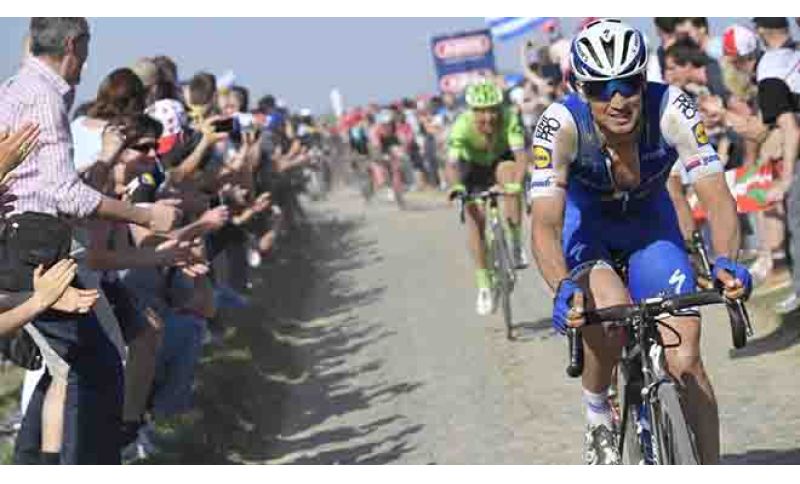
Stybar spent much of his career with Quick-Step, the Belgian team that has won Paris-Roubaix eight times. This helped forge a true "classics mentality" and allowed him to make a successful debut, securing a sixth place in his first participation (2013), after just one complete season on the road.
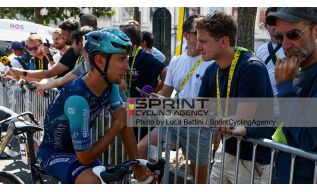
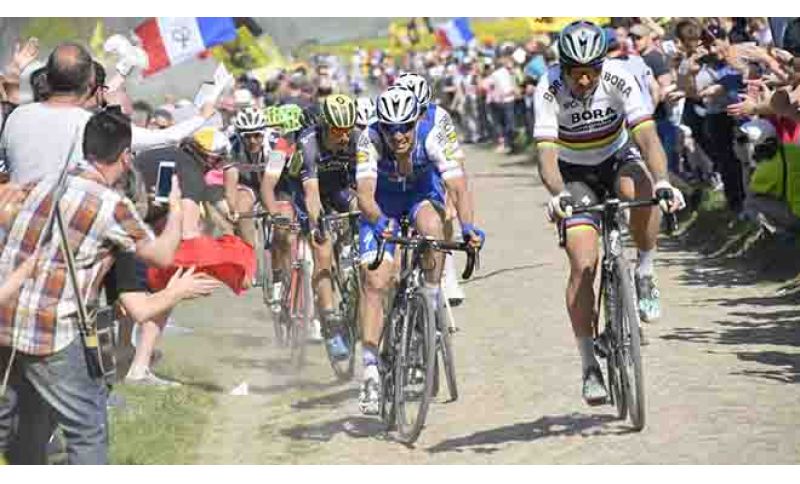
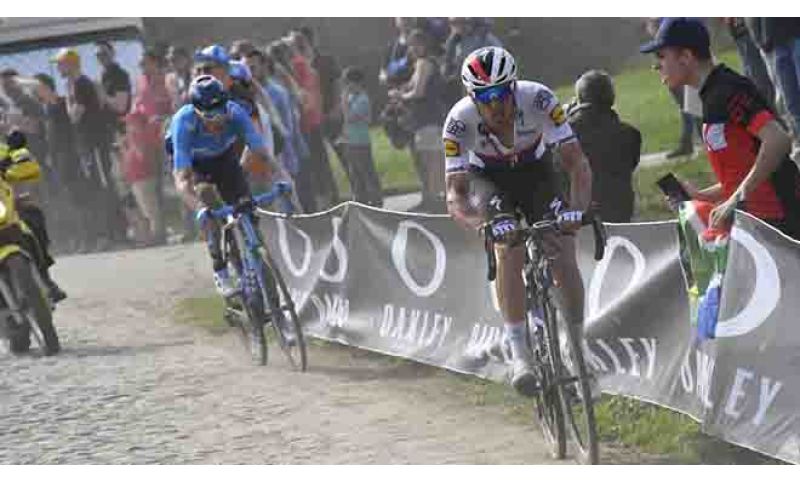
«Before my first Roubaix, our sports director Tom Steels sent us videos of all the cobbled sectors. I watched them many times to memorize every detail and every entry into the sector. From the start I felt comfortable on the cobbles thanks to my cyclocross experience, which helped me choose the best line at every moment. I was quite relaxed, as if I had the situation under control». In the final meters of the Carrefour de l'Arbre, just a few kilometers from the finish of his first major race on cobbles, Stybar was on the wheel of future winner Fabian Cancellara, when he hit a spectator at the roadside. While avoiding a crash, he lost any chance of victory. «Without that incident, I could have finished on the podium», he recalls.
2017, SO CLOSE TO VICTORY
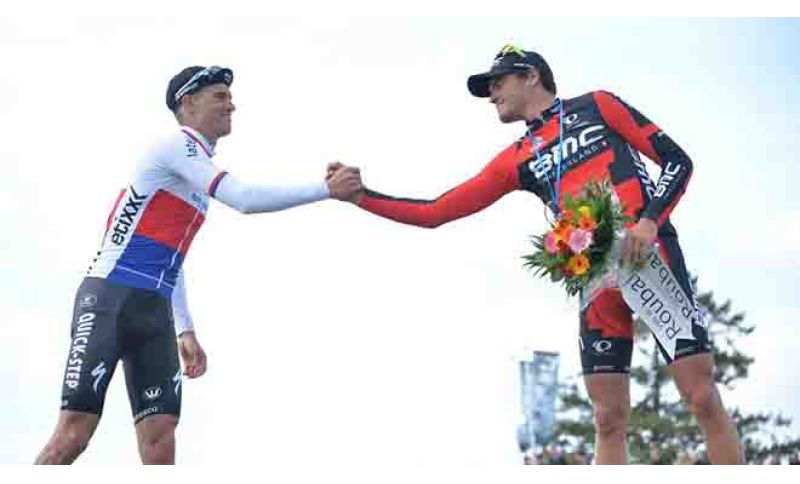
The Czech cyclist stood on the podium twice in his career. The first time, in 2015, left no room for regrets: John Degenkolb was clearly superior at the André-Pétrieux velodrome. Two years later, however, Stybar suffered a bitter defeat against Greg Van Avermaet. It was Tom Boonen's last Paris-Roubaix, and the entire Quick-Step was racing to give him a legendary victory. «That day I spent an enormous amount of energy recovering gaps. I stayed in the front group until the end because Tom was no longer there, and I had to settle for following the other breakaway riders», Stybar explains.
Five kilometers from the finish, the team car finally gave him the green light: after an attack promptly countered by Van Avermaet and Sep Vanmarcke, Stybar chose to wait for the sprint. Fifty meters from the finish, he was ahead of the Belgian... but Van Avermaet passed him at the last moment. «Looking back at that sprint, I couldn't have done better. It was one of the best of my life».
Why did he lose?
«For an idea I proposed to Specialized: that year we were using bikes with suspensions that couldn't be locked. Looking at the sprint in slow motion, I could see the handlebars rising and falling, as if I was riding a mountain bike. I don't regret that choice, because the bike was excellent on the cobbles, but in the end that's what cost me the victory».
SECOND PLACE, IT HURTS...
«In 2015 it had been different: I was very happy to be on the podium of a monument like Roubaix, but the second place in 2017 was hard to accept. I had a lot of difficulty digesting that defeat. In the end, my palmares would have been different and I could have realized the dream of every cyclist. That said, it wouldn't have changed the person I am».
WHEN YOUR FRIENDS BECOME YOUR ENEMIES
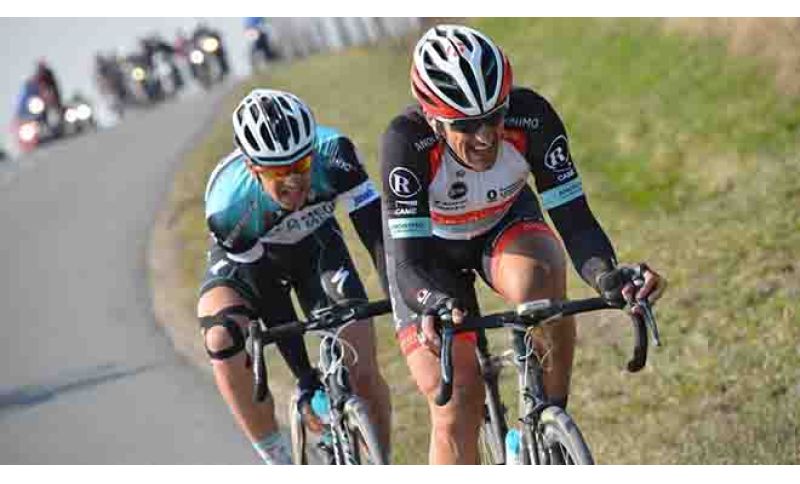
The tactical subtleties of Paris-Roubaix Hauts-de-France are so numerous that the strength of your own team sometimes can work against you. A member of one of the teams most focused on the Classics, Stybar saw two of his teammates triumph: Niki Terpstra (2014) and Philippe Gilbert (2019). «When Niki won, I didn't really feel part of the victory: there were three of us at the front 10 km from the finish: Niki, Tom and me. The team told us to attack and Niki seized the opportunity immediately. He had already gone before I even understood the message. When Philippe won, instead, it was a true team victory: we worked for him all day and blocked attacks behind him. It wasn't the same feeling».
He was often asked why he hadn't changed teams earlier to be the undisputed leader: «It's true that at Quick-Step many of us were capable of winning Roubaix. But I don't think I would have won 70 races a year elsewhere. Maybe I would have won something more for myself, but nothing beats the feeling of being able to win every day with the team. It's priceless».
A RACE WITH A THOUSAND SCENARIOS
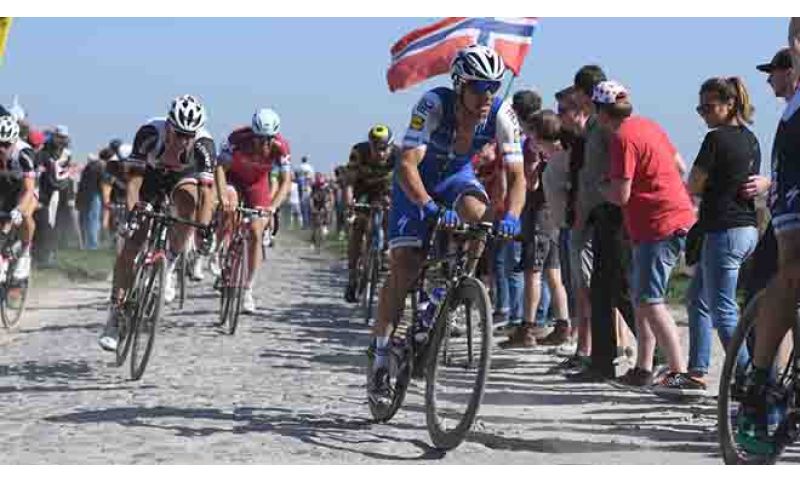
Although he claims the race «has no secrets», Stybar offers some food for thought. «The general rule is: the faster you go, the easier the cobbles become. Equipment has also evolved enormously in recent years and that changes everything. But in my opinion, it's especially the approach to every sector that makes the race so difficult». And you don't have to wait for the cobbles to make the difference: «At Roubaix, the first 100 kilometers can already be decisive. Some years, there are crosswinds already after the first 30 or 40 kilometers, with still 220 to go! This can completely change the race, and it's impossible to predict: there are a million possible scenarios».
Like many, Stybar identified the Trouée d'Arenberg as the section he feared most: «Getting through it really depends on luck. Unlike the Carrefour de l'Arbre: the atmosphere there is incredible. Once you get past it, the hardest part is behind you and there are still almost 20 kilometers to go to figure out how to win the race».
THE PROFILE
Zdenek Stybar
Born December 11, 1985 in Plana u Mariánských, Czech Republic.
Teams: Quick-Step (2011–2022, under various names such as Omega Pharma, Etixx and Deceuninck), Jayco AlUla (2023).
Main victories: Cyclocross World Champion 2010, 2011, 2014; Vuelta a España 2013, Stage 7 (Mairena del Aljarafe); Strade Bianche 2015; Tour de France 2015, stage 6 (Le Havre); Omloop Het Nieuwsblad 2019; E3 Harelbeke 2019
Results at Roubaix: 2013: 6th / 2014: 5th / 2015: 2nd / 2016: 110th / 2017: 2nd / 2018: 9th / 2019: 8th / 2021: 26th / 2022: 45th / 2023: 79th
Distinctive feature: at 27 years old, after several years of dominance in cyclocross, Zdenek Stybar switched to road cycling. He undoubtedly paved the way for versatile talents like Wout van Aert, Mathieu Van der Poel, Tom Pidcock and Thibau Nys, capable of shining both in the mud and on the asphalt. He quickly became one of the best classics specialists, achieving results that place him virtually among the greatest Czech cyclists of all time, alongside sprinter Jan Svorada and Roman Kreuziger. Today, Stybar directs the Czech Cycling Academy, a talent identification and development program.
ALREADY PUBLISHED



 6
6
 6
20
20
1
1
2
2
3
3
1
1
18
18
6
20
20
1
1
2
2
3
3
1
1
18
18

 Ritratti
 Oscar
Oscar Albi d'Oro


Se sei giá nostro utente esegui il login altrimenti registrati.