
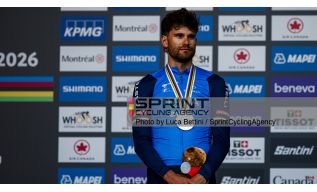
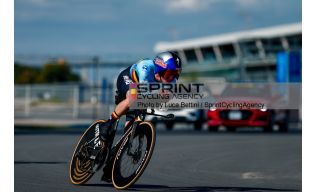
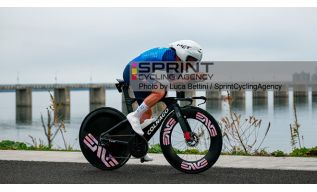
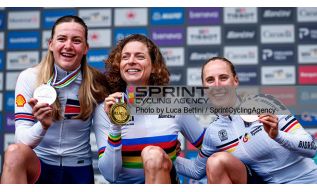

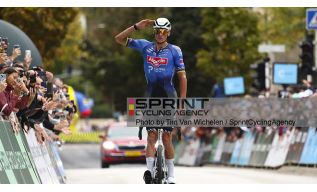
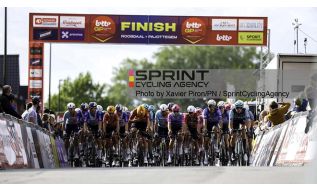













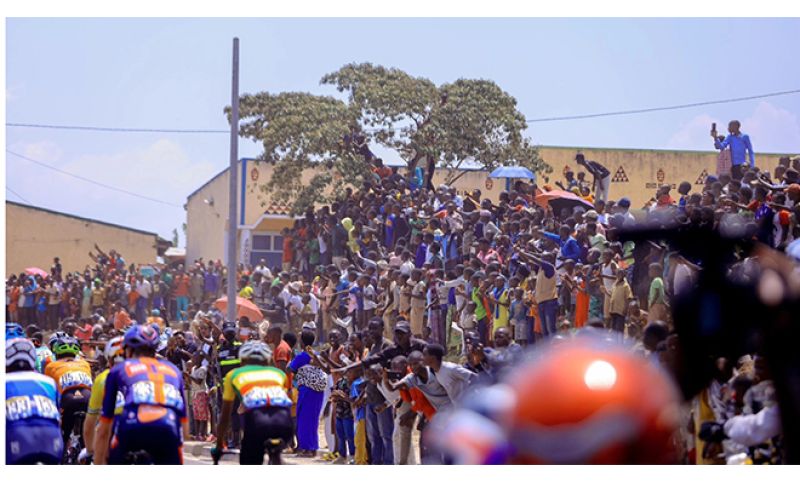
Where were we? At the grand finale emphatically signed by TADEJ POGACAR, at the end of an incredible and radiant world week, made of memorable competitive numbers (just ask Lorenzo Finn) and a public participation that once again affirms the sporting passion dwelling in the Land of a Thousand Hills.
Rwanda back again, Kigali back again marking the usual start and finish of a competition that didn't just pop up out of nowhere, because it's coming of age (18 editions) and especially because without that stage race, one could never have imagined, one day, bringing the first road cycling World Championships to equatorial latitudes. In short, the Rwandan event is positioning itself to become an increasingly important cycling hub, articulating its strategy along guidelines oriented towards developing the link between cycling and tourism promotion, without forgetting efforts aimed at spreading youth activity.
There will be an opportunity to delve deeper, adopting the words of Tgsabu Grmay, an Ethiopian who, from his long World Tour experience, recalls: "Rwanda has been a turning point for many athletes, a model of how sport can open doors to the world". Given that for this Nation, sports investments are always under the same brand present on the jerseys of major European football clubs (Visit Rwanda on the leader's jersey), the event has not lost its identity, proudly 2.1, a classification that allows space for African national teams, Rwandan squads, and a qualified group of Development teams representing the World Tour.
Two years ago, Blackmore won the overall classification here, shortly before finishing second at Tour de l'Avenir. In Kigali, it's reasonable to expect a similar path for riders competing in the development ranks of team Picnic Post NL, Lotto-Groupe Wanty, Movistar Team Academy, Soudal Quick-Step, NSN. Wearing the Eritrean jersey (with Ethiopia and Rwanda at the start), Henok Mulubrhan seeks a repeat of his Tour du Rwanda victory after his 2023 triumph: for the Astana rider, it would also be compensation for what happened last year, when the contested cancellation of the last stage (Doubey's mutiny and triumph) took away Mulubrhan's final victory.
In the 8 stages from Sunday 22 to Sunday 1st March, wandering through Rwanda follows a fairly faithful counterclockwise route compared to the previous year: there are new entries like Rwamagana in the eastern provinces, and classic stops remain, Huye, Rusizi, Rubavu, Musanze, Kigali of course, concluding at the mythical Pelè stadium, which already hosted the first, pioneering edition.
For a Country emerging from Genocide, preserving memory, cycling has had and has a salvific value. At the World Championships, stakeholders (UCI first and foremost) were assigned the task of affirming cycling across the Continent, an immense effort, yes, but consistent with initiatives aimed at increasing the number of races and the pool of practitioners, through the driving force of a global protagonist like Biniam Girmay (represented here by his brother Mewael).
This is how it works: the Tour organizers, supported once again by French expertise, know how to happily combine attention to setup details in a Grand Tour mode together with an unfiltered spirit of participation, translated into uninterrupted lines of spectators well beyond starts and finishes. The people counter would end up giving a lower number. We'll see the modern part of the Capital, with a finish line similar to the World Championships, but the backdrop in which cyclists pedal is changing and surprising, full of spectacular views ranging from rice fields and tea plantations, natural parks, the long shoreline of Lake Kivu, the slopes of volcanoes where Gorillas live. Will the competitors, creating tight challenges, feel like actors in a great tourist spot spanning 978 km and 16,174 meters of elevation gain? Yes, but they know they're preparing for a great collective embrace.
www.raggidafrica.it



 20
20
 20
8
8
13
13
20
8
8
13
13

 Ritratti
 Oscar
Oscar Albi d'Oro


Se sei giá nostro utente esegui il login altrimenti registrati.