


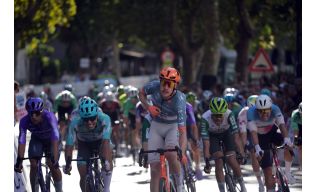
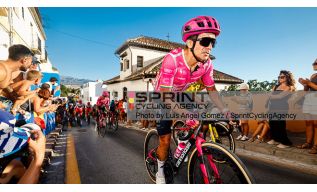
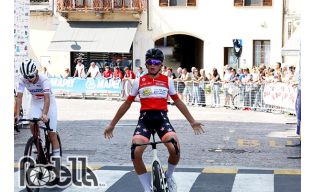














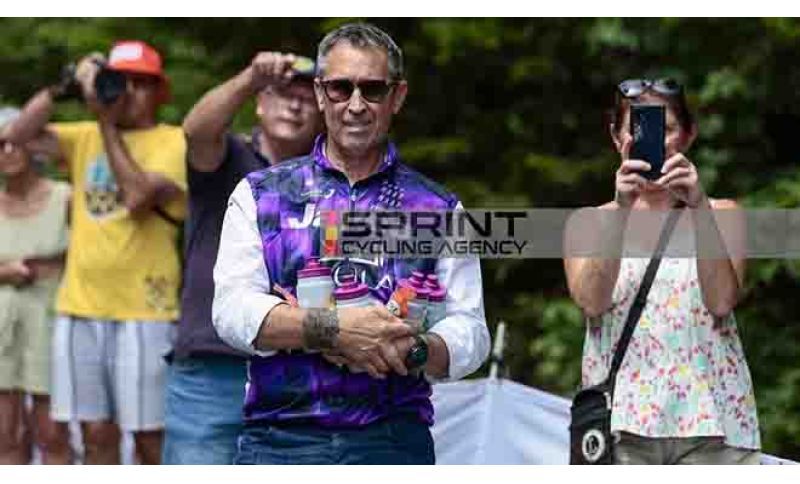
The AlUla Tour has just concluded, a stage race in Saudi Arabia where the Jayco-AlUla was racing... at home. On the jersey of this Australian WorldTour team (men's and women's) is the name of this historic Arab location, not far from the Red Sea, which is the first UNESCO site in the nation. On the occasion of the AlUla Tour, we had the opportunity to interview the team manager Brent Copeland, who since March 2024 has been the president of the AIGCP, the association that brings together all professional sports groups: the right person to talk about money, budget cap, investments, sponsors, and riders' conditions. On January 27th, we presented [the first part of our conversation](/article/1769446263), and this is the second.
"Let's start with the women's world: we must be careful that it doesn't grow too much, because in the last two or three years the teams' budgets have grown by 300%, and we don't want to find ourselves in a situation like men's cycling, where there are those two or three teams with a super budget and all the others left behind. This goes in the opposite direction of having a somewhat more enjoyable cycling, right?"
One of the most discussed topics in recent years is the need to impose a budget cap on sponsor investments: "As president of this organization, I have always said that the budget cap is mandatory, otherwise we find ourselves, for example, next year with Saudi Arabia investing 100 million, Qatar investing 100 million, the United Arab Emirates investing 60-70 million, and their teams racing against each other. It shouldn't be a budget cap that drives sponsors away, absolutely not, but a tool that can give much more security to those who want to invest. Right now, a sponsor who comes with 20 million and asks for the guarantee that those 20 million will be worth the top name for the next 5 years, cannot have this certainty, because if there's no budget cap, those 20 million are only worth a small logo on the sleeves".
Copeland emphasizes the need to work on a new business model valid for all teams, "We must find a way in which the team does not live exclusively on sponsors. Putting together a team to win is quite easy, then obviously you need everything else, but most teams are already well-made and equipped for a very high-level organization. But if you don't have a budget, you can't buy the rider to get results, and it's logical that you find yourself in the current situation. We don't have a stadium and we don't sell tickets, but there are ways that can be created to have more income".
What is he thinking about?
"Young people are watching less and less television and more and more iPad and iPhone. If a platform is created for all teams, or other similar ideas, there could be something interesting for everyone. These are ideas we are already exchanging, we have a working group".
The other aspect that has explosively emerged with Simon Yates' retirement is burnout, the exhaustion of riders, increasingly stressed and under pressure: enjoyment takes a back seat.
"This is a point that is very close to my heart because it is something that must be done as soon as possible: create a project that helps riders not only when they stop but during their career. We at Jayco-AlUla are fortunate to have a leader, Gerry Ryan, who strongly believes in the work environment. He treats all his workers in Australia the same way, to have the pleasure of working even in the factory, and we are fortunate to do the same in our team. Of course, sometimes an environment that is too light is created and results are lacking, because we don't have that way of working with too much pressure, but we want to try to create an environment where riders bring home results because they enjoy doing it".
Here are the key words: results, pressures, stress.
"It's true, every year it becomes increasingly difficult because there are the demands of sponsors and shareholders, points are needed to remain in the World Tour, and there is always more pressure. So we must create this balance between the right pressure and an environment where we work well, we do the same with our staff, mechanics, masseurs, etc. It's not easy at all, but cycling must react as soon as possible, otherwise we see young riders exhausted more and more. I don't know if this is the case with Simon Yates, but it's true that cycling is a sport that asks a lot, you're away from family, always on the move, making many sacrifices, the environment is increasingly stressful. Then there are social networks, and I have said this many times in recent years, even as AIGCP president, that we must make an additional investment to try to help everyone".
There are teams that bring riders' families to training camps.
"Certainly, this is something that could help, but it always depends on budgets, because important teams can afford to do so. Maybe there should be a rule to have fewer training camps: riders who come to race with us tell us they have done 70 days at altitude in a year and then another 70-80 days of racing. Before bringing families to training camps, it might be more important to create a more reasonable work environment. A bit like in Formula 1 or MotoGP, where there are only eight tests per year for each team. When you're at a training camp, you're always under pressure about diet, training, everything. Then someone will criticize me saying that riders are paid well and that it's their job. Right, okay, but let's find a middle ground".
2 - end



 1
1
 1
5
5
1
1
1
1
4
4
1
5
5
1
1
1
1
4
4

 Ritratti
 Oscar
Oscar Albi d'Oro


Se sei giá nostro utente esegui il login altrimenti registrati.