















Bicycles have a soul. It's not just the aluminum, steel, carbon, or titanium - or even bamboo - of its frame. But it's something that goes beyond matter, a bit of shape and color, gender and age, origin and destination, owner and user, and much spirit, and much existence.
Bicycles have a soul, and that's why calling them mechanics, cyclists, shopkeepers means little or nothing. Because they are also a bit priests and missionaries, nurses and doctors, rescuers and surgeons, interpreters and translators, psychotherapists and laborers, artisans and - yes - artists.
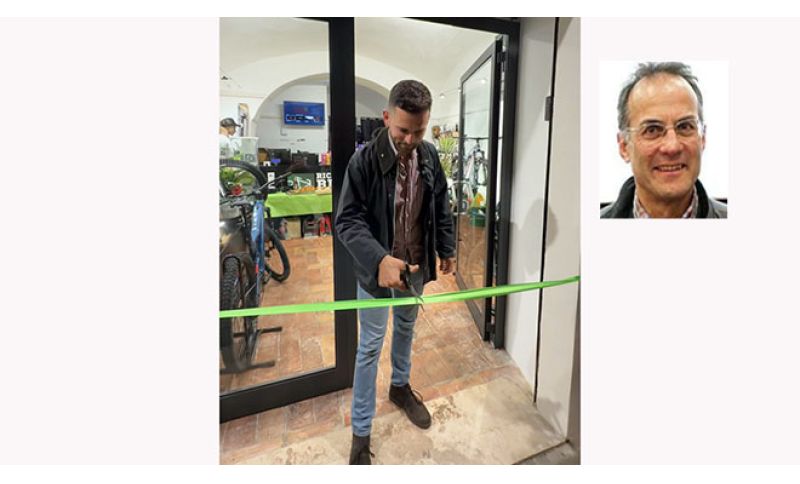
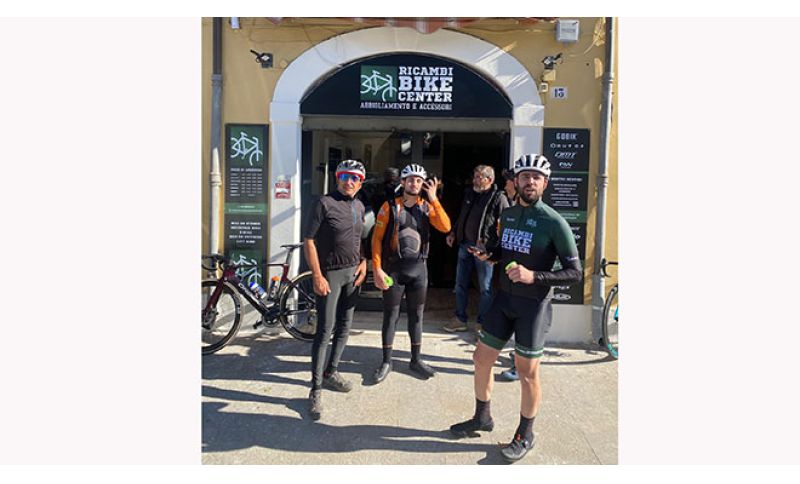
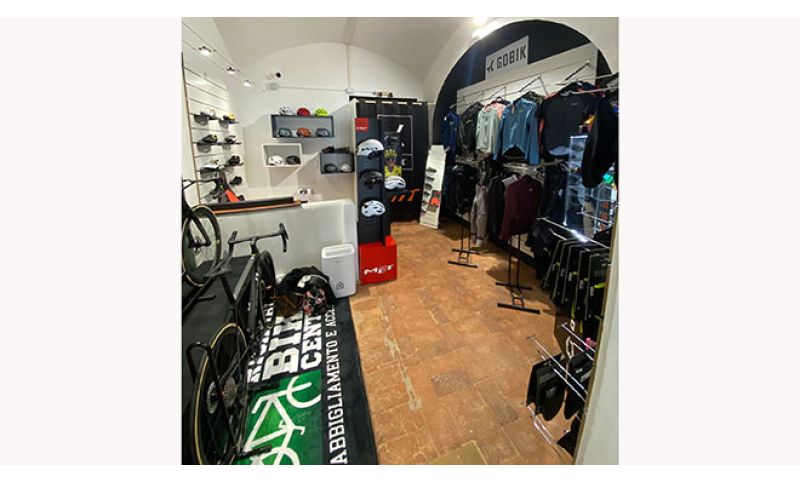
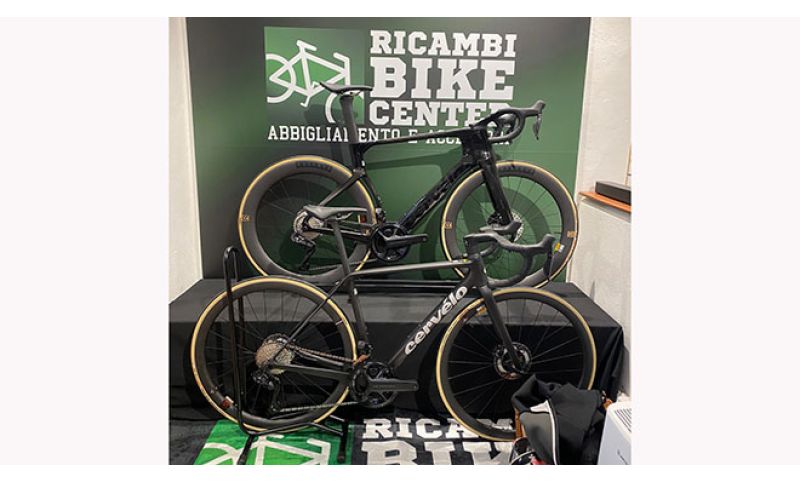
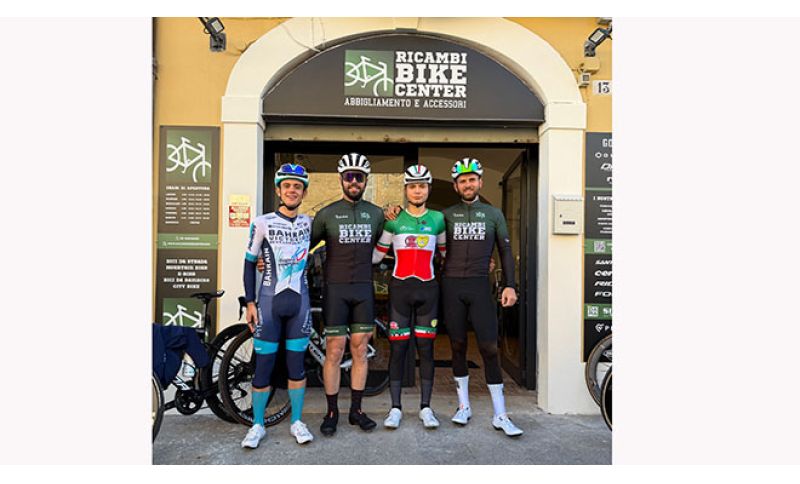
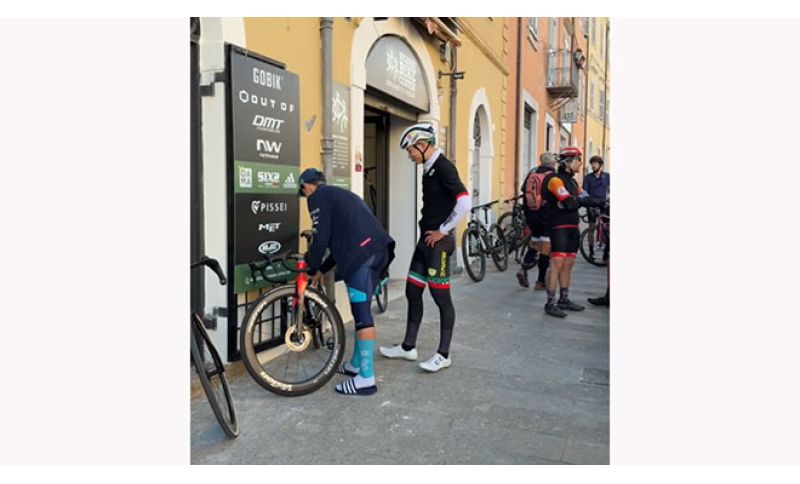
Thus, the birth of the Ricambi Bike Center in Oriolo Romano, on the Via Claudia Braccianese, about fifty kilometers north of Rome, towards the heart of Tuscia, is a celebration that goes beyond the inauguration (last November 9th), but continues every day. A workshop but also an emergency room, a laboratory but also a cultural center, a store but also a human refuge.
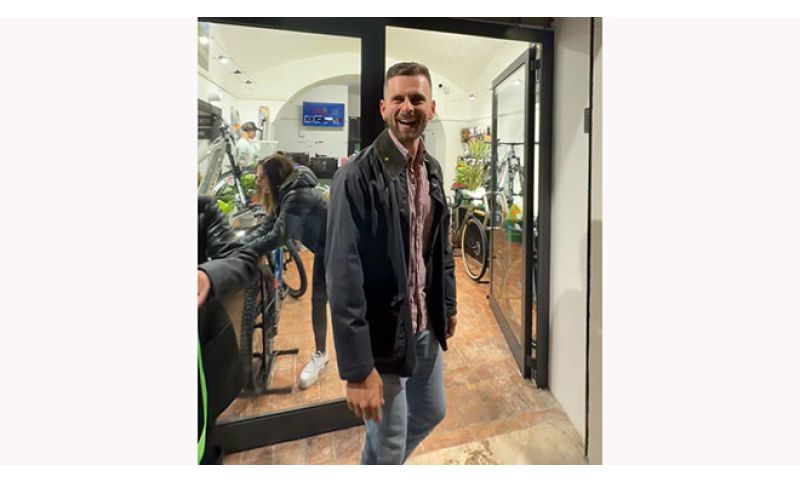
Edoardo Placidi is 33 years old, from Rome, after a bachelor's in Motor Sciences he is graduating in Human Nutrition Science: the bicycle has marked his life, "the passion inherited from my father, the rides and races, working as a mechanic first at Decathlon then at Montanini, and finally the decision to start my own business, courage but above all desire, almost a necessity". His first racing bike was a revelation: "A Tommasini racing bike, entirely handmade, in the workshop in Grosseto". From that day "the bicycle became freedom, that is autonomy and independence, wind in the face, it became a companion, that is an accompanist and guide, a daily presence, it became a subject of study and conversation, the most beautiful sport one can imagine because it teaches how to be in the world, imposing order and discipline". Placidi continues: "The bicycle is not just an extension of one's seat, but an instrument and vehicle, a means for everyone, of all ages and all strengths, the vehicle of the future".
Here we go from the most simple and frequent operations ("Replacing inner tubes and tires") to the most complex and complicated ones ("Generally those concerning the bottom bracket"), but well knowing that "the most important thing is understanding the detail that can make a difference", precisely because "each bicycle has its soul and it is the soul that must be identified, interpreted, confessed". Placidi is convinced that "you must treat every bicycle as if it were your own: clean it, listen to it, care for it, love it".
In the jungle of large numbers, those industrial ones, the small gardens of small numbers, those artisanal, express a humanity that is affection, precision, candor. "I talk to bikes - Edoardo Placidi confides. Because bikes tell stories, explain, and while pedaling, sing and play". He's not crazy, Edoardo. "The perfect music would be that of silence. Easier to find off-road than on the road. Easier to find inside them, the bicycles, than inside ourselves". But we'll try.



 2
2
 2
4
4
2
4
4

 Ritratti
 Oscar
Oscar Albi d'Oro


Se sei giá nostro utente esegui il login altrimenti registrati.