
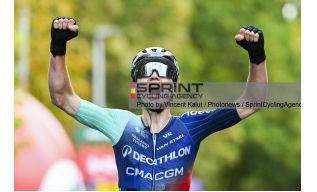
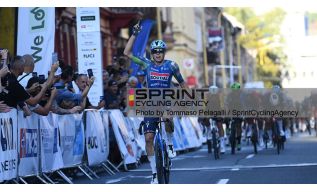
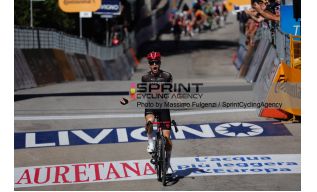
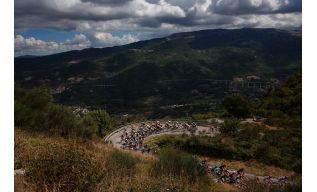
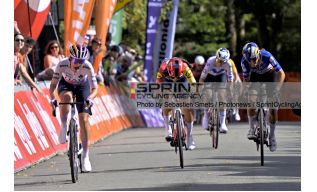
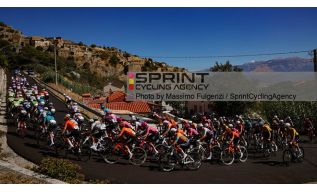
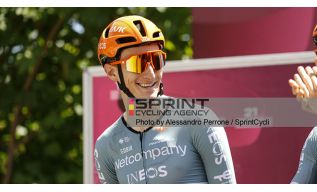















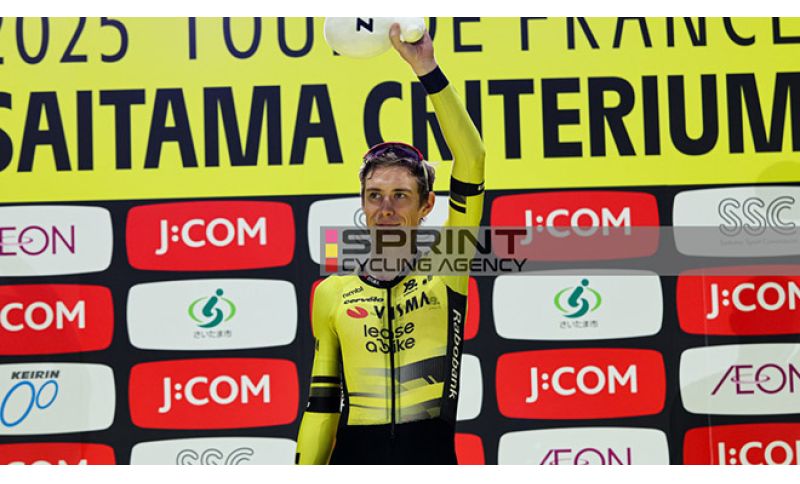
Jonas Vingegaard is the enigmatic man of the peloton. Often capable of hiding his emotions, with eyes concealed behind his mirrored sunglasses even at the end of a race, he rarely lets slip what he thinks or how he feels. In interviews, his answers are always brief, and at the end of every race, the only thing he wants is to hug his wife Trine and their two children.
The Dane, winner of the Vuelta and second at the Tour de France, believes that 2025 was a very positive year for his team and that only 2023 was truly his perfect year. Vingegaard speaks little, but through Visma-Lease a Bike it was possible to receive his interview, the last one, recorded inside the team bus during the training camp in Spain with his press officer.
Looking back at 2025, what kind of season was it for you?
"I think it was a good season. Well, certainly not my best, but it was still a good season. The Tour de France was the biggest goal of the year, and unfortunately I didn't manage to win it, but still a second place is a great result. Certainly I want more, and then winning the Vuelta was also a really big goal for me and I was happy with the result obtained".
Was it a positive year for you and do you think the same for the team?
"I think for the team it was a fantastic year. Only one year was better: 2023. For the team to win the Giro d'Italia and the Vuelta in the same year is already a great result, and then winning the Women's Tour de France and finishing second in the men's race is certainly something unique".
The season started with a victory in Algarve, then there was the fall at Paris-Nice, which prevented you from racing until the Dauphiné. Was it a difficult period for you?
"No, we decided to wait: I could have raced in Romandy or some other race, but we decided to take it easy and prepare for the Tour. It wasn't a serious injury, even though I was sidelined for about a week. Unfortunately, I didn't do the Catalonia, and that was a shame".
How did you transition from Dauphiné preparation to the Tour de France?
"Actually, when I started training, my goal was the Tour de France, or rather, the first race was the Dauphiné. So from there it was just about getting back in shape: I started the high-altitude training, and then we did the Dauphiné and immediately after the Tour de France".
How did you feel at the Tour?
"Even better than at the Dauphiné. After the 2024 fall, I'm back in shape more or less with the same power numbers I had before the fall. We started the race very aggressively: people even complained that we were too aggressive. Looking at the race, I think there were many opportunities to see if we could gain some time. And obviously, looking back, we might have done something different, but it's always easy to be smart afterward. Of course, we all believed in our plan and wanted to increase the aggression. The goal was really to put pressure on the others".
In the past, you never raced too aggressively: did you enjoy this new approach?
"Yes, I liked it. It was a different way of challenging compared to what we normally did in the past. I liked that it was a bit more based on feelings and that we were more aggressive. I'm not saying we should always race like this, but at least this once it was nice to try, and I think it's fair to say we tried everything to win the race".
You finished second with a significant advantage over third place, but in the end, one was the strongest.
"I think at some point I had a few negative days that made a big difference in the race, but I still believed I could win and still believed in myself, thinking we could recover some time. Unfortunately, it wasn't possible to recover. But it's also fair to admit that the best rider at this year's Tour de France won the race. But this should also give us more motivation for next year".
How exciting was it for you to see Wout win that last stage?
"It was really nice to see Wout win again at the Tour. Both he and I had a bad fall at the same time, and I think perhaps we both had some difficulties, but then it was really nice to see him win on the Champs-Élysées, and I was super happy for him. Seeing Wout win is always nice, and he truly deserved the victory because he fought so hard for it: his success made me want to win at the Vuelta".
How did you prepare for the Vuelta?
"First, I went back home to Denmark to relax a bit for a nice week and then restarted. It was just under four weeks, and obviously, there wasn't much that could be done".
What was the plan for the Vuelta?
"We knew there were many uphill finishes where you could easily burn out. So we chose and developed the tactics before the race, deciding to focus more on stage hunt towards the end. Then if opportunities arose, we would exploit them, but we didn't want to exhaust the entire team for the second stage, for example. Then the opportunity presented itself, and I seized it. On days when you feel good, you must take advantage. If I look at that Vuelta from a tactical perspective, initially the plan was to be conservative, but after the first rest day, we also had to adapt to the new plan because we needed to become aggressive and try to win stages. So already in stage 11 towards Bilbao, I put the entire team at the front and was still in the running to win, but then the stage was cancelled, and we did it again in stage 13. I wanted to win and still believed I could, but I had to change strategy mid-stage to defend rather than attack".
What do you say about yourself as a cyclist, about being able to change strategy so quickly?
"I think switching from being defensive to attacking can be more difficult for someone. You want to attack, but then it's not possible, so you just have to focus on chasing. If you only want to chase, suddenly you find yourself having to attack, and this can be more difficult. For me, it shows that I'm also a very strong instinctive and tactical rider, and that's how I want to race".
We can't ignore the fact that you had to celebrate the Vuelta victory in the team hotel parking lot. How was that?
"In the end, I think it's fair to say that was also a historic celebration. But obviously, it was also a shame for cycling what happened. I also remember a bit of question marks above everyone's head when we returned to the hotel because it wasn't very clear what would happen. I sat at the back of the bus and stayed there for quite a while, and then the others arrived, and we drank a beer together, and suddenly I don't remember who got on the bus and said: 'Ah, we're working on a party here in the parking lot. We'll try to gather everyone'. And then yes, in the end, everyone came, and for me personally, it was one of the most memorable podium ceremonies I've ever experienced".
So, what did you take home at the end of the Vuelta?
"Actually, I would say a lot of positive things. I'm really happy that there were celebrations, first of all, and also very happy with how everything ended up. Of course, I would have preferred not to get sick, but I still won three stages and the Vuelta, which is also a very important race, and I'm super happy to have it in my palmares".
You competed in the Europeans after a quite demanding season. Do you think you would have needed more rest?
"I was happy to have done the Europeans, but to be honest, looking back, maybe I would have needed to rest. I realized I needed a break more than I thought. After the Vuelta, I had about a week of preparation and then went to the Europeans, and the result was not what I hoped".
So, what did you do to rest afterward?
"Actually, I only had a few days of rest and then continued training in Andorra and then went to Japan. I did low-intensity training three or four rounds a week, and then I did intervals and continued to keep the engine running a bit: in Japan, I took my real vacation. Now I've gone to the Netherlands and then will work with the team in Spain".
Do you want to tell us something about your appointments for 2026?
"No, it wouldn't be right. We'll reveal everything together with the team later on".

 4
4


 4
4


 1
1
1
1
22
22
1
1
1
1
22
22

 Ritratti
 Oscar
Oscar Albi d'Oro

