




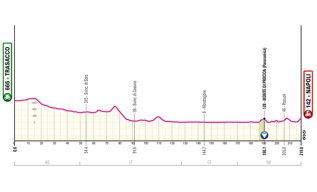







It was in the air, and with today's official presentation in Rome, everything is confirmed: in 2027 the province of Bergamo, and Val Brembana in particular, will return as protagonists of international professional cycling. On Saturday, May 22, the 14th stage of the Giro d'Italia will take the peloton from Cantù to the finish at Piani di Bobbio – Valtorta, at the end of a 187 km stage with 4,920 meters of elevation gain. A demanding and spectacular stage, with an unprecedented finale that could prove decisive for the general classification, on the eve of the final week of the Giro.
The Bergamo region already boasts climbs that have entered cycling history, from Selvino to Valcava, passing through Ganda, and with the 2027 Giro stage, two new challenges will be added for professionals: the Alino climb and the ascent that will lead to the finish at Piani di Bobbio in Valtorta.
But let's look at it in detail. After the start from Cantù, the peloton will immediately tackle the legendary Madonna del Ghisallo climb, then descend towards Lecco and climb again through the Culmine di San Pietro, to reach Val Brembana. The route will pass through locations with a strong connection to cycling and particular charm such as Sedrina, the birthplace of Felice Gimondi, and immediately after the peloton will face the third climb of the day: Miragolo. Upon reaching San Pellegrino Terme, the most demanding part of the stage will begin, with the first novelty of the day: the short but extremely steep Alino climb. After San Giovanni Bianco, the peloton will pass through Lenna and, at Olmo al Brembo, will turn left to tackle the long ascent towards Valtorta and the finish at Piani di Bobbio.
The involvement of the territory will also extend to the Giro-E, with San Pellegrino Terme as the starting city of the stage that will also conclude at Piani di Bobbio Valtorta.
The reconnaissance with two true Bergamo natives
To discover the characteristics and challenges of these two brand new climbs, we tackled the final kilometers of this stage together with two former professional cyclists from Bergamo: Ivan Gotti, winner of the Giro d'Italia in 1997 and 1999, and Eddy Mazzoleni on the podium of the Giro in the 2007 edition.
Thirty years after Ivan Gotti's Giro d'Italia victory, the Giro includes the unprecedented Alino climb in the Bergamo stage, which Gotti himself describes as an "ascent capable of surprising." In fact, the route that deviates from the provincial road of Valle Brembana is only 3 kilometers long, with an average gradient of 10%, but this figure doesn't fully convey the difficulty of the uphill road. Essentially, the climb is divided into three sections, with the beginning and final stretch having gradients ranging between 15 and 20%, separated in the middle by a flat section that will provide some relief.
For Ivan Gotti, who was born in San Pellegrino, this is a climb from home: "The road was completed after my retirement, so I've never ridden it in a race, but if it had been included in one of my Giros, I would have definitely loved it: with these gradients, it's one of those climbs that pure climbers enjoy". It's not a climb that can make the difference, but these walls can represent a trap. "Yes, it's true, if a rider has podium ambitions and struggles here, the time gaps can radically change the classification". A climb that starts from the center of San Pellegrino and that nobody knows: "It's not among the classified climbs for amateurs, but we're sure it will become a battleground on Strava for those who want to set the KOM among enthusiasts," concludes Ivan Gotti.
With Eddy Mazzoleni we instead tackled the final climb towards Piani di Bobbio. The road starts climbing from the town of Olmo al Brembo when there are 19 km to the finish, but the real climb begins when riders are less than 12 km from the finish, that is, from the town of Valtorta. For almost 10 km, before the final more rideable section in the meadows of Piani di Bobbio, the gradient never drops below 10%, with peaks reaching 18/19 percent.
"This is a real climb, and it comes at the end of the second week when fatigue begins to take its toll. If you struggle here, you can lose many minutes. And probably the Giro as well," explained Eddy Mazzoleni. "Everything depends on how the peloton decides to approach the first part of the climb: if the pace is high, whoever wants to aim for the pink jersey will have to be ready in the second part to attack without hesitation." No, it won't be an easy stage, on this Mazzoleni also agrees: "Especially because four climbs have been tackled and the muscles are feeling it by this point, but I don't think it will be a transition stage: with modern cycling, this stage will be ridden to put a mortgage on the entire race," concludes Mazzoleni.
Two new challenges for Bergamo cycling enthusiasts
The bond between Bergamo and cycling is thus further strengthened, bringing the Giro d'Italia to unprecedented roads, destined to become new reference points for professionals and cycling enthusiasts. An opportunity to enhance the territory and make climbs known to fans and enthusiasts that, after the passage of the Giro, could permanently enter cycling lore.
"Before and after the Giro, Alino and Piani di Bobbio will become a destination for many cycling enthusiasts: we expect many fans hunting for KOMs and QOMs - commented Giovanni Bettineschi of Promoeventi Sport, the local organizing committee for the stage – because they are two variants of different lengths for those who love Valle Brembana and want to discover new climbs to test themselves on".
Fans on the ski lifts.
And no problem with the road surface: the final section towards Piani di Bobbio that during winter coincides with ski slopes, will be restored with a cemented dirt track, compatible with the environment and at the same time usable by cyclists of all types.
Finally, great news comes from a logistical perspective: reaching the finish will also be very simple. From the Lecco side, fans will be able to go up directly from Barzio thanks to the new cable car, opening in December 2026. From the Bergamo side, instead, the Chiavello chairlift will remain active.
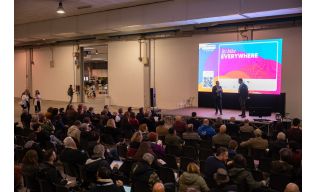
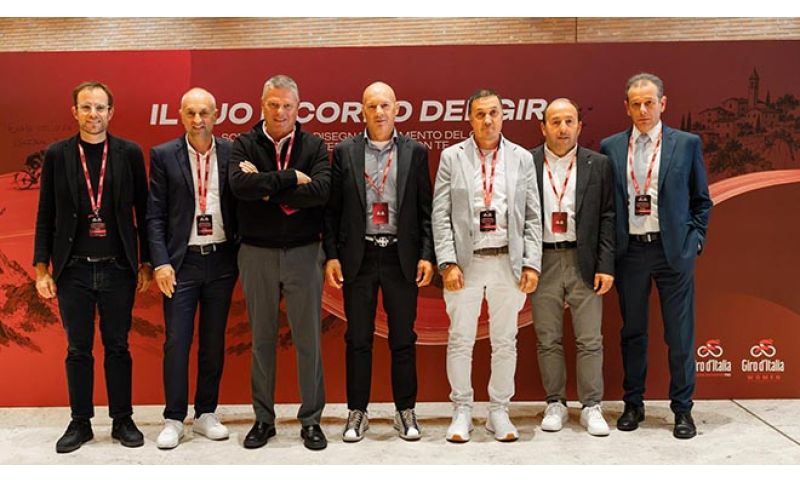
At the presentation in Rome today were present Giovanni Bettineschi and Fabio Belingheri of Promoeventi Sport, Massimo Fossati of ITB Spa, Andrea Ferrari mayor of Barzio, Antonio Regazzoni mayor of Valtorta, Jonathan Lobati regional councilor of Lombardy Region and Ivan Gotti.
From left, in the photo: Jonathan Lobati, Ivan Gotti, Massimo Fossati, Giovanni Bettineschi, Antonio Regazzoni, Fabio Belingheri, Andrea Ferrari. Photo credit Marco Quaranta



 2
 2
2
2
1
1
2
2



 |
 |
||
 |
 |
|
|
 |
|
||



 Ritratti
 Oscar
 Albi d'Oro


Se sei giá nostro utente esegui il login altrimenti registrati.