






What more can be written about Bartali? What can be written that is new about Bartali? What else can be written about Bartali? About Giuseppe Garibaldi on horseback, but on a bicycle, there must have been about seventy books written, approaching a hundred if we consider those written about him and Coppi, a tandem often inseparable, if not always indispensable. Gino the Pious, Gino the Just, Gino the Timeless, Gino the Man of Iron has been portrayed, told (he himself told his story: "Everything wrong, everything to do over," Mondadori, 1979), narrated, framed, contextualized, even contested ("The Obsession of Memory" by Marco and Stefano Pivato, Castelvecchi, 2021), he has been beatified, sanctified, sung about (by Paolo Conte, Enzo Jannacci, the Tetes de Bois...), he has been novelized, historicized, illustrated (in comics, in graphic novel form). Everything and more. And yet.
And yet more can still be written about Bartali. And yet one can always write about Bartali. And if there isn't something new, and if there isn't something unprecedented, and if there isn't something else, there will still always be something different. A different approach, a different angle, a different memory, a different point of view and reference, a different starting and ending point, a different way of measuring, evaluating, if not judging, a different writing style. Even from those who never met or knew him, but who have excavated or analyzed him. Time is sometimes a tyrant, sometimes a gentleman, but in any case it helps us interpret.
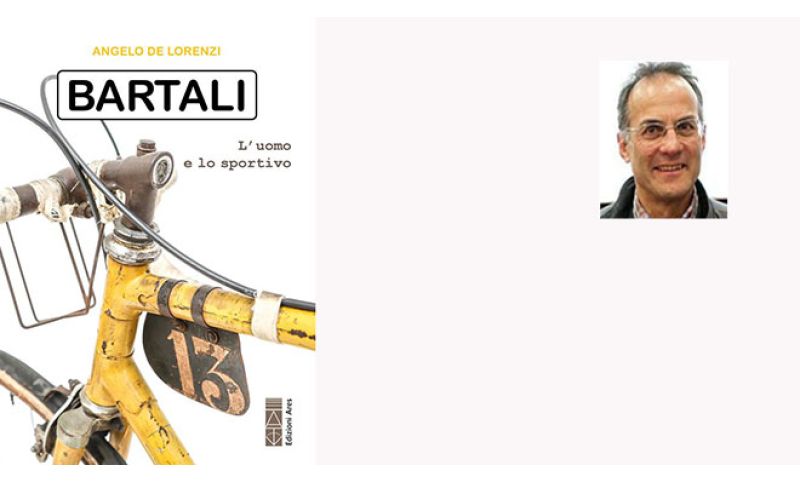
Angelo De Lorenzi had already written about Bartali in "Gino Bartali a 'saint' on a bicycle" (Mimep Docete, 212 pages, 12 euros, 2019), and the focus was on his "profound religiosity." Now he returns to it with "Bartali – The Man and the Athlete" (Ares Editions, 208 pages, 16 euros), and Ginettaccio is told from his starting point, Ponte a Ema, July 18, 1914, all the way to and beyond the finish, Florence, May 5, 2000, precisely the day of the Manzonian "He was." Because beyond his first life, the competitive one, and his second life, that of sports director, general manager, entrepreneur, testimonial, journalist, commentator, television host, Bartali is still living a third life, that of messenger of peace, of Righteous Among the Nations. An existence, and also a resistance, that he had jealously kept hidden and that slowly emerged through confidences and confrontations, research and investigations, without reaching arithmetic certainties but traces, clues, declarations. And then his jerseys. And then his bicycles. And then his books, that hundred about him.
De Lorenzi synthesizes and cites. Synthesis can be sufficient for understanding, citations are precious for deepening knowledge. The narrative present is historical, and it is perfect, because the Garibaldi on a bicycle continues to pedal. "Bartali – The Man and the Athlete" is not a literary exercise, but a work that has its reason for being.



 1
 1
7
7
1
1



 |
 |
||
 |
 |
|
|
 |
|
||



 Ritratti
 Oscar
 Albi d'Oro


Se sei giá nostro utente esegui il login altrimenti registrati.