




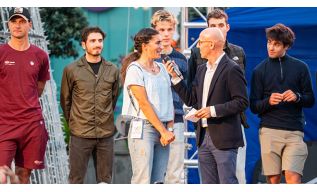
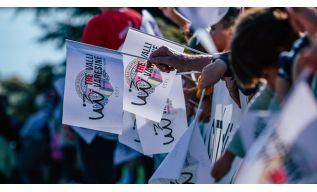















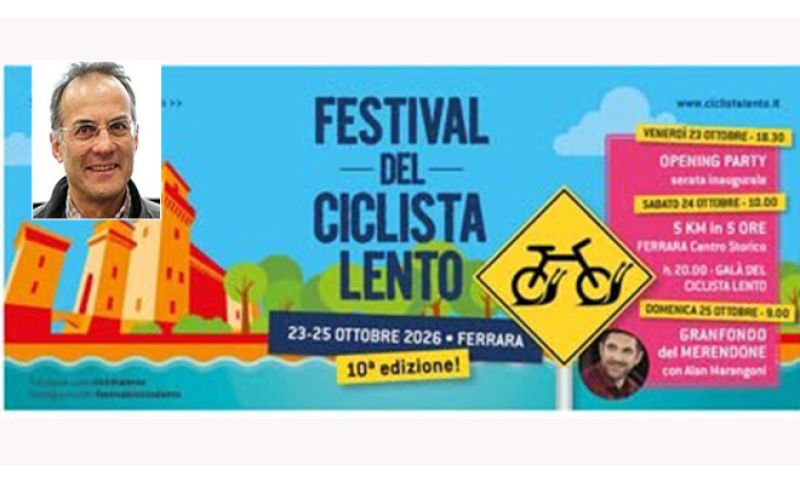
Ten like the fingers on our hands and ten like the toes on our feet. Ten like the commandments and ten like the plagues, that is, the disasters, that God sent upon the Earth to convince the Pharaoh of Egypt to free his people from slavery. Ten like the highest grade at school and ten like the jersey of Pelé and all the most imaginative footballers (from Maradona to Messi, from Platini to Zico, from Baggio to Totti, from Del Piero to Dybala...). And ten like the editions of the Slow Cyclist Festival, in Ferrara, from today Friday, October 23rd to Sunday, October 25th, with Guido Foddis as director, and Alan Marangoni as guest of honor. The first event starts at 6:30 PM at the Casona on via Smeraldina: words and music. For more information www.ciclistalento.it.
"Ten – a number that counts" (il Mulino, 140 pages, 14 euros) is the tribute that Luisa Girelli has dedicated to what "according to the Pythagoreans is the perfect and sacred number, because it represents the sum of the first four numbers (1+2+3+4) and embodies universal harmony and order". Ten, the first double-digit number. Ten, the number corresponding to beans in the Smorfia and the number representing the cycles of life with its ups and downs in the Wheel of Fortune in the Tarot. Ten, the atomic number of neon. Ten, the number of "top," the "top ten," the first ten, the best ten. Ten, the number of little Indians (the film "Ten Little Indians") and also of winters (the film "Ten Winters"). Ten, the number of minutes of the historic "Carosello" on television. "The number ten is born as a shapeshifter – writes Girelli – it appears everywhere, often assuming a special aura and, in almost every occasion, an extraordinary value. It is around this number that the decimal numerical system is built, extended to almost all measurement systems".
The number ten has something fateful about it. The 10th Tour de France was held in 1912, won by a Belgian, Odile Defraye. A lucky number for him, because he participated in the Tour six more times and was always forced to withdraw. The 10th Giro d'Italia was not held in the tenth year but in the fourteenth year, suspended during World War I. It was 1922, and Giovanni Brunero finished first. In the words of Raro, Ruggero Radice, a journalist first at the "Gazzetta del Popolo" and then at "Tuttosport," Brunero "felt almost guilty when dropping his opponents on the climbs". Do you know how many stages that Giro had? Ten, of course. And do you know who won the tenth stage? Brunero, naturally.
And ten are the years of Alan Marangoni's professional cycling career. And that victory achieved in his final race can be considered a commendation. Precisely: ten with honors, ten with distinction.



 4
 4

 Ritratti
 Oscar
 Albi d'Oro


Se sei giá nostro utente esegui il login altrimenti registrati.