



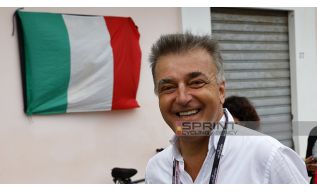




















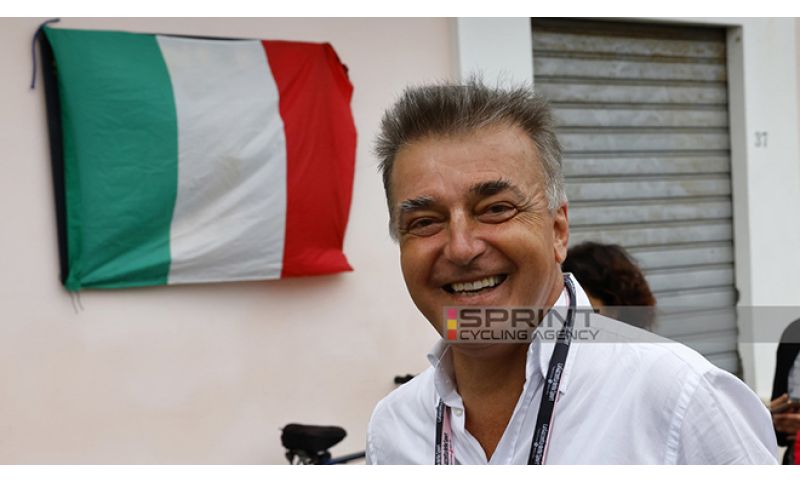
Valentino Sciotti intervenes in the discussion about world ranking, classifications, the role and importance of ProTeam formations. His is a valuable reflection that deserves our attention. We present it to you.
Are we sure we're on the right track? Let's start from the principle that the professional cycling system shows evident flaws that should have been addressed long ago and no one seems to have been concerned about it. If you adopt a new system, common sense would suggest that - after an experimental period - there should be revisions and yet here no one seems to have raised the issue.
But is it normal that there must necessarily be 18 teams representing absolute excellence and a gap from the rest of the group, when an enormous gap already exists between these same 18 elite teams? Having a budget difference of 30 or 40 million per year doesn't just mean this, but it means that if you don't intervene, after three years the cumulative difference becomes 100/120 million and you can only build important rosters over several years, because not all cyclists are free to change teams every year. In fact, in recent seasons we've witnessed the fact that those with unlimited budgets lock their athletes into 5-year contracts that get extended at the end of each year, thus making it effectively impossible to put together a team that can compete immediately, even for those who might want to enter cycling with very substantial investments.
In a normal world, corrective measures would have been implemented immediately, but in our world we've brought the sector to the point that only 5 or 6 teams win in a Grand Tour and too often teams with enormous investments end up empty-handed, with sponsors who certainly cannot be happy with their investment and increasingly easily decide to abandon the sport.
Now it would be time to ask ourselves: is this what the future of cycling should be? Is it better to live off the overwhelming dominance of a single team and the substantial investment of 3 or 4 other sponsors who sooner or later will abandon due to dissatisfaction with results, caused by the impossibility of accessing the strongest athletes, or have 10 or 12 first-tier teams with limited budgets but with the possibility for each to have cyclists who can compete in any race and then a substantial number of professional teams that can have proper visibility in races in their own country to keep the sector alive and to attract new sponsors and cycling enthusiasts to the sport?
If we don't give ourselves an answer on this, perhaps we won't find ourselves seeing teams that finish in 31st place and don't fall within the possibility of an invitation, even if 3 or 4 teams that ranked ahead of them won't exist the following year. Perhaps there won't be invitations to Grand Tours that aren't aimed at protecting the national movement but will instead be reserved for teams whose sponsors know how to be "generous" with organizers, causing the national movement to plummet into the abyss, with the social result of driving many young people away from this sport, given the impossibility of finding opportunities for their future.
Do we really want to delude ourselves that cycling is alive thanks to the Continental world, kept afloat by the passion of a few and in conditions of strong disparity regarding obligations, rights and controls?
The UCI must understand that to manage a worldwide movement it's not enough to look at the present, but every choice must guarantee a better future for the entire sector, and I, perhaps due to my inability, don't see this future, just as I can't see a future for Italian cycling without Bardiani and the other Italian Professional teams in the group.

 4
4


 4
4


 4
4
1
1
4
4
4
4
4
4
1
1
4
4
4
4

 Ritratti
 Oscar
Oscar Albi d'Oro

