
















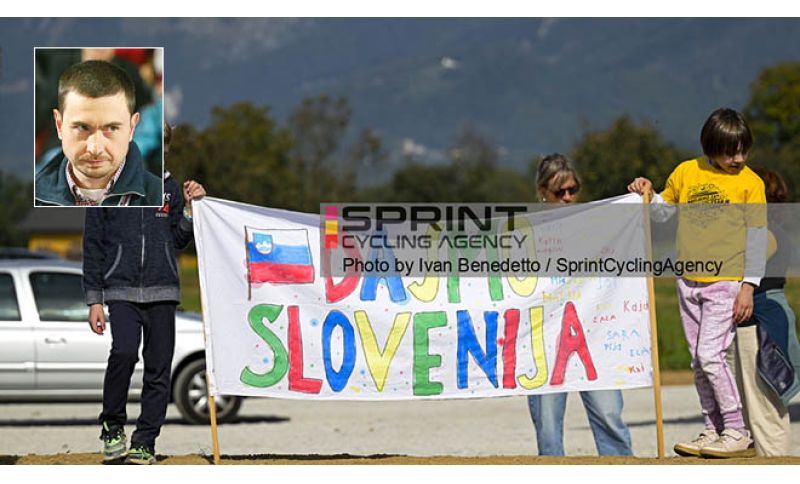
Beyond the World Championships, Tadej Pogacar's absence weighs heavily on the European Championships: the race takes place in Slovenia, on the Ljubljana circuit that organizers had designed with the home phenomenon in mind, who is also the defending champion. In the absence of the phenomenon, the odds widen, even though the competition narrows compared to the World Championships: there's no Seixas, Van der Poel is thinking about whether or not to attempt the Lombardia, Pidcock is at home with all of Great Britain, Van Aert isn't even entered. With another jersey to be worn for a season at stake, the course is not to be underestimated: more than the distance (197 kilometers), the climb in the second part of the race will matter—a couple of kilometers at ten percent to be repeated five times that push the elevation gain to 2500 meters. In the ten previous editions, there have been four Italian victories, all in a row between 2018 and 2021 (Trentin, Viviani, Nizzolo and Colbrelli in that order). Here are the ten faces hunting for the continental throne.
Remco Evenepoel. He wins because he needs to redeem a disappointing World Championships, because it's the last of the great goals still missing from his palmares, because he's the only rider at the highest level attempting it. He doesn't win because on the road he's not a guarantee like he is in time trials.
Giulio Ciccone. He wins because his world-class form allows it, because with fewer phenomena in circulation he has space to do it, because among the many jerseys worn in his career this one is missing. He doesn't win because a World Championships raced on the front line could have drained his energy.
Primoz Roglic. He wins because in the absence of Pogacar the home crowd is entirely behind him, because he came out of the Vuelta in perfect condition, because he's among those who has consumed himself the least this season. He doesn't win because at the threshold of 36 years old he suffers from the freshness of the young.
Mads Pedersen. He wins because there's no course he can't adapt to, because he's one of those who never gives up, because if he's capable of fighting with phenomena, imagine when they're not there. He doesn't win because even generous riders like him can have an off day.
Juan Ayuso. He wins because he has the ideal course to succeed, because he needs to bounce back after a World Championships that wasn't exactly starring him, because this season he's done well but not brilliantly. He doesn't win because feeling equal to the phenomena is one thing, proving it is another.
Jan Christen. He wins because he's another who needs to redeem himself from the World Championships, because he's a rider who when he's on form can't be held back, because on this course he can ignite. He doesn't win because at 22 years old he's still a bit behind the phenomena of his age.
Romain Gregoire. He wins because he's focused heavily on this race, because in the September tune-ups he's been improving, because he's one of those you never consider but is always there. He doesn't win because the circuit's climb risks going against him as the laps wear on.
Giulio Pellizzari. He wins because he's been strong for a couple of months, because the course suits his qualities, because compared to the other Italian alternative Scaroni he has the World Championships setback to redeem. He doesn't win because he finds someone more brilliant than him.
Mathys Rondel. He wins because he's been racing on the front line for an entire season, because he's perfectly suited to this course, because in the French national team both he and Vauquelin have a free hand. He doesn't win because races like this require the experience he still doesn't have.
Jacob Omrzel. He wins because he's the classic twenty-year-old you don't expect, because he hasn't raced since the Vuelta and is fresher than many, because he can't wait to show his enormous talent on the roads of his home country. He doesn't win because on his team he has Roglic and his first duty is to help him.

 10
10


 10
10


 1
1
1
1
1
1
6
6
3
3
1
1
1
1
1
1
6
6
3
3

 Ritratti
 Oscar
Oscar Albi d'Oro

