















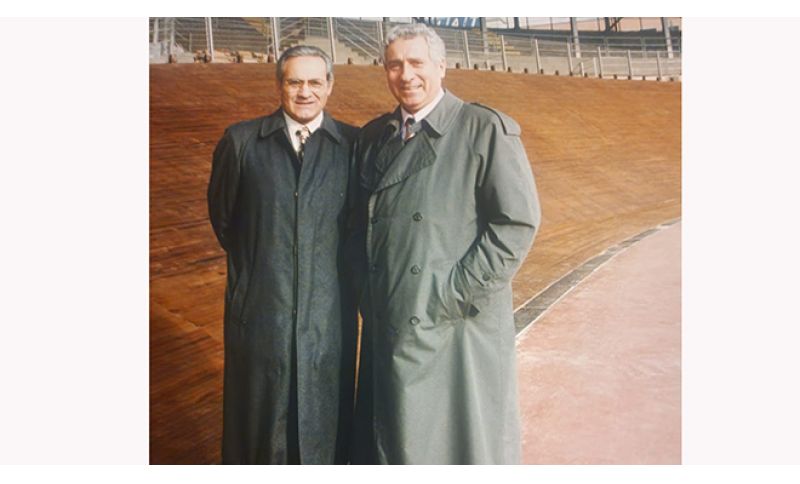
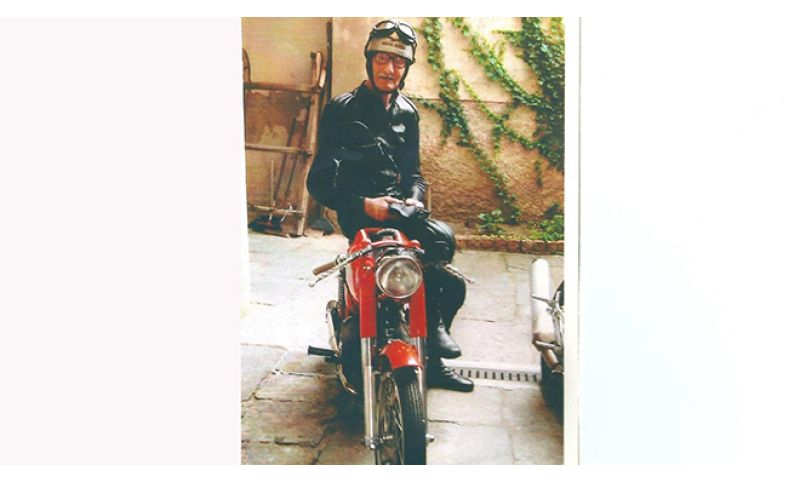
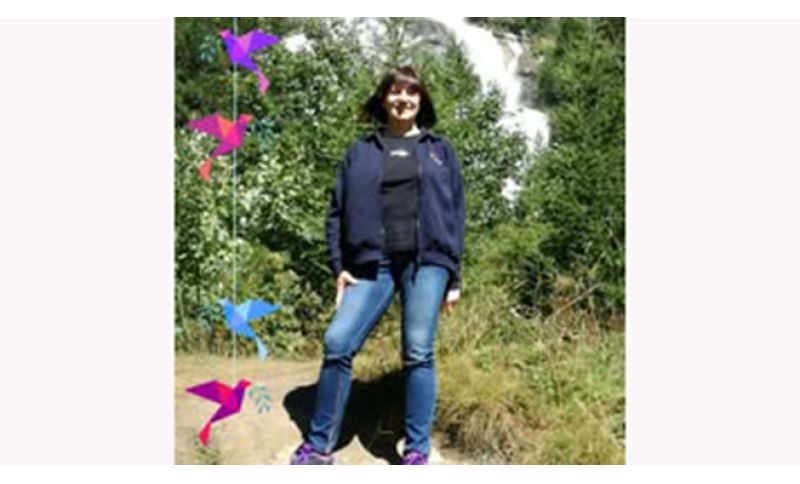
We present on this occasion a worldwide "unicum" of cycling, track cycling, with a glance toward the past, a rather remote past, given that this concerns the middle-distance racing or stayer discipline as it is called. The stayer events at the world championships were abolished by the UCI in 1992 for professionals and, two years later, the open category that followed.
The middle-distance racing world championships were included in the track world championship competitions since 1895 and were won by Welsh rider James Michael, who inaugurated a series of great, diverse, and historic stayers over the years.
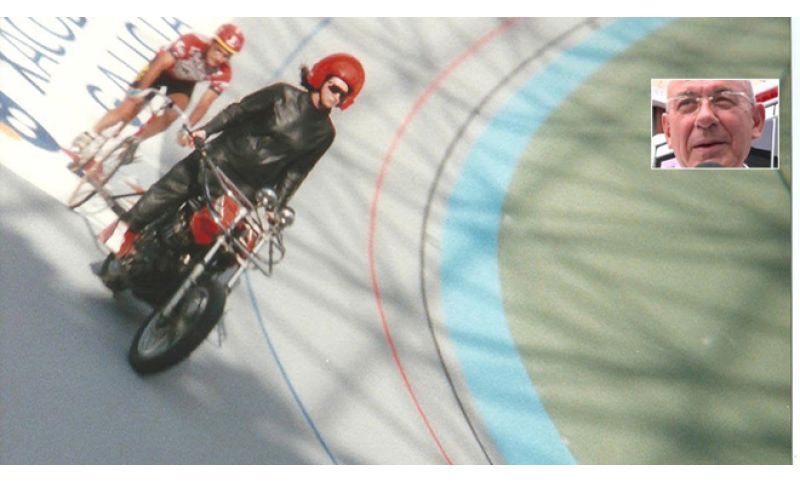
It has always been a highly spectacular discipline with the massive Indian motorcycles with flywheel transmission at whose roller the cyclists crouched with specially equipped bicycles and gear ratios suited to developing very high speeds. In the velodromes with banked curves designed for the high speeds of stayers, especially in Northern Europe and initially also in the U.S.A., rustic duels often took place between competitors with tactics and strategies dictated—sometimes even agreed upon—to put opponents in the wind and keep one's own rider protected at the roller.
It was a discipline that involved substantial expenses for maintenance and transport of the mechanical equipment, reasons for which, officially, the world cycling governing body decided to abolish it. Somewhat of a fig leaf to avoid declaring that in the conduct of stayer activities—trainers and riders—often engaged in behaviors that did not always (to put it mildly) inspire the pure Coubertin spirit….
The intent of this article's introduction is to provide at least an indication of what has been a long and roaring history. And, within this, a space of remembrance is dedicated to a lady, Maria Talamoni, the only woman who managed to obtain the license of stayer-pilot at the world level. A flash of pink in an environment dominated in a totalitarian manner by muscular and seasoned professionals (riders and trainers) with numerical prevalence of Northern European countries, except for some exceptions, also Italian ones of first-rate value.
And Mrs. Talamoni, 56 years from her birth, recalls that she risked being born on a motorcycle as her mother drove the motorcycle throughout her pregnancy, as she was accustomed to doing, just as her husband did, in daily life. And always a Guzzi motorcycle. The famous brand headquartered in Mandello del Lario (Lecco), frequented assiduously by the Talamoni family for various events. The Lariano brand was also the official supplier, for a long time, of the Giro d'Italia and the vehicles of the Highway Police.
Her father, Pierluigi, born in 1926 and passed away in 2010, was an eclectic and versatile artist among painting, sculpture, drawing, and creator of fine ceramics, following in the footsteps of his father, Giuseppe, who was among the founders of the Bosina Academy, a cultural institution for the valorization of the characteristics of the territory and the specificities, in various sectors, of Varese and surroundings.
The passion for motorcycles then expanded to bicycles and the middle-distance racing discipline—or stayer— to put it with the English term that can be rendered in Italian as "endurance test" was the natural mediation, almost obvious. This combination led her to manage, for about fifteen years, events at the Varese velodrome in Masnago, with a cement surface, together with the late Alfredo Maranesi, a historic figure of the Velo Club Mendrisio, a prestigious first-rate society based in the nearby Canton Ticino and venue of world championships of considerable importance in more recent years.
A passion also shared with sports master Giancarlo Bassani and his colleague-friend Angelo Lavarda, recently passed away, both residents in the Varese area.
With all the track specialties, the middle-distance racing sector enjoyed their particular interest for the significant impact of the mechanical equipment, put into competition with the proper, careful preparation to obtain the best performance on the track, with the spirit of a true devotee and curator of Pierluigi Talamoni.
It was a sort of "throttle club"— as the motorcycle trainers are called in Milanese slang, a term derived from the one with which the Milan tram drivers are defined in Milanese.
It was somewhat the Lombard pole of the discipline, often in close competition with the Roman pole of stayers. And for enthusiasts of the discipline with white hair (or even without..) it will be a good memory exercise to recall riders, trainers, and various staff members.
And for young Maria Talamoni it was all of a piece to share the environment alongside her father, beginning to ride on the track to accumulate experience driving the Cagiva motorcycles, a Varese brand of the Castiglioni Brothers that had created special models for the conduct of stayer activities.
And in 1992 she obtains the FCI license to enter the ranks of licensed stayers, the only "pink quota" that appears in the sector at the world level. The examination commission in 1992 was chaired by Domenico De Lillo, a first-rate specialist, whom Maria Talamoni always remembers with an amused smile, as well as the Dagnoni family, custodians of various memorabilia of the discipline dear to their father Mario, continued and practiced also by his sons, Cordiano and Christian, and many other colleagues, often friends in life but always rivals (sportively) when they opened the throttle of the engine on the track and performed daring maneuvers, at the limit of the regulations, to put the opponent of the moment in difficulty.
Maria remembers that experience always with pleasure even though the UCI's axe in the first half of the 1990s prevented her from continuing it with continuity.
The motorcycle, although without the "tail" of the roller, is still her preferred means of transport even in everyday life to this day. Middle-distance racing, for some time now, has a version that can be defined as "light" with the crackling dernys, equipped mopeds now also with silent electric motors and pedals, which however no longer convey the sensations and emotions of the roar and evolutions of the historic motorcycles in the carousal of the discipline.



 1
1
 1
2
2
1
2
2

 Ritratti
 Oscar
Oscar Albi d'Oro


Se sei giá nostro utente esegui il login altrimenti registrati.