


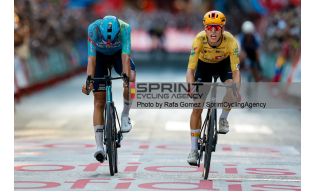















Twinned with Pinerolo (remember the 2011 stage won by Boasson Hagen?), Gap - capital of the Hautes-Alpes - hasn't missed the Tour de France map this year either. The 2026 edition assigns to the territory marked "05" first the finish at Orcieres-Merlette and then the start from Gap heading towards Alpe d'Huez.
Beyond the Monginevro, they've been doing the math: «since 1922, more than 80 Tour de France stages have left their mark on this unique landscape. Gap hosted the Grande Boucle for the first time in 1931, on the occasion of the fifteenth stage from Nice to the prefecture of the Hautes-Alpes. Antonin Magne wore the yellow jersey and kept it all the way to Paris, while the stage went to Jef Demuysere. The significance of Italians pedaling through this town of 41,000 inhabitants is captured in one statistic: out of 24 arrivals and departures from Gap, on six occasions there was an Italian victory, starting with Giuseppe Martano in 1934 and ending with Matteo Trentin in 2019.
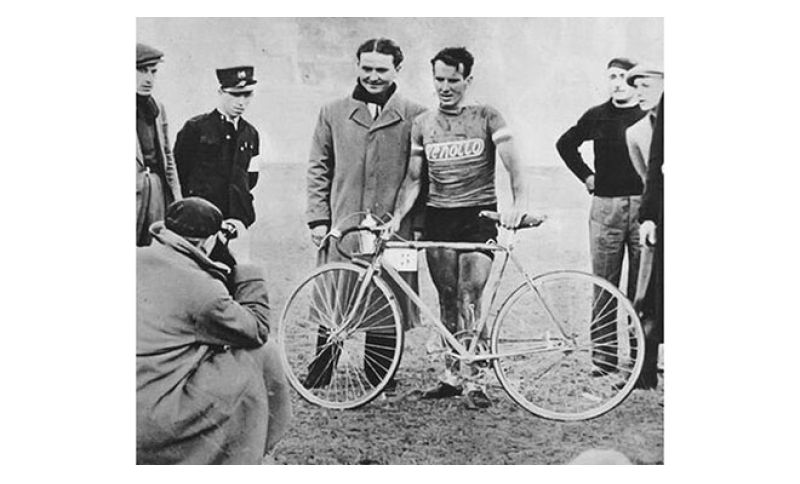
Of the Piedmontese from Giaveno, third at the 1933 Tour, one could also remember the Fantozzi-like reference to a duel with "Trueba, the flea of the Pyrenees". Martano perfectly wrote the screenplay for the great day that concluded with victory in the Grenoble-Gap stage, a classic of those years: after tackling the tough Côte de Laffrey and the Col Bayard, the Turin native (though born in Savona) launched himself downhill with only one thought - to drop Magne: «I had a bend's advantage over him when I slipped in the sand, causing a wound to my shoulder, but I quickly got back on the saddle» the winner told L'Auto, with 7 seconds over the yellow jersey that became about a minute thanks to time bonuses.
Another climb, La Rochette, near Gap, in the era of television coverage would have jumped to prominence for Beloki's crash and Armstrong's miraculous action, who managed not to hit the ground thanks to a cyclocross-like maneuver through the fields surrounding an almost liquid strip of asphalt. From the town that awarded an Italian the world title – a well-known story and "vexata quaestio" Basso's comeback against Bitossi – let's retrace Marco Lietti's stage brilliance in 1991. We do this through the memory of Davide Cassani, the perfect teammate that day, in favor of his Ariostea squad companion: «in the finale of that 215 km stage there were excellent riders in the breakaway including Lemond and Fondriest. Lietti was feeling good and much better than me, so I told him to wait before attacking. He did it just a few kilometers from the finish and won the stage, even though the next day he broke his femur during the warm-up before the start». The Romagnolo finished fifth.
Formidable those days, which as Italians we can only look back on with such admiring nostalgia, deliberately avoiding comparisons with what happens today, which risks demoralizing us. In the 13th stage Claudio Chiappucci was doing a dress rehearsal for his triumphant ride the following year at Sestriere, it was just the beginning of five consecutive victories (Cenghialta, Argentin, Lietti), culminating in Gianni Bugno's double at Alpe d'Huez. When we Italians were the Martians, arriving or departing from Gap.



 3
3
 3
8
8
10
10
6
6
1
1
3
8
8
10
10
6
6
1
1

 Ritratti
 Oscar
Oscar Albi d'Oro


Se sei giá nostro utente esegui il login altrimenti registrati.