














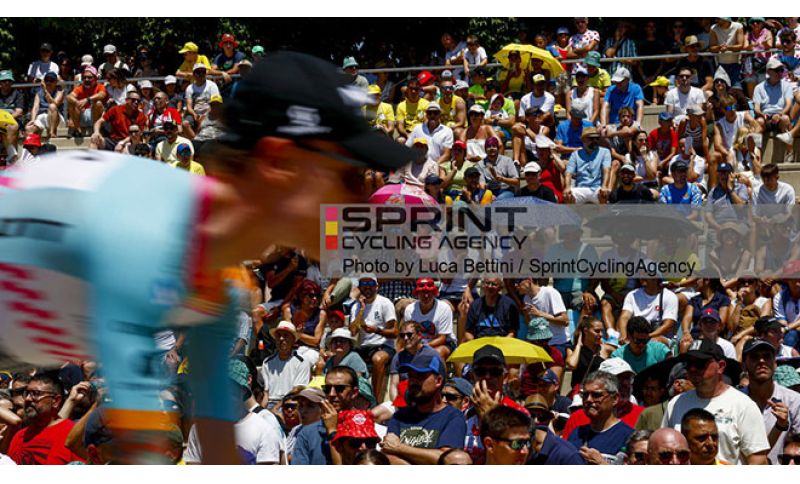
Climate change brings heat, and heat often brings fires. Today, the Tour de France and its riders are paying the price, as a major fire emergency forces changes to the third stage: the finish at Les Angles will take place without spectators. Yet the teams are following the organizers' lead, convinced that safety must always come first.
The Grande Boucle returns to French roads and immediately faces an emergency that goes far beyond cycling. The third stage, finishing at Les Angles in the Eastern Pyrenees, will indeed take place under exceptional circumstances due to violent fires affecting areas just kilometers from the finish line.
For safety reasons and in full compliance with the prefect's directives, ASO organizers have decided that the public will not be allowed to attend the stage finish and that access will be severely restricted even for race support vehicles. A decision welcomed with understanding by the teams, aware that in situations like this, the absolute priority must be protecting people.
One of the first to comment on the decision was Raphaël Jeune, general manager of Cofidis, who expressed full confidence in the organizers' actions: "We believe that the safety of spectators and riders is fundamental, and this decision once again shows how ASO always makes responsible choices".
To minimize the presence of vehicles in the finish area, the Tour's caravan has been drastically reduced. "To protect both riders and spectators, the caravan passage and all non-essential vehicles have been eliminated. Only priority vehicles necessary for the race to run smoothly will be authorized, such as sports directors' cars, team buses, and a few other vehicles".
According to Jeune, this measure will help keep the situation under control: "I think it's a good decision because it allows us to keep the situation as stable as possible".
Despite confidence in the organization's choices, the Cofidis manager emphasizes that the evolution of the fires continues to be monitored: "There are still several issues to address, because the alternative route also passes through areas currently affected by the fires. We'll have to wait and see, but I have full confidence in ASO and the decisions that will be made."
Beyond logistical aspects, teams must also manage the psychological side of their athletes. Today it's practically impossible to prevent riders from learning about news from outside, but the staff's job is precisely to allow them to focus exclusively on the race.
"Riders see social media, read the news, and know there are fires in France. But their priority at the Tour de France is to give their best. They stay in their little bubble and our job is to keep them in that bubble, bringing them to the start of each stage in the best possible condition".
The Tour de France, like any major outdoor event, is inevitably linked to environmental conditions. And the ability to adapt is considered a fundamental quality. "In cases like this, you have to adapt, whatever happens. It's part of our job to protect the riders until the end".
The teams will therefore follow all of the organization's directives. "We'll adapt to ASO's guidelines. Once again, I believe the organizers are making decisions seeking to protect all parties involved". For the riders, it will inevitably be an unusual situation. The great climbs of the Tour de France are traditionally accompanied by thousands of enthusiasts who turn each ascent into a popular celebration. At Les Angles, instead, silence will replace the cheers.
A sacrifice that is accepted with a sense of responsibility. "Of course we like to be encouraged and hear the crowd, especially on a difficult stage like this one. But we fully understand the situation and it's important not to put people in danger. After all, this will also bring a bit more peace of mind to the end of the race".
The fire emergency adds to the heat wave accompanying this first week of the Grande Boucle, bringing attention back to the increasingly evident effects of climate conditions even in sport. For those in the industry, however, the answer is not to stop the race, but to learn to manage increasingly complex situations. "We're at the Tour de France and we have to adapt. We can't think about canceling stages: it would be a shame for the most important race in the world".
"It's up to the organizers to make the best decisions and up to us riders to adapt. Today it was very hot, but I think we managed it fairly well. We're also acclimatizing".
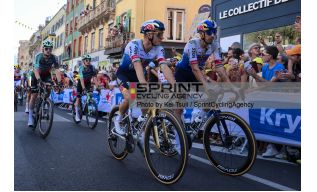
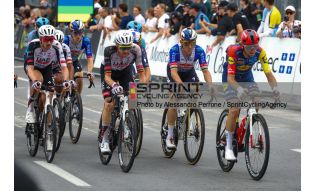
The third stage of the Tour de France will therefore be different from all the others. No crowds on the final ramps to Les Angles, fewer vehicles following the race, and maximum attention to safety. An unusual image for the Grande Boucle, which once again demonstrates how cycling can adapt to events, always putting the protection of athletes, staff, and fans first.



 2
2
 2
1
1
7
7
5
5
2
1
1
7
7
5
5

 Ritratti
 Oscar
Oscar Albi d'Oro


Se sei giá nostro utente esegui il login altrimenti registrati.