
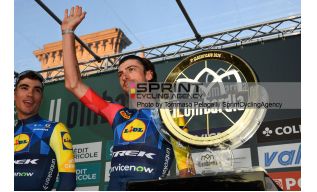
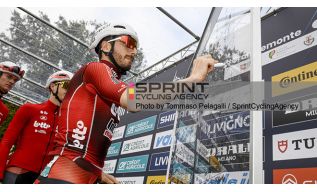















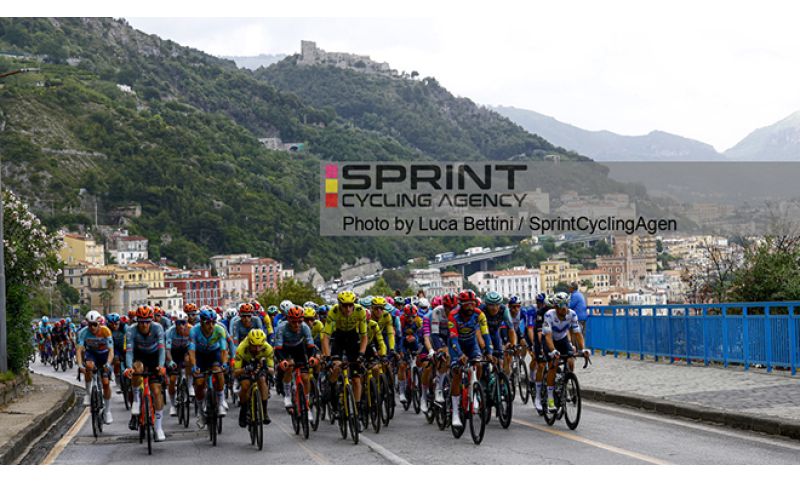
And it will be once again the 'Campania', not fictitious, not amateur, not secondary, the Giro della Campania - of cycling, needless to say - that will invade without a hitch the roads of our region on Sunday, September 20. This year, the 'Campania' will unexpectedly celebrate autumn, though it grew up in spring, its 64th edition. Yet another, we might say perennial, chapter of a noble epic that was born in 1911 and ran until 2001 with 56 one-day editions and 7 stage races...
And the 64th edition also marks an iconic return, because our 'Campania' has been missing for just a quarter of a century. The last winner, in 2001, was Russian Dimitri Konychev, a brilliant sprinter in front of the Royal Palace of Caserta, with a Count and an Ongarato on the podium. And it is the end of a genealogy that ignites metaphors across the decades spanning two World Wars and the champions of the sport most beloved by Italians, religious or not.
It was certainly born with the unknown Gremo and Garda in 1911, the 'Campania', only two years less noble than the Giro d'Italia, but it soon became the training ground for the major actors of cycling from our great-grandfathers' and grandfathers' era... Di Paco and Frascarelli paraded at the 'Campania', but above all Learco Guerra, the favorite - as Neapolitans from Caivano would tell it - with his historic triple that remains an unreachable record: 1932, '34, '35...
And in a litany of achievements that illuminates victories, and never epitaphs, even though many leave no trace here, amid many interruptions in history due to the trials of the times, the vivid mirage of Fausto Coppi unfolds, who every time is an entirely different story (a Bennato, as they say), with victories in harmony in 1954, in the rainbow jersey, and in 1955, when he crumbled the rest of the world on the Agerola climb. And the Naples-Pompeii highway seemed to make way for his whirlwind pedaling. Coppi was, at the 'Campania', a masterpiece, as Luigi Compagnone liked to say.
And in a recital of sprinters, the cards of Liviero and Ciampi, Benedetti and Dancelli won, and of a Guido De Rosso who on the only day of his career in Naples managed to beat Jacques Anquetil.
'Campania' in the Italian tricolor, if not the rainbow jersey, registered on the podium the tribute of Dino Zandegu', who won in '67 singing 'Core 'ngrato', but those were different hearts.
'Campania' in the Italian tricolor, we would have expected the first foreigner in 1976, the ruthless Rik Van Linden, in a princely sprint: Basso and De Vlaeminck, Bitossi and Gavazzi, do you know?
In a nomadic narrative of cycling, abandoned by the regional capital, viewed with suspicion for years by the Great Cities, until the current Neapolitan enthusiasm, the 'Campania' with finishes in Caserta and Sorrento would have applauded the dueling Saronni and Moser, the latter winning twice, Roger De Vlaeminck, in an exceptionally foreign podium - 1984, ahead of Pedersen and Brugmann -, Adriano Baffi and Franco Ballerini, so dear to us, in the early '90s. And Dario Nicoletti, Davide Cassani, 1992, up to Stefano Della Santa, the climber who in '93 anticipated Leonardo Sierra.
It seemed to be over, and we remember it well, that year, the 'Campania'. Despite Sergio Zavoli's efforts, cycling that year said goodbye to us: or vice versa. Until the generous return in the 2000-'01 biennium. In the rain, in Agropoli, Dario Frigo, in 2000, my God what rain... In the sunshine of an afternoon, in Caserta, Dimitri Konychev, the next time. The sky does not set on the 'Campania', for those who - ultimately like us - knew how to wait on the shore of the Naples sea.
From 'Il Mattino'

 1
1


 1
1


 1
1
2
2
1
1
2
2

 Ritratti
 Oscar
Oscar Albi d'Oro

