
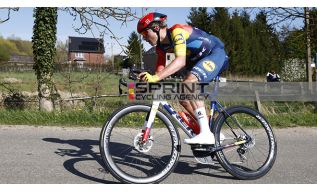
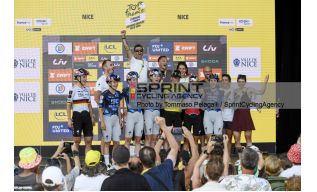
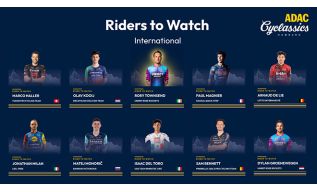
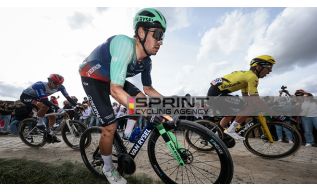
















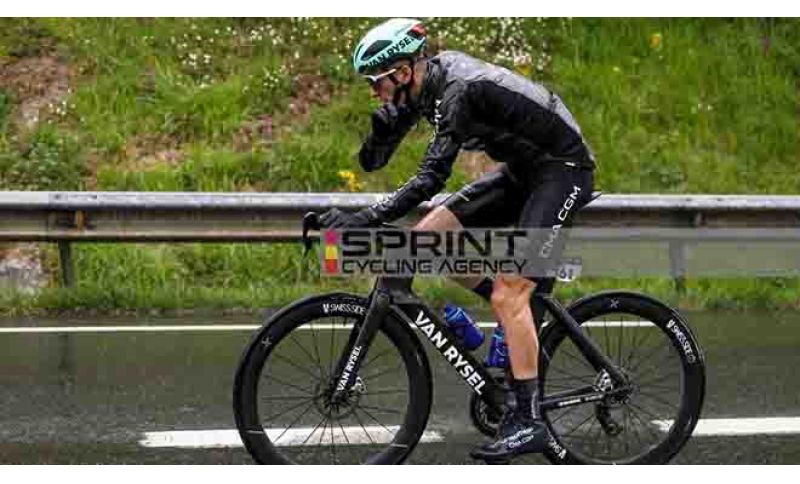
On the eve of the Flèche Wallonne, the name that intrigues the peloton and cycling enthusiasts the most is that of Paul Seixas. He is neither the most experienced nor the most decorated, but in the absence of superstars like Remco Evenepoel and Tadej Pogacar, the spotlight has shifted to this French talent of just 19 years old, ready to test himself on the fearsome Mur de Huy. Seixas is considered one of the brightest stars of French cycling. Having progressed rapidly through the junior categories, he had already made a name for himself two years ago by winning the junior version of Liège-Bastogne-Liège, finishing on the famous Redoute. His palmares also includes notable placings such as eighth place at the E3 Harelbeke juniors and third place at the Under 23 European Championships.
Despite his young age, the Decathlon-CMA CGM rider has already shown versatility: competitive in stage races and incisive in classics, as demonstrated by his second-place finish this year at Strade Bianche. His progression has been remarkably rapid, to the point that he is already being touted as a possible poster boy for French cycling's future.
What strikes about Seixas is not only his talent, but also his approach and that composure that is rarely encountered in a young rider competing at the highest levels. His words are measured, sincere, almost surreal for a boy his age, who has even prompted intervention from the French president to protect his future in his home country. "I don't consider myself the absolute favorite, but as a team we're not racing for second place either".
Despite being at the center of attention, the young Frenchman keeps his feet on the ground. He acknowledges the value of his rivals and doesn't shy away from competition, but avoids overstating things. Even when speaking about Tadej Pogacar, he shows no hesitation: "We're talking about the greatest rider of all time. The level he reaches is incredibly high".
The Flèche Wallonne, however, is a particular race, entirely built around the explosive effort of the Mur de Huy, and Seixas knows this well: "It's a climb you need to learn to know: positioning, pace, timing of the acceleration".
Accustomed to longer efforts—climbs lasting fifteen or twenty minutes—the Frenchman will have to adapt to a short finale, where great energy will be required. He has worked on this aspect, but admits that the race will above all be a test to understand where his explosiveness stands.
Recent results speak for themselves: Seixas has already impressed by winning the Tour of the Basque Country and confirming his talent with important placings in major races. He himself has admitted: "Yes, my results are better than expected. I've surprised myself. Concentration and passion for cycling are my secret, and I want to ride my bike every day".
At the Flèche Wallonne, Seixas doesn't start with the label of absolute favorite, also out of respect for more experienced riders like Kevin Vauquelin. But the message is clear: his team won't be racing for a mere placing. As he himself has said, the Flèche Wallonne will be an enjoyable journey of self-discovery. But if we look with a critical eye, then at the Flèche Wallonne we may truly have the opportunity to discover a new star of world cycling.

 7
7


 7
7


 8
8
2
2
8
8
2
2

 Ritratti
 Oscar
Oscar Albi d'Oro

