

















Once upon a time there was sports journalism. That kind of sports journalism. Not the pieces that are forty lines long (short), which the head of the desk, more pragmatic than the section editor, who in turn is more pragmatic than the deputy director, reduces to thirty-five by favoring a graphic solution that gives air, air!, just like that, as if the reader risks suffocation from the effort of reaching the end (so much so that the text lines are further reduced to specify the minutes and seconds needed for reading, an addition that, with a bit more air, limits the total to thirty). That sports journalism offered not just pieces, but entire pages. Whole pages of lead type. And if they overflowed, and if they deserved it, they were published in series, in installments. Services like a daily weekly.
Once upon a time there was that sports journalism. Entire pages in which the chronicle was merely a reference, the box scores a citation, yet the freedom granted to the sports journalist was absolute, able to range from national history to grandmother's recipes, from the works of Gabriel García Márquez to films with Lea Massari, from the gardener at Wimbledon to the innkeeper of Barcelonnette, without forcing the reader to measure themselves against the planned reading time, but instead granting them the privilege of taking all the time they desired, to read reread remember cut out learn by heart, because those pages constituted the strength (also in sales, also in revenue) of the newspaper.
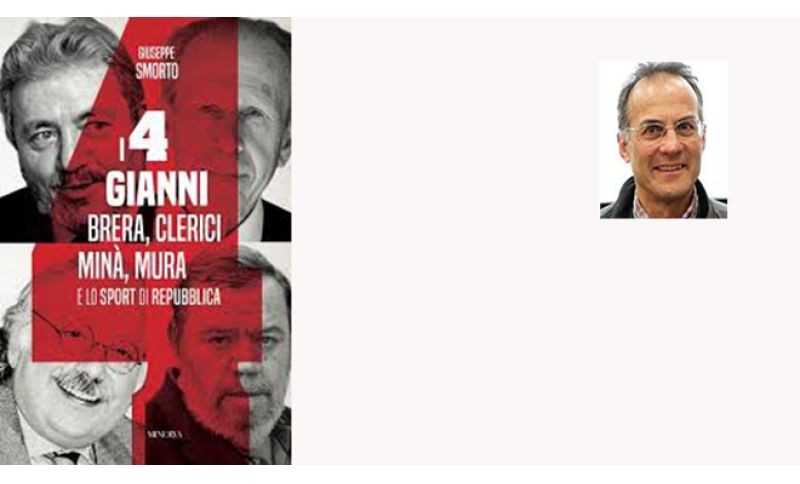
Once upon a time there was that sports journalism of the four Gianni: Brera, Clerici, Minà, Mura. In order, by birth certificate, Giovanni Luigi, Giovanni, Giovanni, Giovanni Diego. Two nicknames for the first two, of their own making: Gioanbrerafucarlo and Scriba (though Carletto Pierelli, Mura's historic driver, called him "Dottorone"). All four at "Repubblica". All four giants, even though none of them reached five foot nine, three were even stocky if not downright chubby, whereas Clerici, who cared greatly about his figure, was lean as an athlete (of the four, he had actually been one). Giuseppe Smorto, who as head of the desk directed the Sports section of "Repubblica", has written "The 4 Gianni" (Minerva, 234 pages, 18 euros) recounting those giants seen up close and experienced from within, never—and I say this immediately, and immediately offer him my thanks—yielding to the temptation of raising himself to their same height or aspiring to become a protagonist, but only opening the doors for us and welcoming us into the newsroom (and in any case one senses it must not have been easy to always find the right balance with the director and colleagues). The "4 Gianni" were authentic artists, different stuff from craftsmen, who nonetheless interpret and represent the best of the breed (thus more than the average of the media).
Once upon a time there was that sports journalism, but only the "4 Gianni" (and "Repubblica") could afford absolute freedom, elsewhere discouraged by common sense of propriety or forbidden by ancient rules (first person, neologisms, digressions). The fate of any such presumption would have been the wastebasket.
Once upon a time there was sports journalism, period, one might even say. The sports journalism of correspondents paid by the newspaper (I go I see I write), of events experienced trackside or courtside or poolside (and not in front of the TV), of face-to-face interviews (and not copied and pasted from who knows where), of primary sources checked and verified (and not those artificial and contrived ones), of worn-out shoe soles trudging up and down (which no expense account would ever have covered), of careful craftsmanship in writing (a great opening, then the substance, then a fine closing), of paid pieces (today, often, asking for payment seems bizarre), of dailies rightly considered gospel (if not scripture), of journalists whose articles, by themselves, were worth the full price (and of editors who told you well done regardless—it was easy: they didn't exist—of "likes"). Just nostalgia?
(end of first installment – to be continued)

 2
2


 2
2


 5
5
3
3
5
5
3
3

 Ritratti
 Oscar
Oscar Albi d'Oro

