


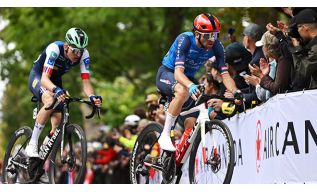
















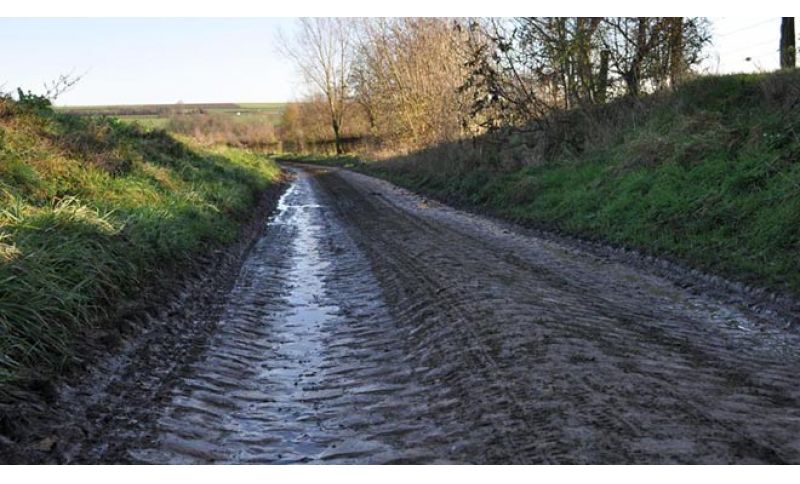
Just days away from Paris-Roubaix 2026, the attention of insiders is focused on one particular stretch: the Briastre sector. It is not a historic stretch like the famous Trouée d'Arenberg, but it could prove decisive from the very first stages of the race.
During the official reconnaissance led by director Thierry Gouvenou, two main unknowns emerged: weather conditions and the state of the pavé. In some sectors, such as Haveluy, manual intervention was even necessary to fix loose stones, with results far from guaranteed in case of rain.
Returning to Briastre, we are facing an anomalous but decisive sector of the race. Approximately 3 kilometers long, it represents a deviation from the traditional route. Included only in some recent editions (between 2017 and 2019 and in 2024), it is considered a "rare" sector, but precisely for this reason unpredictable, and it is here that a new turning point for Paris-Roubaix 2026 could be found.
According to Thierry Gouvenou, here the teams can "race like beasts", increasing the pace brutally and selecting the group already in the opening kilometers of pavé. The slight climb and the difficulty of the surface make it comparable to a 5-6% gradient on asphalt, but with much higher energy expenditure.
Should weather conditions worsen, the sector could transform into a true balancing act, increasing the risk of falls and significant gaps.
Briastre is not just a strategic point, but also a symbolic place, a passage in the history of cycling and in the very memory of Paris-Roubaix. Here we remember Belgian cyclist Michael Goolaerts, who passed away in 2018 after a cardiac arrest during the race. A stele along the route keeps his memory alive, adding an emotional element to an already extremely demanding stretch.
The 2026 route features 30 pavé sectors for a total of over 54.8 kilometers out of 258 overall. The opening stretches will already be highly selective: in less than 20 kilometers, over 11 kilometers of pavé are concentrated, with long segments at Quiévy and right at Briastre.
Top-tier riders like Tadej Pogačar and Mathieu van der Poel could take advantage of these difficulties to attack from far out, without waiting for the more iconic sectors like the Carrefour de l'Arbre, and if this were to happen, we would once again find ourselves facing a clash of titans. Everyone knows that the Hell of the North is a race full of risks and unknowns, and the weather, as always, will play a decisive role. The pavé of the North, even when clean and well-maintained, remains extremely sensitive to rain. A wet surface can transform the race into a struggle for survival, while dry conditions favor higher speeds but are no less selective. For this reason, wet pavé and mud will certainly favor some riders while excluding others.
Gouvenou himself, in his interview with the newspaper L'Équipe, expressed an almost symbolic wish: rain to make the images spectacular, but only after Arenberg. To find the perfect balance between spectacle and safety.
With such a demanding start and a sector like Briastre ready to make immediate selections, the 2026 edition of Paris-Roubaix promises fireworks from the opening kilometers. There will be no need to wait for the more celebrated stretches to see the first major gaps: the race could explode much earlier than expected.
And in a race where every stone can make the difference, even an "unusual" sector can enter history.

 1
1


 1
1


 2
2
17
17
4
4
1
1
2
2
17
17
4
4
1
1

 Ritratti
 Oscar
Oscar Albi d'Oro

