

















In the presumption (and illusion) of having-it-all-right-now, in the era of real-time (as if, otherwise, it were unreal), in the myth of speed (up to high speed) and immediacy (up to instantaneity), slowness is considered a sin, an obstacle, a disadvantage, if not a defeat, if not a loss. A loss of time. And yet we talk about slow food and slow wine, and yet we ask for more time to reflect and evaluate and delve deeper, and yet we at least propose to slow down the frenzy of living.
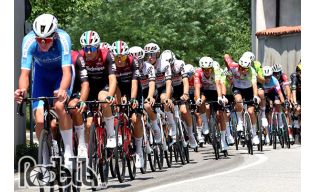
The bicycle is perfect. Celebrated as a symbol of futurism, thus speed, dynamism, and technology, then suffocated and overwhelmed by motorcycles, cars, and planes in an ever faster, more dynamic, and technological spiral, finally recovered and rehabilitated as a flag of silent, healthy, ecological, agile, economical mobility, the bicycle is perfect because it is slow, but with a fast slowness, and it is fast, but with a slow speed. Faster than walking, slower - but not in the city - than going by motorcycle and car. And with the gift of always belonging to the places where one pedals, an epidermal and muscular immersion, a sentimental and emotional participation, a sound and tactile sharing.
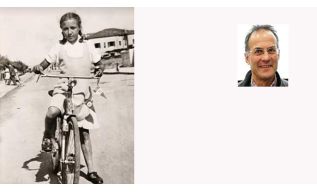
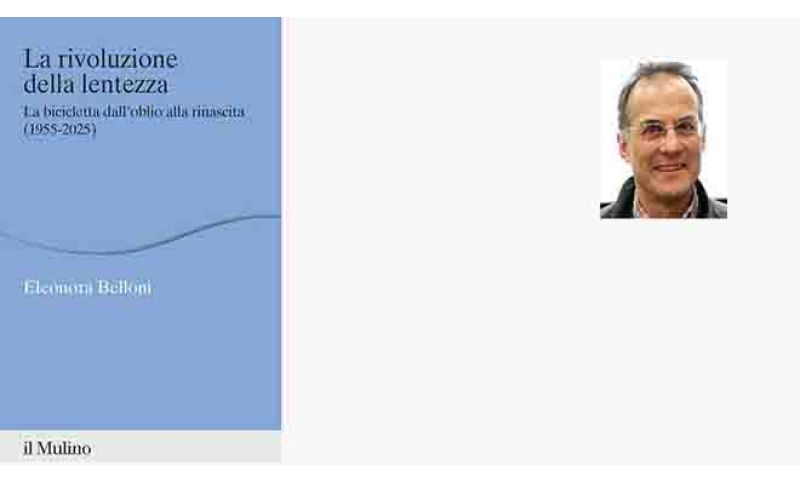
Eleonora Belloni has written "The Revolution of Slowness" (il Mulino, 164 pages, 17 euros), the history of the bicycle from oblivion to rebirth, that is, from 1955, when the demographic decline of bicycles in Italy began to become more noticeable, to 2025, when the bicycle seemed to have returned to an urban and metropolitan lifestyle, also in tourism and travel, as well as in more or less competitive sports, thus also returning to the market (bike economy). Agile, light, sustainable, versatile, eclectic, essential yet complete, slowly fast or quickly slow, even poetic, the bicycle is - we have already written - perfect. And Belloni explains it, tells it. "An apparently simple means, yet extraordinarily complex in its meanings and narratives", while changing "countless times its own social role in time and space".
In this pedal essay (and the pace, truly, seems like that of a bicycle, slowly fast or quickly slow), we move from "Bicycle Thieves", 1948, De Sica's film about the centrality (and drama) of bicycles in Italians' lives, to "The Easy Life", 1962, Dino Risi's film about the economic miracle, motoristic obsession, and road bullying; we jump from the Graziella, the folding bike designed to fit in the tiny trunk of a Fiat 600, to the new folding bikes for train interchange; we go from the oil crisis, 1973, to the announced depletion of renewable natural sources (on July 24, 2025); we cite from Ciclobby of Luigi Riccardi with his Bicinfesta, 1987, to L'Eroica in Gaiole in Chianti, 1997, from the first Critical Mass in Milan and then in Turin, Bologna, Genoa..., 2002, to the establishment of bike sharing, from the profession of bike messengers to the spread of e-bikes, from the law on cycling mobility, 2018, to the Cycling Mobility Plan, 2023.
The conclusions are anticipated by Belloni from the introduction: "Today, cycling practice is experiencing a new protagonism, not just material. The growing sensitivity to environmental issues has led to re-reading the mobility phenomenon in light of the principle of sustainability, focusing attention on non-motorized mobility (pedestrian and cycling)", "restoring to the bicycle a space in public debate", "which nominates it to become once again, as at the origins of its history, a symbol of modernity". Here: the bicycle no longer as a poor and for the poor means, but as the most respectful and valuable means.



 5
5
 5
2
2
5
2
2

 Ritratti
 Oscar
Oscar Albi d'Oro


Se sei giá nostro utente esegui il login altrimenti registrati.