


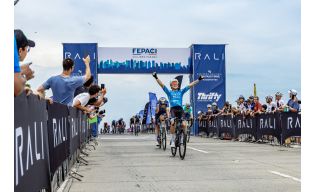
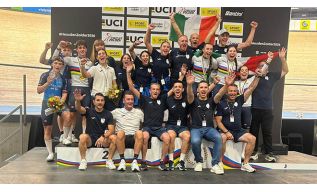

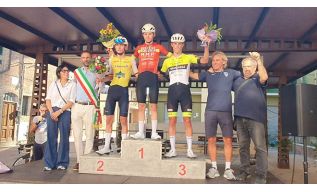

















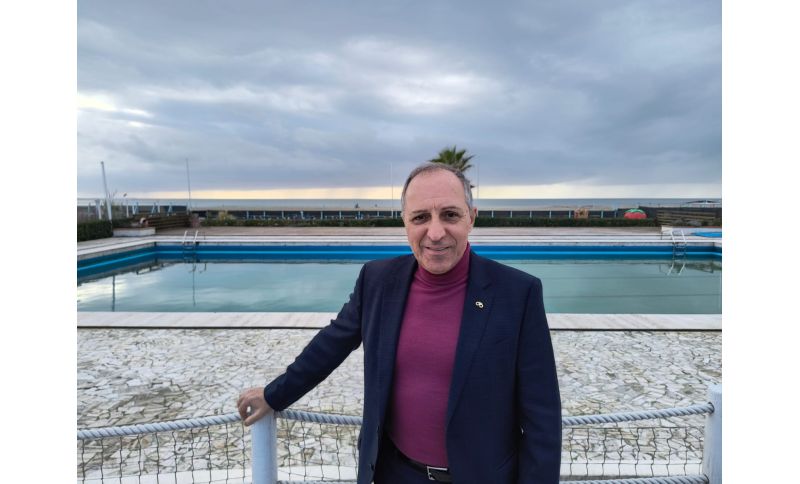
While the professional cycling season is beginning around the world, the Italian Cycling Federation has been making headlines with a proposal to update the highway code regarding vulnerable road users. In the days immediately following their publication, we gathered some explanations from the federal president, who at the end of November had personally been the protagonist of a social media video encouraging cyclists to protect themselves by following common-sense cycling rules.
Here's Cordiano Dagnoni: "Safety is a priority. Road dangers are not only bearers of human tragedies but also the worst obstacle to promoting cycling among young people and maintaining people's passion for bicycles. In my second presidential term, I immediately committed to establishing a commission composed of organizers, athletes, sports directors, referees, sponsors, administrations, and institutions, to understand together how to improve safety not only in races but in daily practice. Chaired by lawyer (former amateur cyclist from Perugia) Carlo Moriconi, the commission was established last April and officially presented these proposals in the Federal Council on December 18, 2025. I understand that when proposing important and courageous changes, various conflicting opinions can arise, but it's an inevitable step in any field when seeking a true cultural change."
The greatest perplexities were raised by the proposal to extend helmet mandatory use:
"Many believe it could be a deterrent to bicycle use. We believe it's time to think that, just as it was made mandatory for skiers, motorcyclists, and 'racing' cyclists, it should also be for those cycling in urban mobility, where risks are high even at low speeds and a helmet can truly save lives. All our assessments are based on case studies and numbers, supported by the Zerosbatti association, whose founder, lawyer Federico Balconi, is a Tuttobiciweb contributor. We'll see what the legislator thinks."
While we're at it, let's go back to early December and another somewhat misinterpreted issue: lowering the competitive age from 13 to 8 years...
"...which was strongly supported by the federal medical director Roberto Corsetti, and which other federations like the boxing federation have aligned with. First and foremost, it was about resolving an internal cycling anomaly, where BMX and Trial already had the 8-year threshold while other disciplines had it at 13 years. And we adjusted this threshold to that age, certainly not because we want to put 'professional' pressure on the youngest. The definition of 'competitive' should not be misleading: it means protecting the child's health and not being satisfied with the non-competitive certificate, because cycling stresses the heart from a very young age, and it's right that parents practice it with their son or daughter with the peace of mind of having them undergo appropriate stress tests."
A "competitive" postscript on the year now dawning: what does he expect from 2026?
"For Olympic disciplines, we're starting to get serious, with qualifications for Los Angeles 2028. We've invested heavily in young people and hope to achieve results through the right mix of youth and experience. It will be a challenging year in terms of travel, with qualifications on all continents. We'll need to manage these major commitments in the best possible way!"

 11
11


 11
11


 1
1
1
1
1
1
1
1

 Ritratti
 Oscar
Oscar Albi d'Oro

