






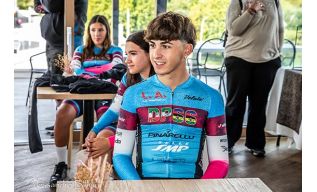


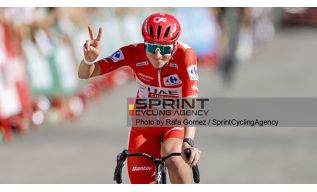
















Cycling as a guinea pig, in the sense that for years it has been - since the 1960s when anti-doping controls were born - studied and investigated, pursued and prosecuted, ultimately torn apart, often unfairly, if only because it never had any protection whatsoever: they always went straight ahead. The protected ones? The world of football, for example. It's no coincidence that the Acqua Acetosa laboratory was closed due to a soccer scandal: they weren't doing the controls. They were letting urine samples age as if they were a Barbera or an Amarone. Then there's the Balco scandal and the very recent Sinner tsunami, where public opinion immediately sided with the South Tyrolean champion, and the media as well. Many cried foul: they're protecting him! In a previous piece, I immediately wrote that I would have liked to see our world mobilize in the same way to defend one of our champions. We cyclists are much more straightforward: we stone the athlete in the public square and that's it.
Cycling has set the standard for anti-doping, for hunting down cheaters, and there's a legal literature that has made case law. And it's no coincidence that for years science has been much more committed to anti-doping than the opposite. The only true example of evil science applied to doping is the already mentioned Balco case (Victor Conte, the mastermind behind it all): in that case, they had invented hormones similar to human ones, and that American case was truly one of the most striking and painful in sports history. Those who dope have always made a very simple calculation: they keep pharmacokinetics in mind. How long does a substance last in the blood and therefore in urine? That's the dilemma, which is why cycling, and forgive my bias, proposed surprise checks, out of competition, to address the problem. But not only that, it then proposed the 50% limit, tracking of movements (Adams), and many other things: if sport is more credible today, a large part of the credit clearly goes to our sport.
These days, there has been much talk about hypoxic masks following the death of Norwegian biathlete Sivert Guttorm Bakken, as well as the arenicola, a small marine worm that carries more oxygen than EPO, but it's more of a magic trick than a true doping method, in fact the news dates back three years and this arenicola story has long since washed up on the shore. There is, rather, another emergency. Or rather, I consider it such, not so much because I have the knowledge to reach such conclusions, but because I have ears to listen. In all sports environments, there has long been talk of use and abuse of painkillers and anti-inflammatory drugs, exciting and stimulating substances. It's a plague that affects all sports, and I mean all: even and especially F.1. They are used disproportionately. Painkillers and analgesics, caffeine and pseudoephedrine, which allow better absorption of fatigue and workloads galore. To be clear, these are not prohibited products or included in the WADA (World Anti-Doping Agency) anti-doping list but the point is precisely this: abuse.
Until a few years ago, caffeine could be consumed within certain doses, if you exceeded the maximum limit the athlete was considered positive. For over twenty years it has been free, and today there are supplement companies that have products on the market containing up to 180 milligrams of caffeine. Such habits and the abuse of painkillers, analgesics, anti-inflammatory drugs, stimulating and exciting substances, are following the laws of gravity, descending to increasingly younger categories. This abuse is considered by a significant portion of the scientific community as extremely harmful to health and those with more knowledge than myself believe that a breaking point has been reached: we can no longer pretend nothing is happening. We can no longer remain silent.
So, what to do? The major controllers, WADA first and foremost, should acknowledge this situation and adopt the necessary countermeasures. Why should certain types of painkillers like Codeine, an opioid analgesic, be taken? What use are they to an athlete? Wouldn't it be sufficient to reintroduce limits for caffeine abuse? And what about all the substances and stimulants contained in many energy drinks sold in supermarkets? The quantities and frequency of use of these substances are bordering on madness. Rather than chasing the marine "worm", why not address this emergency that is not discussed, except in low voices and in well-protected rooms among insiders, and I'm not referring to their sterility, but to the omertà of those who frequent them.
Editorial, from tuttoBICI January issue

 14
14


 14
14


 1
1
2
2
3
3
1
1
2
2
3
3

 Ritratti
 Oscar
Oscar Albi d'Oro

